NASA Media Archive
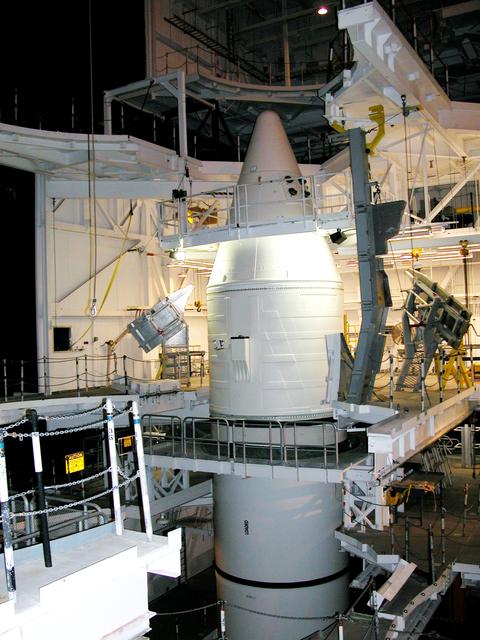
KENNEDY SPACE CENTER, FLA. - In the Vehicle Assembly Building, the forward assembly of this solid rocket booster (SRB) is ready for destacking, part of time and cycle activities. The SRB was part of the stack on Atlantis originally scheduled for a March 1, 2003, launch on mission STS-114. The SRBs and external tank were demated in February 2003. STS-114 is now scheduled to occur no earlier than Sept. 12, 2004, on Atlantis.
KSC-03pd3221
KSC | 2003-12-09
Details
KENNEDY SPACE CENTER, FLA. - In the Orbiter Processing Facility, KSC technicians work on the underbody of the orbiter Discovery. The vehicle has undergone Orbiter Major Modifications in the past year. Discovery is scheduled to fly on mission STS-121 to the International Space Station.
KSC-03pd3215
KSC | 2003-12-09
Details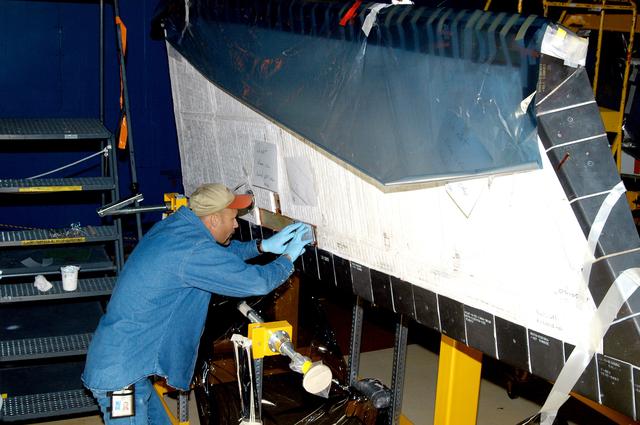
KENNEDY SPACE CENTER, FLA. - In the Orbiter Processing Facility, KSC employee Joel Smith prepares an area on the orbiter Discovery for blanket installation. The blankets are part of the Orbiter Thermal Protection System, thermal shields to protect against temperatures as high as 3,000° Fahrenheit, which are produced during descent for landing. Discovery is scheduled to fly on mission STS-121 to the International Space Station.
KSC-03pd3216
KSC | 2003-12-09
Details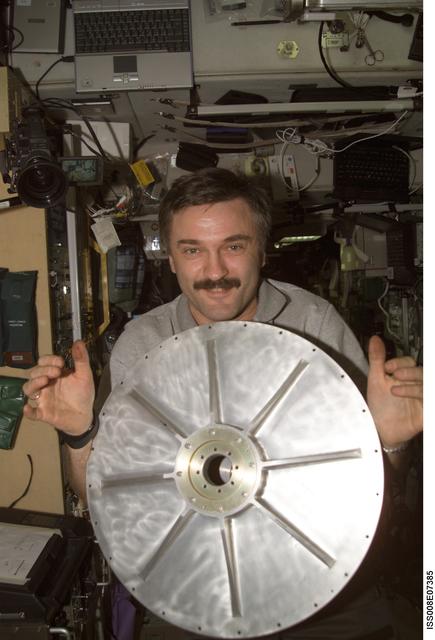
Kaleri holds the top endcap for the TVIS Gyroscope in SM during Expedition 8
iss008e07385
JSC | 2003-12-09
Details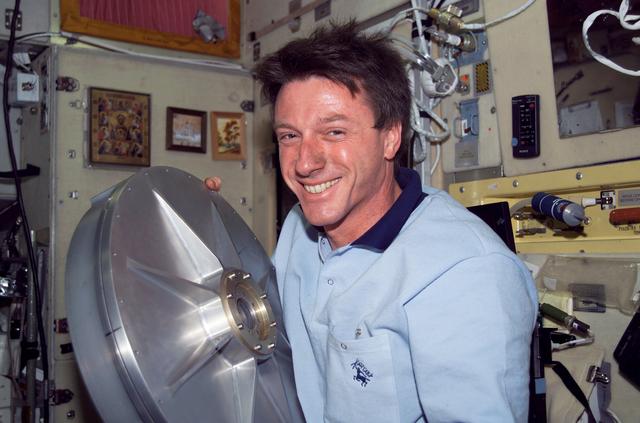
Foale holds the top endcap for the TVIS Gyroscope in SM during Expedition 8
iss008e07384
JSC | 2003-12-09
Details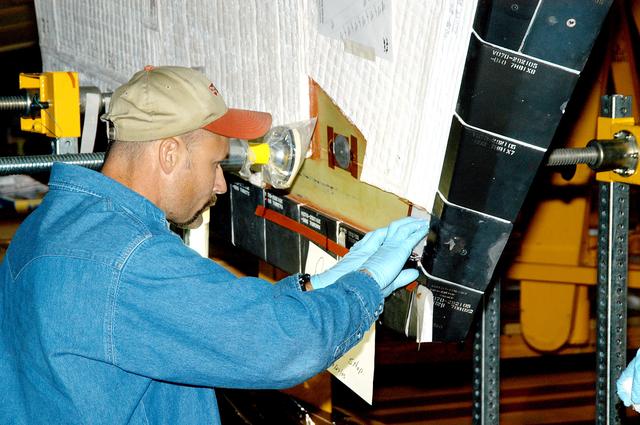
KENNEDY SPACE CENTER, FLA. - In the Orbiter Processing Facility, KSC employee Joel Smith prepares an area on the orbiter Discovery for blanket installation. The blankets are part of the Orbiter Thermal Protection System, thermal shields to protect against temperatures as high as 3,000° Fahrenheit, which are produced during descent for landing. Discovery is scheduled to fly on mission STS-121 to the International Space Station.
KSC-03pd3218
KSC | 2003-12-09
Details
KENNEDY SPACE CENTER, FLA. - In the Vehicle Assembly Building, the forward assembly (nose cap and frustum) is lifted away from the solid rocket booster (SRBThe destacking is part of time and cycle activities. The SRB was part of the stack on Atlantis originally scheduled for a March 1, 2003, launch on mission STS-114. The SRBs and external tank were demated in February 2003. The mission is now scheduled to occur no earlier than Sept. 12, 2004, on Atlantis.
KSC-03pd3227
KSC | 2003-12-09
Details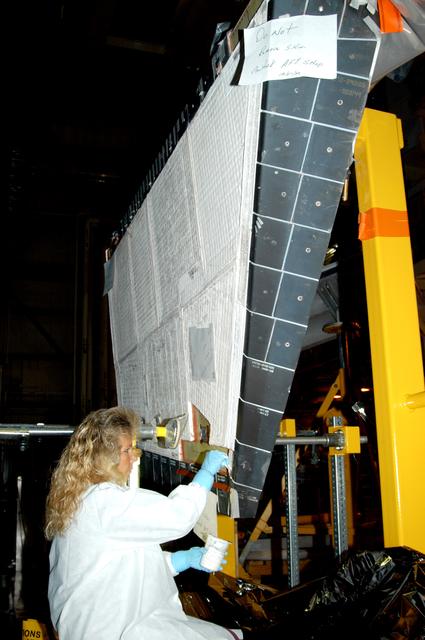
KENNEDY SPACE CENTER, FLA. - In the Orbiter Processing Facility, KSC employee Nadine Phillips prepares an area on the orbiter Discovery for blanket installation. The blankets are part of the Orbiter Thermal Protection System, thermal shields to protect against temperatures as high as 3,000° Fahrenheit, which are produced during descent for landing. Discovery is scheduled to fly on mission STS-121 to the International Space Station.
KSC-03pd3217
KSC | 2003-12-09
Details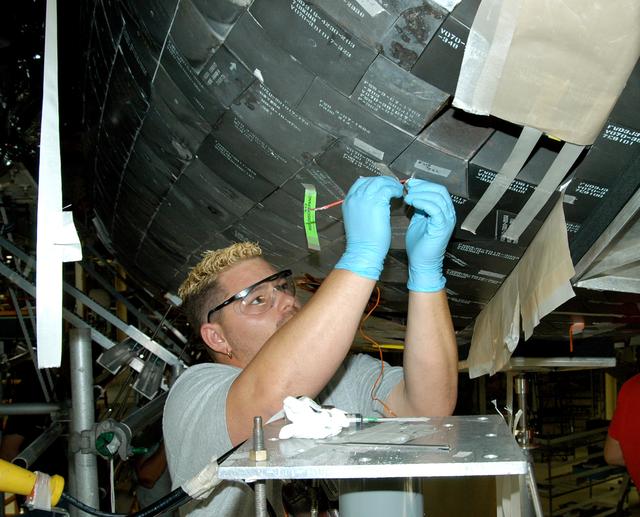
KENNEDY SPACE CENTER, FLA. - In the Orbiter Processing Facility, KSC employee Chris Moore repairs tile on the forward area of the orbiter Discovery. The vehicle has undergone Orbiter Major Modifications in the past year, which includes tile check and repair. The tiles are part of the Orbiter Thermal Protection System, thermal shields to protect against temperatures as high as 3,000° Fahrenheit, which are produced during descent for landing. Discovery is scheduled to fly on mission STS-121 to the International Space Station.
KSC-03pd3213
KSC | 2003-12-09
Details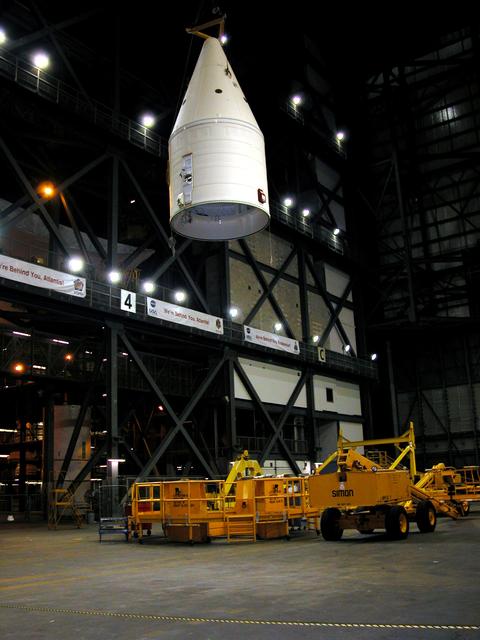
KENNEDY SPACE CENTER, FLA. - In the Vehicle Assembly Building, after being removed from the solid rocket booster (SRB), the forward assembly is lowered toward a transporter below in the transfer aisle. The destacking is part of time and cycle activities. The SRB was part of the stack on Atlantis originally scheduled for a March 1, 2003, launch on mission STS-114. The SRBs and external tank were demated in February 2003. The mission is now scheduled to occur no earlier than Sept. 12, 2004, on Atlantis.
KSC-03pd3229
KSC | 2003-12-09
Details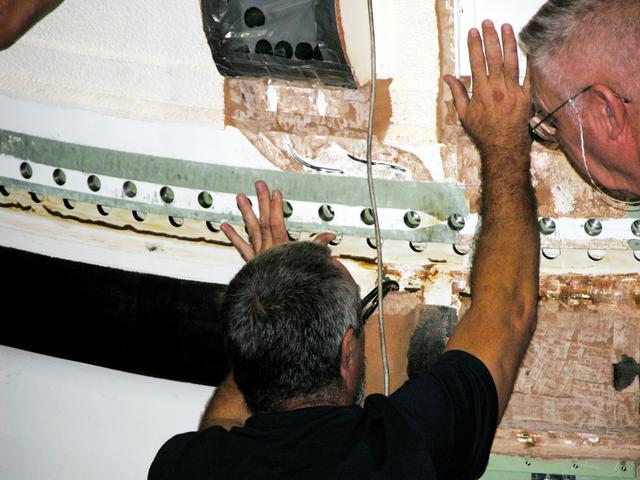
KENNEDY SPACE CENTER, FLA. - In the Vehicle Assembly Building, a KSC employee separates the forward assembly (nose cap and frustum) from a solid rocket booster (SRB) after removing the bolts. The destacking is part of time and cycle activities. The SRB was part of the stack on Atlantis originally scheduled for a March 1, 2003, launch on mission STS-114. The SRBs and external tank were demated in February 2003. The mission is now scheduled to occur no earlier than Sept. 12, 2004, on Atlantis.
KSC-03pd3223
KSC | 2003-12-09
Details

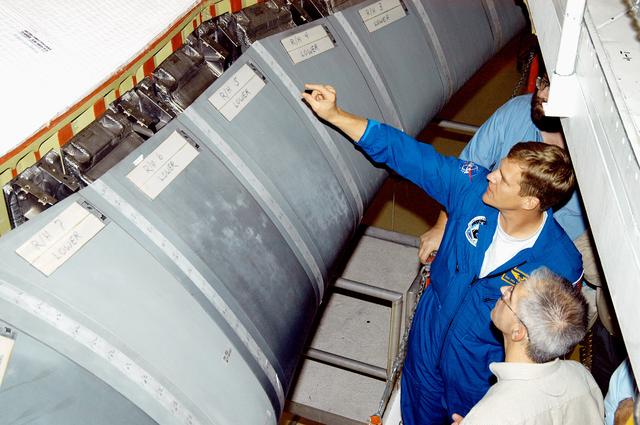
KENNEDY SPACE CENTER, FLA. - In the Orbiter Processing Facility, astronaut Scott E. Parazynski points to the Reinforced Carbon Carbon panels used on the leading edge of the wing of the orbiters. With Parazynski are engineers from around the Agency who are working on improving the RCC panels used on the wing leading edge. The gray carbon composite RCC panels have sufficient strength to withstand the aerodynamic forces experienced during launch and reentry, which can reach as high as 800 pounds per square foot. The operating range of RCC is from minus 250º F to about 3,000º F, the temperature produced by friction with the atmosphere during reentry.
KSC-03pd3211
KSC | 2003-12-08
Details
KENNEDY SPACE CENTER, FLA. - - In the Orbiter Processing Facility astronaut Danny Olivas listens to Greg Grantham (left) talking about the Reinforced Carbon Carbon panels used on the leading edge of the wing of the orbiters. Behind Olivas are engineers from around the Agency who are working on improving the RCC panels used on the wing leading edge. The gray carbon composite RCC panels have sufficient strength to withstand the aerodynamic forces experienced during launch and reentry, which can reach as high as 800 pounds per square foot. The operating range of RCC is from minus 250º F to about 3,000º F, the temperature produced by friction with the atmosphere during reentry.
KSC-03pd3208
KSC | 2003-12-08
Details
KENNEDY SPACE CENTER, FLA. - In the Orbiter Processing Facility, astronaut Michael E. Lopez-Alegria looks at the Reinforced Carbon Carbon panels used on the leading edge of the wing of the orbiters. He and engineers from around the Agency are on a fact-finding tour for improving the RCC panels used on the wing leading edge. The gray carbon composite RCC panels have sufficient strength to withstand the aerodynamic forces experienced during launch and reentry, which can reach as high as 800 pounds per square foot. The operating range of RCC is from minus 250º F to about 3,000º F, the temperature produced by friction with the atmosphere during reentry.
KSC-03pd3209
KSC | 2003-12-08
Details
KENNEDY SPACE CENTER, FLA. - In the Orbiter Processing Facility, astronaut Scott E. Parazynski discusses the Reinforced Carbon Carbon panels used on the leading edge of the wing of the orbiters. With him are engineers from around the Agency who are working on improving the RCC panels used on the wing leading edge. The gray carbon composite RCC panels have sufficient strength to withstand the aerodynamic forces experienced during launch and reentry, which can reach as high as 800 pounds per square foot. The operating range of RCC is from minus 250º F to about 3,000º F, the temperature produced by friction with the atmosphere during reentry.
KSC-03pd3210
KSC | 2003-12-08
Details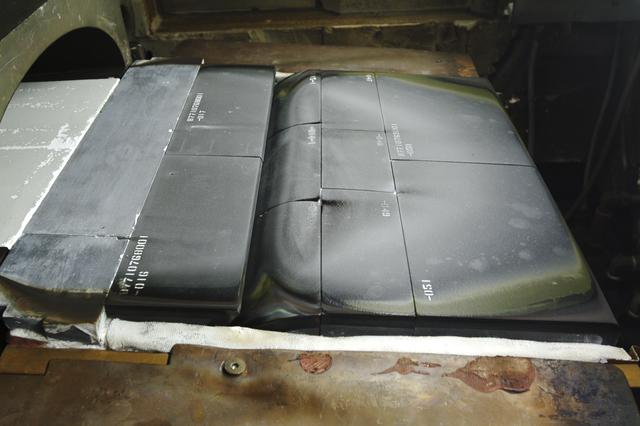







KENNEDY SPACE CENTER, FLA. - Workers prepare to tow the Space Shuttle orbiter Atlantis from the Orbiter Processing Facility (OPF) to the Vehicle Assembly Building (VAB). The move will allow work to be performed in the OPF that can only be accomplished while the bay is empty. Work scheduled in the processing facility includes annual validation of the bay's cranes, work platforms, lifting mechanisms, and jack stands. Atlantis will remain in the VAB for about 10 days, then return to the OPF as work resumes to prepare it for launch in September 2004 on the first return-to-flight mission, STS-114.
KSC-03pd3191
KSC | 2003-12-05
Details
KENNEDY SPACE CENTER, FLA. - Workers back the Space Shuttle orbiter Atlantis out of the Orbiter Processing Facility (OPF) for its move to the Vehicle Assembly Building (VAB). The move will allow work to be performed in the OPF that can only be accomplished while the bay is empty. Work scheduled in the processing facility includes annual validation of the bay's cranes, work platforms, lifting mechanisms, and jack stands. Atlantis will remain in the VAB for about 10 days, then return to the OPF as work resumes to prepare it for launch in September 2004 on the first return-to-flight mission, STS-114.
KSC-03pd3199
KSC | 2003-12-05
Details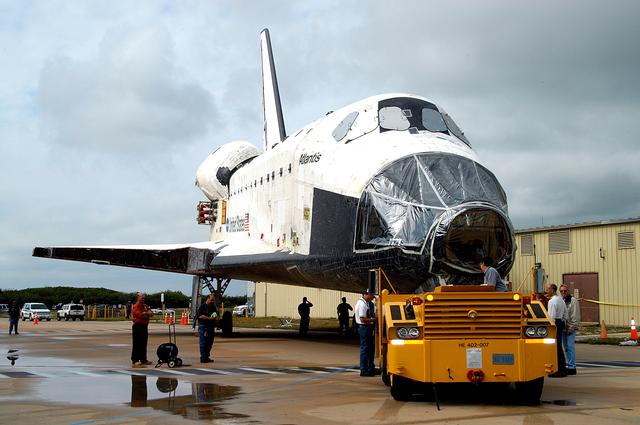
KENNEDY SPACE CENTER, FLA. - The Space Shuttle orbiter Atlantis is towed from the Orbiter Processing Facility (OPF) to the Vehicle Assembly Building (VAB). The move will allow work to be performed in the OPF that can only be accomplished while the bay is empty. Work scheduled in the processing facility includes annual validation of the bay's cranes, work platforms, lifting mechanisms, and jack stands. Atlantis will remain in the VAB for about 10 days, then return to the OPF as work resumes to prepare it for launch in September 2004 on the first return-to-flight mission, STS-114.
KSC-03pd3194
KSC | 2003-12-05
Details
KENNEDY SPACE CENTER, FLA. - The Space Shuttle orbiter Atlantis backs out of the Orbiter Processing Facility (OPF) for its move to the Vehicle Assembly Building (VAB). The move will allow work to be performed in the OPF that can only be accomplished while the bay is empty. Work scheduled in the processing facility includes annual validation of the bay's cranes, work platforms, lifting mechanisms, and jack stands. Atlantis will remain in the VAB for about 10 days, then return to the OPF as work resumes to prepare it for launch in September 2004 on the first return-to-flight mission, STS-114.
KSC-03pd3192
KSC | 2003-12-05
Details
KENNEDY SPACE CENTER, FLA. - Workers monitor the Space Shuttle orbiter Atlantis as it is towed from the Orbiter Processing Facility (OPF) to the Vehicle Assembly Building (VAB). The move will allow work to be performed in the OPF that can only be accomplished while the bay is empty. Work scheduled in the processing facility includes annual validation of the bay's cranes, work platforms, lifting mechanisms, and jack stands. Atlantis will remain in the VAB for about 10 days, then return to the OPF as work resumes to prepare it for launch in September 2004 on the first return-to-flight mission, STS-114.
KSC-03pd3195
KSC | 2003-12-05
Details
KENNEDY SPACE CENTER, FLA. - The Space Shuttle orbiter Atlantis approaches the Vehicle Assembly Building (VAB) high bay 4. It is being towed from the Orbiter Processing Facility (OPF) to allow work to be performed in the bay that can only be accomplished while it is empty. Work scheduled in the processing facility includes annual validation of the bay's cranes, work platforms, lifting mechanisms, and jack stands. Atlantis will remain in the VAB for about 10 days, then return to the OPF as work resumes to prepare it for launch in September 2004 on the first return-to-flight mission, STS-114.
KSC-03pd3207
KSC | 2003-12-05
Details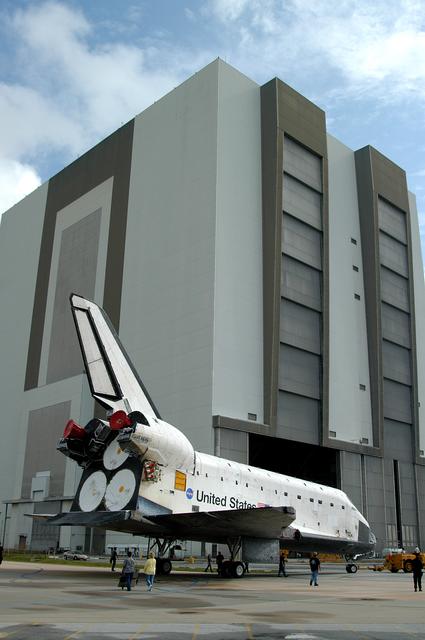
KENNEDY SPACE CENTER, FLA. - The Space Shuttle orbiter Atlantis nears the Vehicle Assembly Building (VAB). It is being towed from the Orbiter Processing Facility (OPF) to allow work to be performed in the bay that can only be accomplished while it is empty. Work scheduled in the processing facility includes annual validation of the bay's cranes, work platforms, lifting mechanisms, and jack stands. Atlantis will remain in the VAB for about 10 days, then return to the OPF as work resumes to prepare it for launch in September 2004 on the first return-to-flight mission, STS-114.
KSC-03pd3197
KSC | 2003-12-05
Details
KENNEDY SPACE CENTER, FLA. - The Space Shuttle orbiter Atlantis is turned into position outside the Orbiter Processing Facility (OPF) for its tow to the Vehicle Assembly Building (VAB). The move will allow work to be performed in the OPF that can only be accomplished while the bay is empty. Work scheduled in the processing facility includes annual validation of the bay's cranes, work platforms, lifting mechanisms, and jack stands. Atlantis will remain in the VAB for about 10 days, then return to the OPF as work resumes to prepare it for launch in September 2004 on the first return-to-flight mission, STS-114.
KSC-03pd3193
KSC | 2003-12-05
Details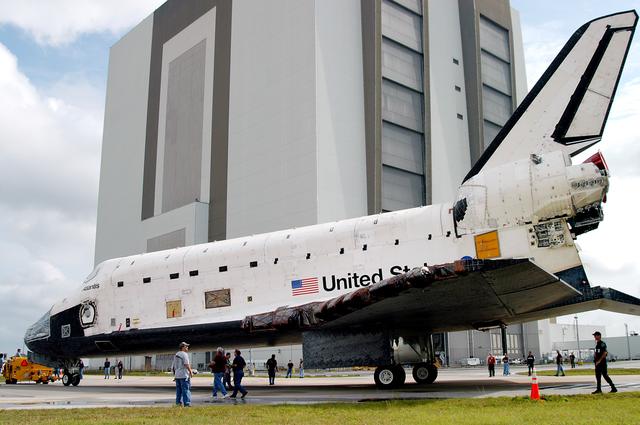
KENNEDY SPACE CENTER, FLA. - The Space Shuttle orbiter Atlantis approaches the Vehicle Assembly Building (VAB). It is being towed from the Orbiter Processing Facility (OPF) to allow work to be performed in the bay that can only be accomplished while it is empty. Work scheduled in the processing facility includes annual validation of the bay's cranes, work platforms, lifting mechanisms, and jack stands. Atlantis will remain in the VAB for about 10 days, then return to the OPF as work resumes to prepare it for launch in September 2004 on the first return-to-flight mission, STS-114.
KSC-03pd3196
KSC | 2003-12-05
Details
KENNEDY SPACE CENTER, FLA. - The Space Shuttle orbiter Atlantis is reflected in a rain puddle as it is towed from the Orbiter Processing Facility (OPF) to the Vehicle Assembly Building (VAB). The move will allow work to be performed in the OPF that can only be accomplished while the bay is empty. Work scheduled in the processing facility includes annual validation of the bay's cranes, work platforms, lifting mechanisms, and jack stands. Atlantis will remain in the VAB for about 10 days, then return to the OPF as work resumes to prepare it for launch in September 2004 on the first return-to-flight mission, STS-114.
KSC-03pd3200
KSC | 2003-12-05
Details
KENNEDY SPACE CENTER, FLA. - The Space Shuttle orbiter Atlantis moves into high bay 4 of the Vehicle Assembly Building (VAB). It was towed from the Orbiter Processing Facility (OPF) to allow work to be performed in the bay that can only be accomplished while it is empty. Work scheduled in the processing facility includes annual validation of the bay's cranes, work platforms, lifting mechanisms, and jack stands. Atlantis will remain in the VAB for about 10 days, then return to the OPF as work resumes to prepare it for launch in September 2004 on the first return-to-flight mission, STS-114.
KSC-03pd3202
KSC | 2003-12-05
Details