NASA Media Archive

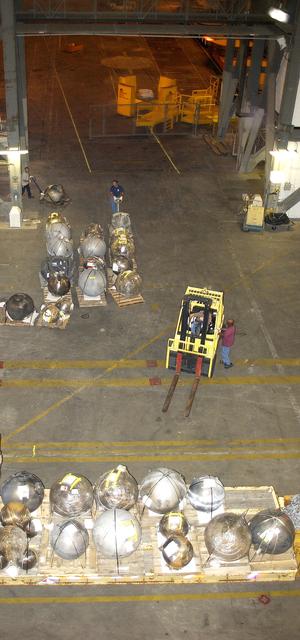
KENNEDY SPACE CENTER, FLA. - Astronaut Pam Melroy speaks to members of the Columbia Reconstruction Team during transfer of debris from the Columbia Debris Hangar to its permanent storage site in the Vehicle Assembly Building. More than 83,000 pieces of debris were shipped to KSC during search and recovery efforts in East Texas. That represents about 38 percent of the dry weight of Columbia, equaling almost 85,000 pounds.
KSC-03pd2625
KSC | 2003-09-15
Details
KENNEDY SPACE CENTER, FLA. - Pieces of Columbia debris are offloaded from a flatbed truck in the transfer aisle of the Vehicle Assembly Building (VAB). The debris is being moved from the Columbia Debris Hangar to the VAB for permanent storage. More than 83,000 pieces of debris were shipped to KSC during search and recovery efforts in East Texas. That represents about 38 percent of the dry weight of Columbia, equaling almost 85,000 pounds.
KSC-03pd2617
KSC | 2003-09-15
Details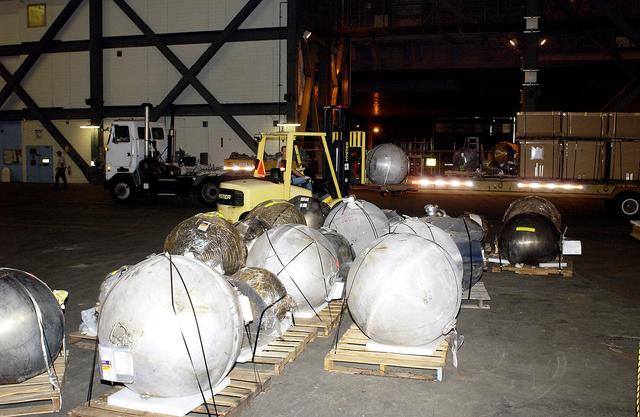
KENNEDY SPACE CENTER, FLA. - Pieces of debris of Space Shuttle Columbia are offloaded from a flatbed truck in the transfer aisle of the Vehicle Assembly Building (VAB). The debris is being moved from the Columbia Debris Hangar to the VAB for permanent storage. More than 83,000 pieces of debris were shipped to KSC during search and recovery efforts in East Texas. That represents about 38 percent of the dry weight of Columbia, equaling almost 85,000 pounds.
KSC-03pd2619
KSC | 2003-09-15
Details
KENNEDY SPACE CENTER, FLA. - Astronaut Pam Melroy speaks to members of the Columbia Reconstruction Team during transfer of debris from the Columbia Debris Hangar to its permanent storage site in the Vehicle Assembly Building. More than 83,000 pieces of debris were shipped to KSC during search and recovery efforts in East Texas. That represents about 38 percent of the dry weight of Columbia, equaling almost 85,000 pounds.
KSC-03pd2624
KSC | 2003-09-15
Details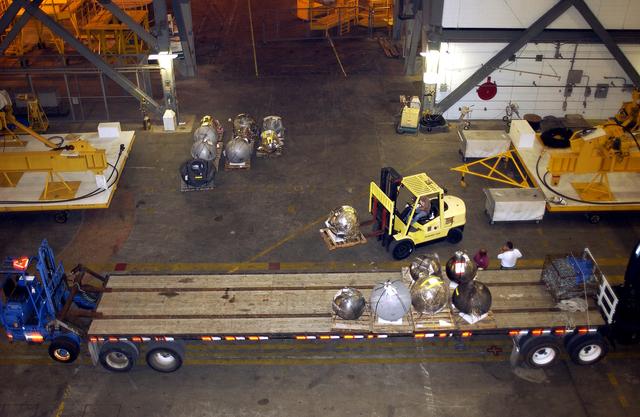
KENNEDY SPACE CENTER, FLA. - Pieces of debris of Space Shuttle Columbia are offloaded from a flatbed truck in the transfer aisle of the Vehicle Assembly Building (VAB). The debris is being moved from the Columbia Debris Hangar to the VAB for permanent storage. More than 83,000 pieces of debris were shipped to KSC during search and recovery efforts in East Texas. That represents about 38 percent of the dry weight of Columbia, equaling almost 85,000 pounds.
KSC-03pd2616
KSC | 2003-09-15
Details
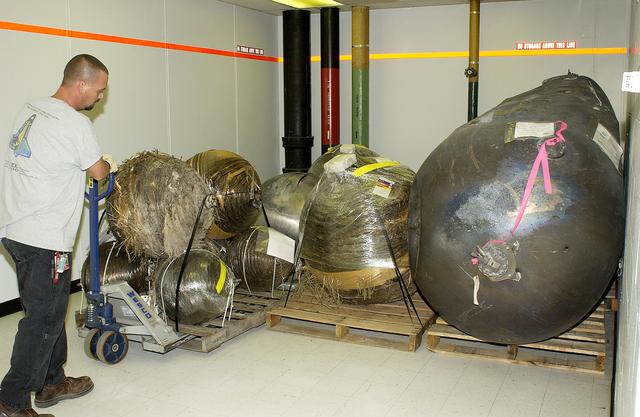
KENNEDY SPACE CENTER, FLA. - A worker moves some of the Columbia debris to its storage site in the Vehicle Assembly Building (VAB). The debris is being transferred from the Columbia Debris Hangar to the VAB for permanent storage. More than 83,000 pieces of debris were shipped to KSC during search and recovery efforts in East Texas. That represents about 38 percent of the dry weight of Columbia, equaling almost 85,000 pounds.
KSC-03pd2623
KSC | 2003-09-15
Details
KENNEDY SPACE CENTER, FLA. - Some of the Columbia debris inside the Columbia Debris Hangar is being moved out and placed on a flatbed truck (seen in the background) for transfer to the Vehicle Assembly Building for permanent storage. More than 83,000 pieces of debris were shipped to KSC during search and recovery efforts in East Texas. That represents about 38 percent of the dry weight of Columbia, equaling almost 85,000 pounds.
KSC-03pd2610
KSC | 2003-09-15
Details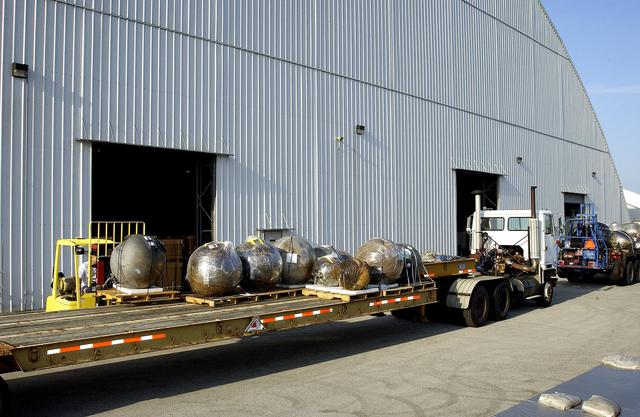
KENNEDY SPACE CENTER, FLA. - At the Columbia Debris Hangar, some of the debris of Space Shuttle Columbia is moved onto a flatbed truck for transfer to the Vehicle Assembly Building for permanent storage. More than 83,000 pieces of debris were shipped to KSC during search and recovery efforts in East Texas. That represents about 38 percent of the dry weight of Columbia, equaling almost 85,000 pounds.
KSC-03pd2612
KSC | 2003-09-15
Details
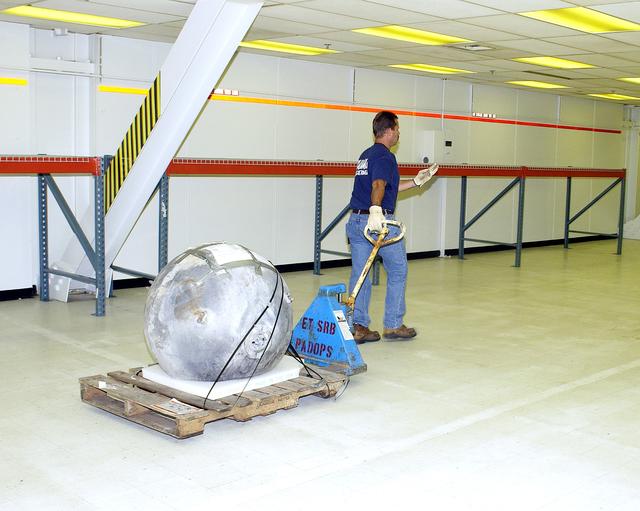
KENNEDY SPACE CENTER, FLA. - A worker moves some of the Columbia debris to its storage site in the Vehicle Assembly Building (VAB). The debris is being transferred from the Columbia Debris Hangar to the VAB for permanent storage. More than 83,000 pieces of debris were shipped to KSC during search and recovery efforts in East Texas. That represents about 38 percent of the dry weight of Columbia, equaling almost 85,000 pounds.
KSC-03pd2620
KSC | 2003-09-15
Details
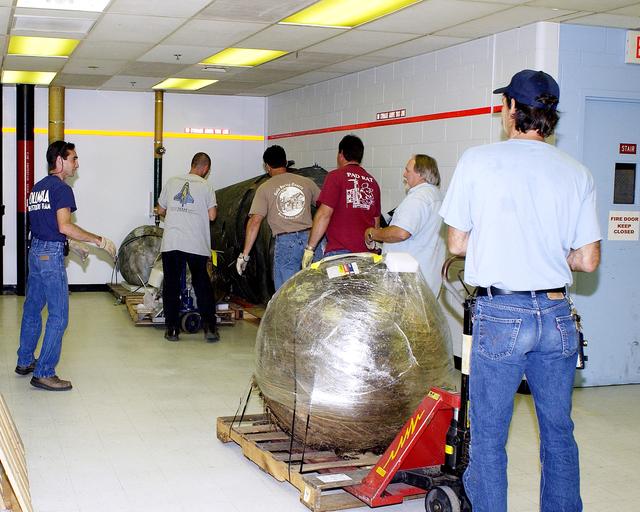
KENNEDY SPACE CENTER, FLA. - Workers move some of the Columbia debris to its storage site in the Vehicle Assembly Building (VAB). The debris is being transferred from the Columbia Debris Hangar to the VAB for permanent storage. More than 83,000 pieces of debris were shipped to KSC during search and recovery efforts in East Texas. That represents about 38 percent of the dry weight of Columbia, equaling almost 85,000 pounds.
KSC-03pd2621
KSC | 2003-09-15
Details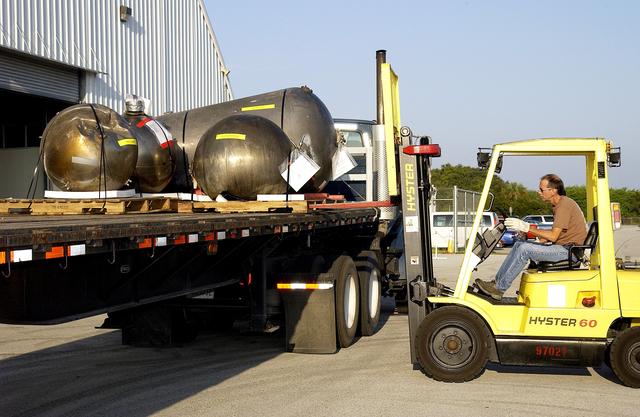
KENNEDY SPACE CENTER, FLA. - Some of the Columbia debris is loaded onto a flatbed truck outside the Columbia Debris Hangar. The debris is being transferred to the Vehicle Assembly Building for permanent storage. More than 83,000 pieces of debris were shipped to KSC during search and recovery efforts in East Texas. That represents about 38 percent of the dry weight of Columbia, equaling almost 85,000 pounds.
KSC-03pd2607
KSC | 2003-09-15
Details
KENNEDY SPACE CENTER, FLA. - Jim Comer, United Space Alliance project leader for Columbia reconstruction, speaks to members of the Columbia Reconstruction Team during transfer of debris from the Columbia Debris Hangar to its permanent storage site in the Vehicle Assembly Building. More than 83,000 pieces of debris were shipped to KSC during search and recovery efforts in East Texas. That represents about 38 percent of the dry weight of Columbia, equaling almost 85,000 pounds.
KSC-03pd2609
KSC | 2003-09-15
Details


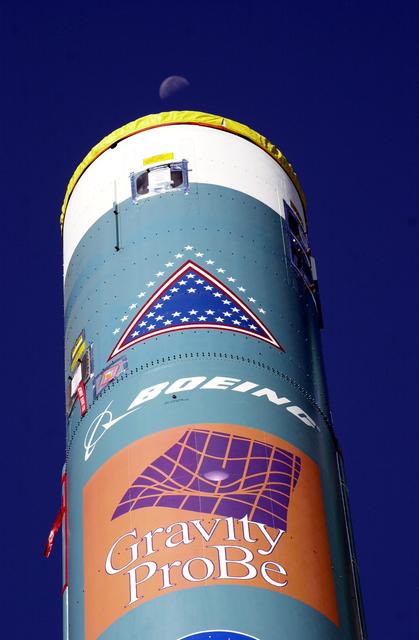
VANDENBERG AFB, CALIF. - Logos identify the mission of this Delta II rocket that will launch the Gravity Probe B experiment, developed by Stanford University, Lockheed Martin and NASA’s Marshall Space Flight Center. The Gravity Probe B will launch a payload of four gyroscopes into low-Earth polar orbit to test two extraordinary predictions of Albert Einstein’s general theory of relativity: the geodetic effect (how space and time are warped by the presence of the Earth) and frame dragging (how Earth’s rotation drags space and time around with it). Once in orbit, for 18 months each gyroscope’s spin axis will be monitored as it travels through local spacetime, observing and measuring these effects. The targeted launch date is Dec. 6, 2003.
KSC-03pd2880
KSC | 2003-09-12
Details
VANDENBERG AFB, CALIF. - In the spacecraft processing facility on North Vandenberg Air Force Base, the Gravity Probe B experiment sits on an assembly and test stand where it has been subject to various prelaunch testing. The Gravity Probe B will launch a payload of four gyroscopes into low-Earth polar orbit to test two extraordinary predictions of Albert Einstein’s general theory of relativity: the geodetic effect (how space and time are warped by the presence of the Earth) and frame dragging (how Earth’s rotation drags space and time around with it). Once in orbit, for 18 months each gyroscope’s spin axis will be monitored as it travels through local spacetime, observing and measuring these effects. The experiment was developed by Stanford University, Lockheed Martin and NASA’s Marshall Space Flight Center. The targeted launch date is Dec. 6, 2003.
KSC-03pd2867
KSC | 2003-09-12
Details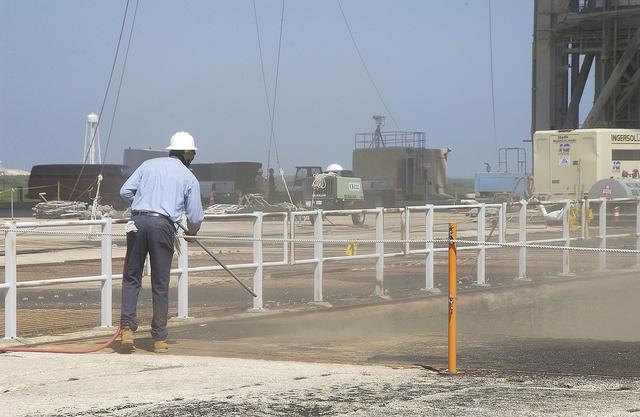
KENNEDY SPACE CENTER, FLA. - A worker sandblasts the surface behind the Mobile Launcher Platform on Launch Pad 39A . Routine maintenance includes sandblasting and repainting as preventive means to minimize corrosion.
KSC-03pd2662
KSC | 2003-09-12
Details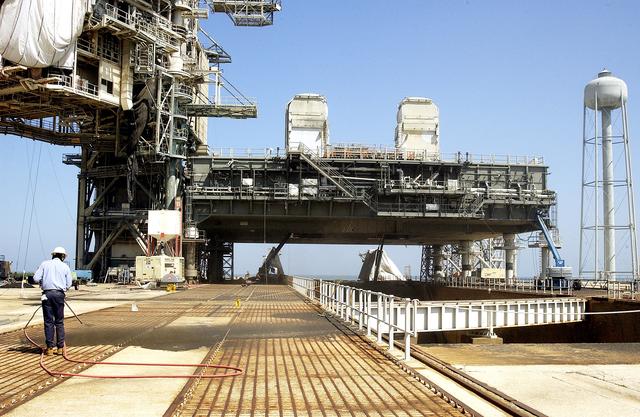
KENNEDY SPACE CENTER, FLA. - A worker sandblasts the surface behind the Mobile Launcher Platform on Launch Pad 39A . Routine maintenance includes sandblasting and repainting as preventive means to minimize corrosion.
KSC-03pd2663
KSC | 2003-09-12
Details
VANDENBERG AFB, CALIF. - The interstage of the Delta II launch vehicle for the Gravity Probe B experiment is moved into the mobile service tower on Space Launch Complex 2, Vandenberg Air Force Base, Calif., where it will be mated with the second stage. The Gravity Probe B will launch a payload of four gyroscopes into low-Earth polar orbit to test two extraordinary predictions of Albert Einstein’s general theory of relativity: the geodetic effect (how space and time are warped by the presence of the Earth) and frame dragging (how Earth’s rotation drags space and time around with it). Once in orbit, for 18 months each gyroscope’s spin axis will be monitored as it travels through local spacetime, observing and measuring these effects. The experiment was developed by Stanford University, Lockheed Martin and NASA’s Marshall Space Flight Center. The targeted launch date is Dec. 6, 2003.
KSC-03pd2876
KSC | 2003-09-12
Details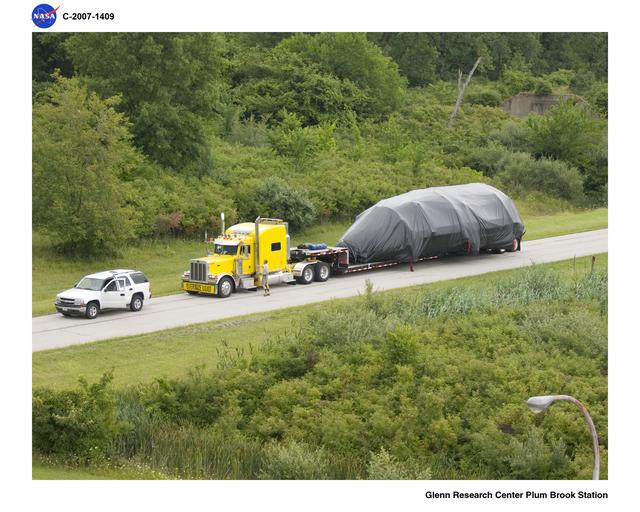
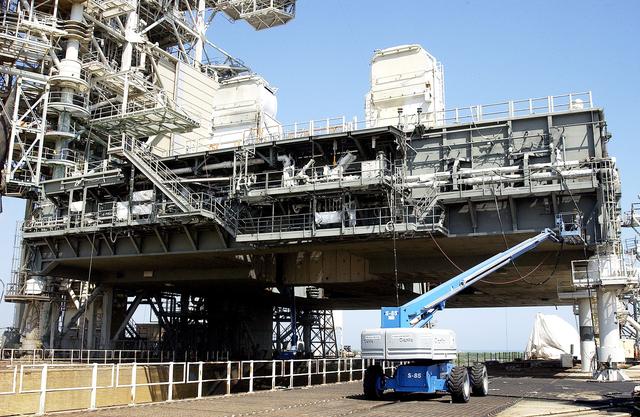
KENNEDY SPACE CENTER, FLA. - Sandblasting begins on the Mobile Launcher Platform on Launch Pad 39A to remove corrosion before repainting. Routine maintenance includes sandblasting and repainting as preventive means to minimize corrosion.
KSC-03pd2657
KSC | 2003-09-12
Details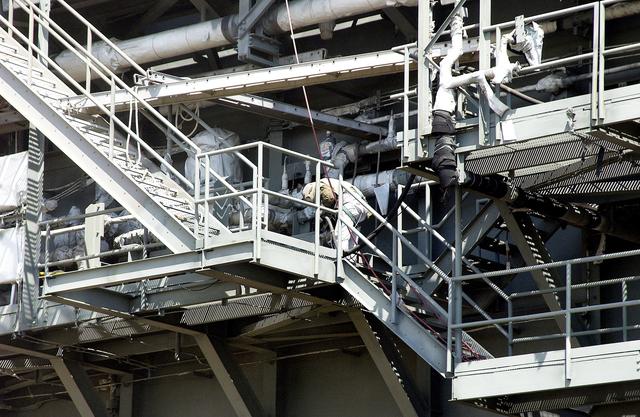
KENNEDY SPACE CENTER, FLA. - Workers, covered in protective clothing and breathing apparatus, continue sandblasting on the Mobile Launcher Platform on Launch Pad 39A to remove corrosion before repainting. Routine maintenance includes sandblasting and repainting as preventive means to minimize corrosion.
KSC-03pd2658
KSC | 2003-09-12
Details
VANDENBERG AFB, CALIF. - The second stage of the Delta II launch vehicle for the Gravity Probe B experiment arrives at the mobile service tower on Space Launch Complex 2, Vandenberg Air Force Base, Calif. The Gravity Probe B will launch a payload of four gyroscopes into low-Earth polar orbit to test two extraordinary predictions of Albert Einstein’s general theory of relativity: the geodetic effect (how space and time are warped by the presence of the Earth) and frame dragging (how Earth’s rotation drags space and time around with it). Once in orbit, for 18 months each gyroscope’s spin axis will be monitored as it travels through local spacetime, observing and measuring these effects. The experiment was developed by Stanford University, Lockheed Martin and NASA’s Marshall Space Flight Center. The targeted launch date is Dec. 6, 2003.
KSC-03pd2882
KSC | 2003-09-12
Details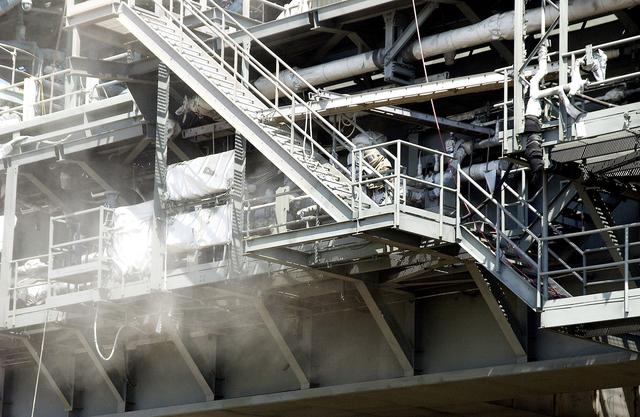
KENNEDY SPACE CENTER, FLA. - Workers, covered in protective clothing and breathing apparatus, continue sandblasting on the Mobile Launcher Platform on Launch Pad 39A to remove corrosion before repainting. Routine maintenance includes sandblasting and repainting as preventive means to minimize corrosion.
KSC-03pd2659
KSC | 2003-09-12
Details