NASA Media Archive
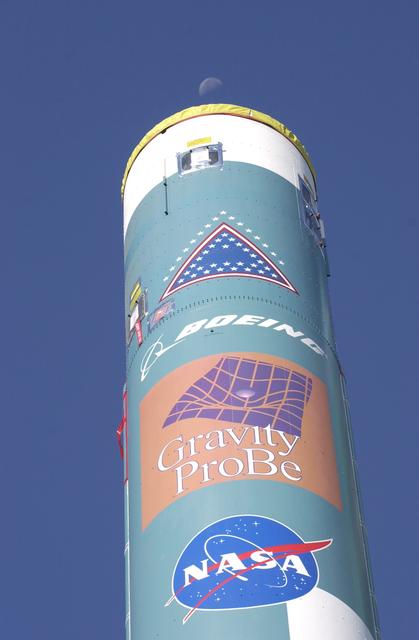
VANDENBERG AFB, CALIF. - Logos identify the mission of this Delta II rocket that will launch the Gravity Probe B experiment, developed by Stanford University, Lockheed Martin and NASA’s Marshall Space Flight Center. The Gravity Probe B will launch a payload of four gyroscopes into low-Earth polar orbit to test two extraordinary predictions of Albert Einstein’s general theory of relativity: the geodetic effect (how space and time are warped by the presence of the Earth) and frame dragging (how Earth’s rotation drags space and time around with it). Once in orbit, for 18 months each gyroscope’s spin axis will be monitored as it travels through local spacetime, observing and measuring these effects. The targeted launch date is Dec. 6, 2003.
KSC-03pd2881
KSC | 2003-09-12
Details
VANDENBERG AFB, CALIF. - A worker in the spacecraft processing facility on North Vandenberg Air Force Base checks the Gravity Probe B experiment during prelaunch testing. The Gravity Probe B will launch a payload of four gyroscopes into low-Earth polar orbit to test two extraordinary predictions of Albert Einstein’s general theory of relativity: the geodetic effect (how space and time are warped by the presence of the Earth) and frame dragging (how Earth’s rotation drags space and time around with it). Once in orbit, for 18 months each gyroscope’s spin axis will be monitored as it travels through local spacetime, observing and measuring these effects. The experiment was developed by Stanford University, Lockheed Martin and NASA’s Marshall Space Flight Center. The targeted launch date is Dec. 6, 2003.
KSC-03pd2868
KSC | 2003-09-12
Details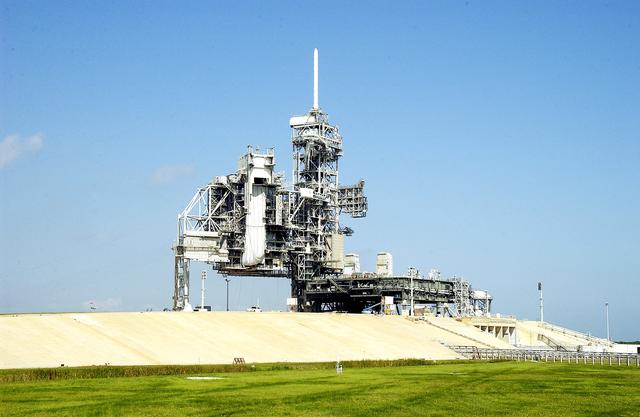
KENNEDY SPACE CENTER, FLA. - Launch Pad 39A undergoes sandblasting of its metal structures and surfaces. Routine maintenance includes sandblasting and repainting as preventive means to minimize corrosion.
KSC-03pd2656
KSC | 2003-09-12
Details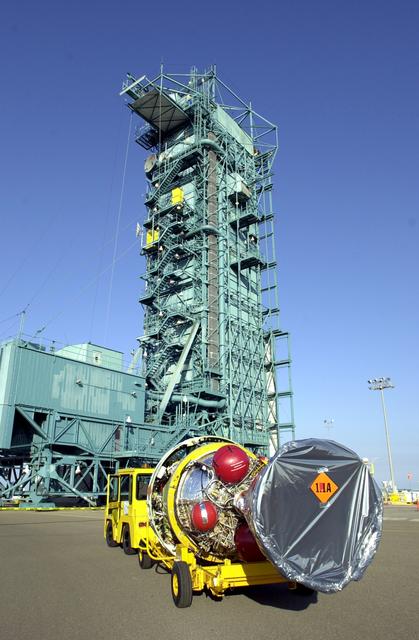
VANDENBERG AFB, CALIF. - The second stage of the Delta II launch vehicle for the Gravity Probe B experiment arrives at the mobile service tower on Space Launch Complex 2, Vandenberg Air Force Base, Calif. The Gravity Probe B will launch a payload of four gyroscopes into low-Earth polar orbit to test two extraordinary predictions of Albert Einstein’s general theory of relativity: the geodetic effect (how space and time are warped by the presence of the Earth) and frame dragging (how Earth’s rotation drags space and time around with it). Once in orbit, for 18 months each gyroscope’s spin axis will be monitored as it travels through local spacetime, observing and measuring these effects. The experiment was developed by Stanford University, Lockheed Martin and NASA’s Marshall Space Flight Center. The targeted launch date is Dec. 6, 2003.
KSC-03pd2878
KSC | 2003-09-12
Details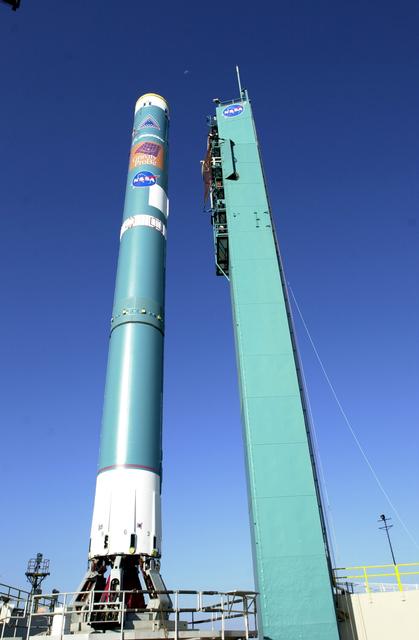
VANDENBERG AFB, CALIF. - The mobile service tower on Space Launch Complex 2, Vandenberg Air Force Base, Calif., rolls back from the Delta II rocket that will launch the Gravity Probe B experiment. The Gravity Probe B will launch a payload of four gyroscopes into low-Earth polar orbit to test two extraordinary predictions of Albert Einstein’s general theory of relativity: the geodetic effect (how space and time are warped by the presence of the Earth) and frame dragging (how Earth’s rotation drags space and time around with it). Once in orbit, for 18 months each gyroscope’s spin axis will be monitored as it travels through local spacetime, observing and measuring these effects. The experiment was developed by Stanford University, Lockheed Martin and NASA’s Marshall Space Flight Center. The targeted launch date is Dec. 6, 2003.
KSC-03pd2879
KSC | 2003-09-12
Details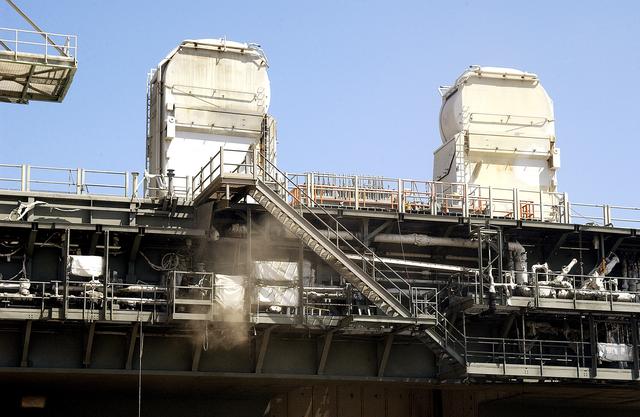
KENNEDY SPACE CENTER, FLA. - On Launch Pad 39A, clouds of dust float away from the Mobile Launcher Platform, which is undergoing sandblasting to remove corrosion before repainting. Routine maintenance includes sandblasting and repainting as preventive means to minimize corrosion.
KSC-03pd2665
KSC | 2003-09-12
Details
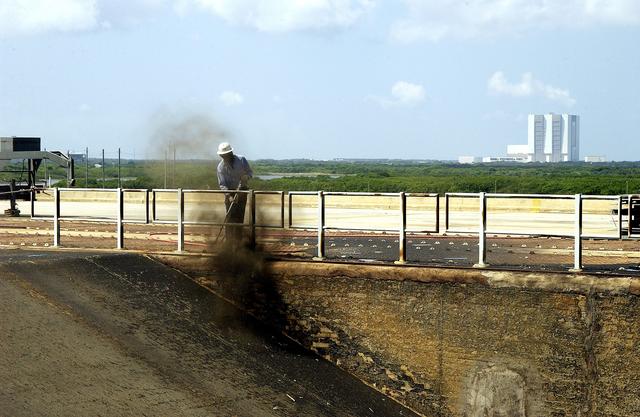
KENNEDY SPACE CENTER, FLA. - A worker sandblasts the surface behind the Mobile Launcher Platform on Launch Pad 39A . Routine maintenance includes sandblasting and repainting as preventive means to minimize corrosion.
KSC-03pd2660
KSC | 2003-09-12
Details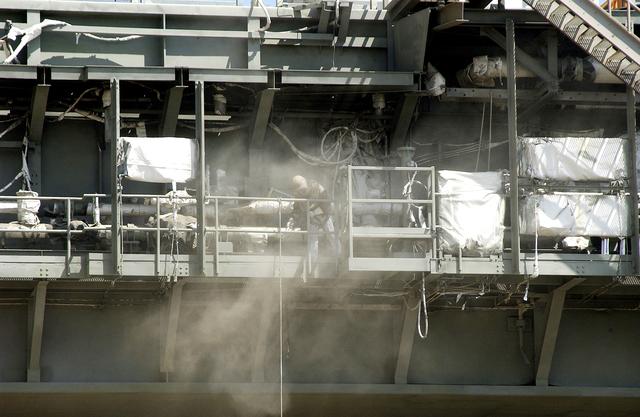
KENNEDY SPACE CENTER, FLA. - Workers, covered in protective clothing and breathing apparatus, continue sandblasting on the Mobile Launcher Platform on Launch Pad 39A to remove corrosion before repainting. Routine maintenance includes sandblasting and repainting as preventive means to minimize corrosion.
KSC-03pd2664
KSC | 2003-09-12
Details
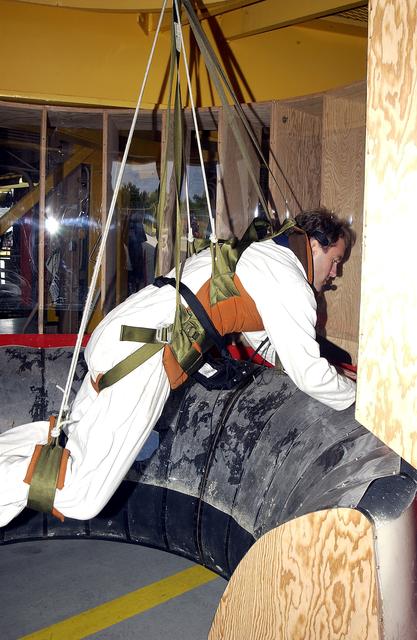
KENNEDY SPACE CENTER, FLA. - Jeff Thon, an SRB mechanic with United Space Alliance, tests a technique for vertical solid rocket booster propellant grain inspection. The inspection of segments is required as part of safety analysis.
KSC-03pd2653
KSC | 2003-09-11
Details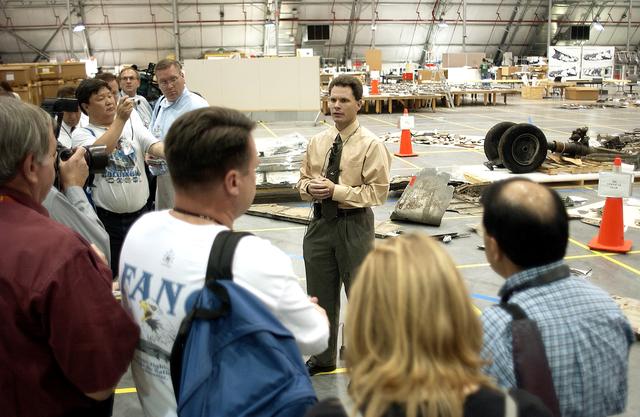
KENNEDY SPACE CENTER, FLA. - In the Columbia Debris Hangar, Scott Thurston, NASA vehicle flow manager, addresses the media about efforts to pack the debris stored in the Columbia Debris Hangar. More than 83,000 pieces of debris were shipped to KSC during search and recovery efforts in East Texas. That represents about 38 percent of the dry weight of Columbia, equaling almost 85,000 pounds. An area of the Vehicle Assembly Building is being prepared to store the debris permanently.
KSC-03pd2569
KSC | 2003-09-11
Details
KENNEDY SPACE CENTER, FLA. - Seen from below and through a solid rocket booster segment mockup, Jeff Thon, an SRB mechanic with United Space Alliance, tests the feasibility of a vertical solid rocket booster propellant grain inspection technique. The inspection of segments is required as part of safety analysis.
KSC-03pd2651
KSC | 2003-09-11
Details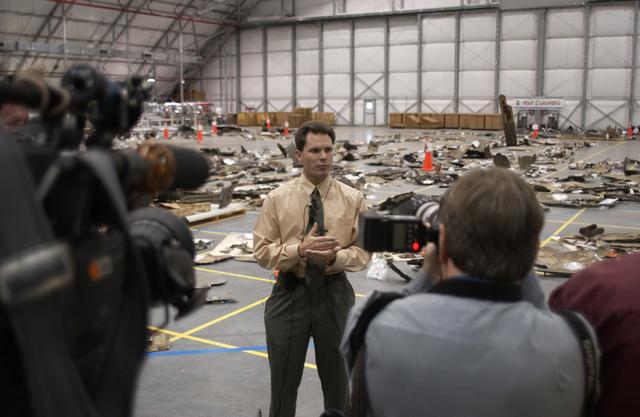
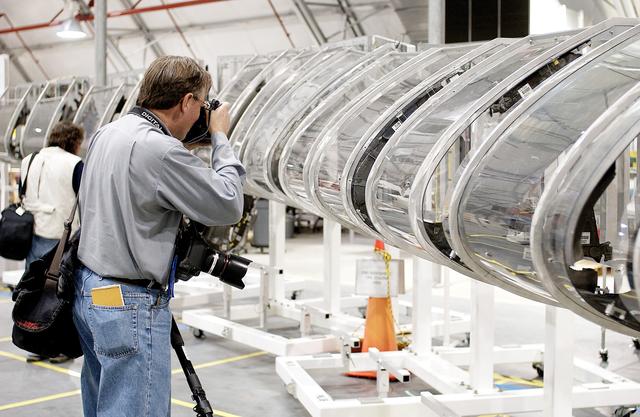
KENNEDY SPACE CENTER, FLA. - During a media tour of the Columbia Debris Hangar, a photographer gets a close-up of the mockup of the leading edge of Columbia’s left wing. About 83,000 pieces of debris were shipped to KSC from search and recovery efforts in East Texas. About 83,000 pieces of debris from Columbia were shipped to KSC, which represents about 38 percent of the dry weight of Columbia, equaling almost 85,000 pounds. The debris is being packaged for storage in an area of the Vehicle Assembly Building.
KSC-03pd2576
KSC | 2003-09-11
Details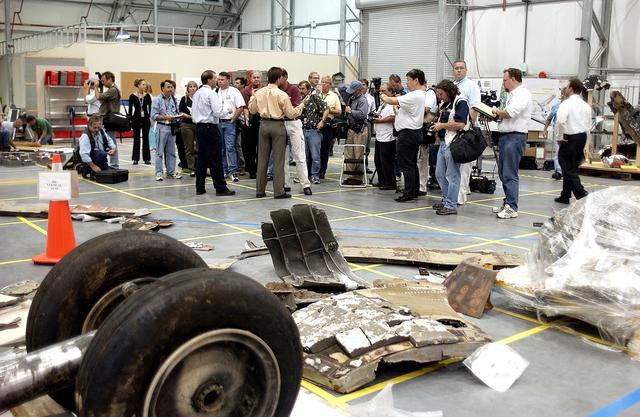
KENNEDY SPACE CENTER, FLA. - The media listen to Scott Thurston, NASA vehicle flow manager, talk about efforts to pack the debris stored in the Columbia Debris Hangar. More than 83,000 pieces of debris were shipped to KSC during search and recovery efforts in East Texas. That represents about 38 percent of the dry weight of Columbia, equaling almost 85,000 pounds. An area of the Vehicle Assembly Building is being prepared to store the debris permanently.
KSC-03pd2568
KSC | 2003-09-11
Details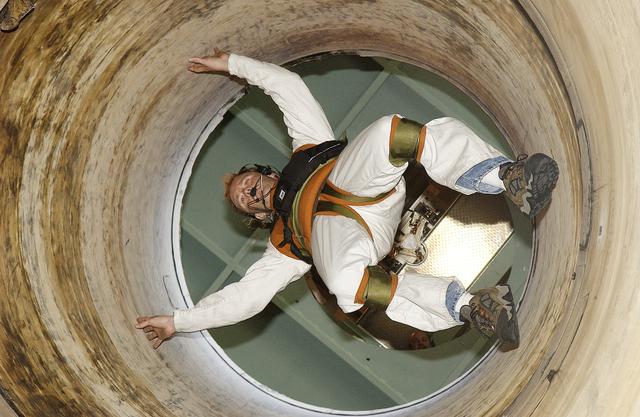
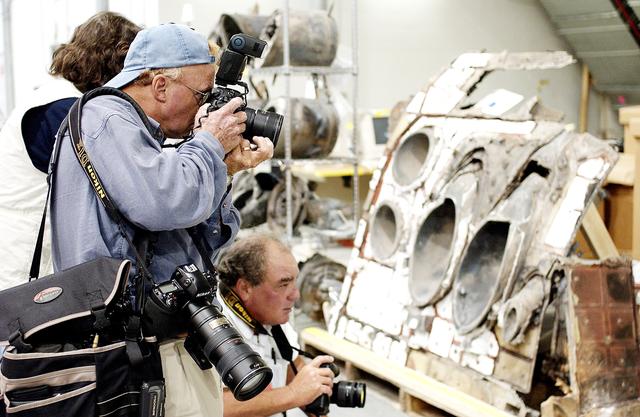
KENNEDY SPACE CENTER, FLA. - During a media tour of the Columbia Debris Hangar, photographers focus on a piece of the debris collected from search and recovery efforts in East Texas. About 83,000 pieces of debris from Columbia were shipped to KSC, which represents about 38 percent of the dry weight of Columbia, equaling almost 85,000 pounds. The debris is being packaged for storage in an area of the Vehicle Assembly Building.
KSC-03pd2579
KSC | 2003-09-11
Details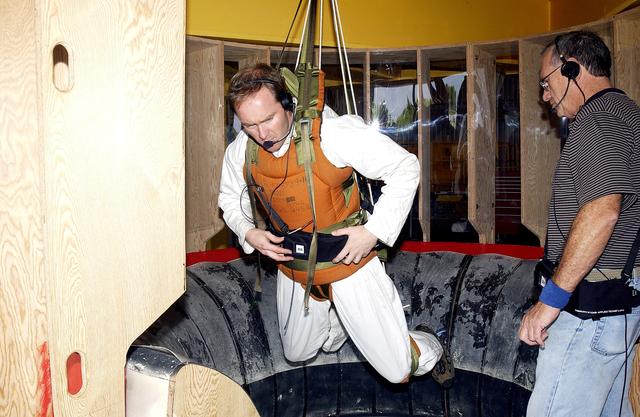
KENNEDY SPACE CENTER, FLA. - Jeff Thon, an SRB mechanic with United Space Alliance, is fitted with a harness to test a vertical solid rocket booster propellant grain inspection technique. Thon will be lowered inside a mockup of two segments of the SRBs. The inspection of segments is required as part of safety analysis.
KSC-03pd2654
KSC | 2003-09-11
Details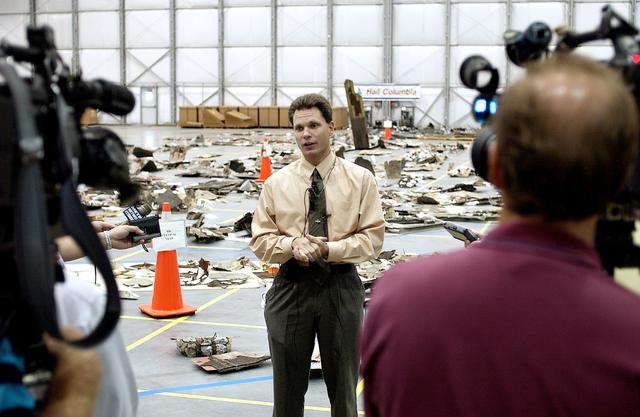
KENNEDY SPACE CENTER, FLA. - In the Columbia Debris Hangar, Scott Thurston, NASA vehicle flow manager, addresses the media about efforts to pack the debris stored in the Columbia Debris Hangar. More than 83,000 pieces of debris were shipped to KSC during search and recovery efforts in East Texas. That represents about 38 percent of the dry weight of Columbia, equaling almost 85,000 pounds. An area of the Vehicle Assembly Building is being prepared to store the debris permanently.
KSC-03pd2573
KSC | 2003-09-11
Details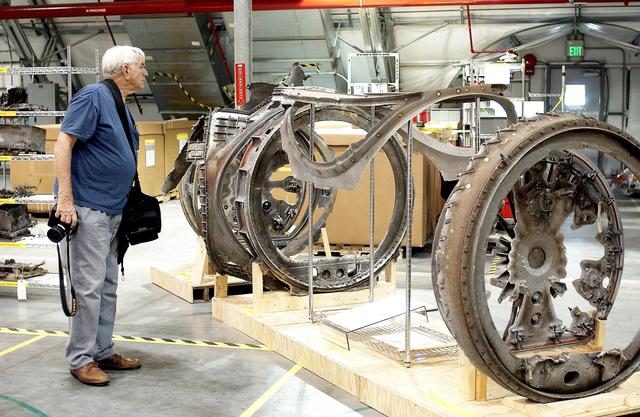
KENNEDY SPACE CENTER, FLA. - During a media tour of the Columbia Debris Hangar, a photographer examines some of the debris collected from search and recovery efforts in East Texas. About 83,000 pieces of debris from Columbia were shipped to KSC, which represents about 38 percent of the dry weight of Columbia, equaling almost 85,000 pounds. The debris is being packaged for storage in an area of the Vehicle Assembly Building.
KSC-03pd2580
KSC | 2003-09-11
Details
KENNEDY SPACE CENTER, FLA. - Seen from below and through a solid rocket booster segment mockup, Jeff Thon, an SRB mechanic with United Space Alliance, tests the feasibility of a vertical solid rocket booster propellant grain inspection technique. The inspection of segments is required as part of safety analysis.
KSC-03pd2650
KSC | 2003-09-11
Details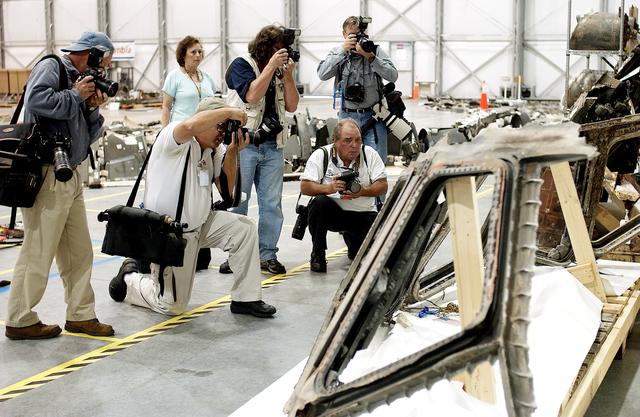
KENNEDY SPACE CENTER, FLA. - During a media tour of the Columbia Debris Hangar, photographers focus on part of the cockpit collected from search and recovery efforts in East Texas. About 83,000 pieces of debris from Columbia were shipped to KSC, which represents about 38 percent of the dry weight of Columbia, equaling almost 85,000 pounds. The debris is being packaged for storage in an area of the Vehicle Assembly Building.
KSC-03pd2578
KSC | 2003-09-11
Details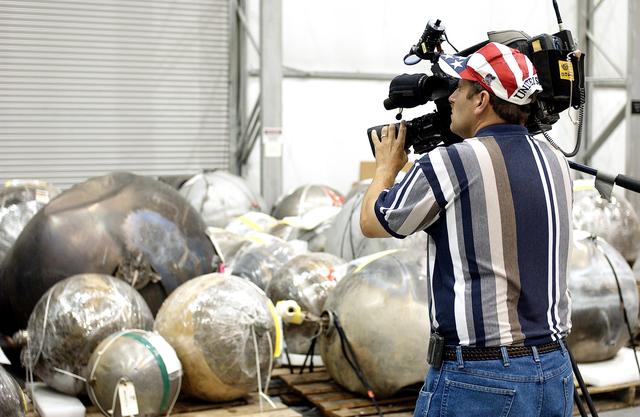
KENNEDY SPACE CENTER, FLA. - During a media tour of the Columbia Debris Hangar, a video cameraman records some of the debris collected from search and recovery efforts in East Texas. About 83,000 pieces of debris from Columbia were shipped to KSC, which represents about 38 percent of the dry weight of Columbia, equaling almost 85,000 pounds. The debris is being packaged for storage in an area of the Vehicle Assembly Building.
KSC-03pd2577
KSC | 2003-09-11
Details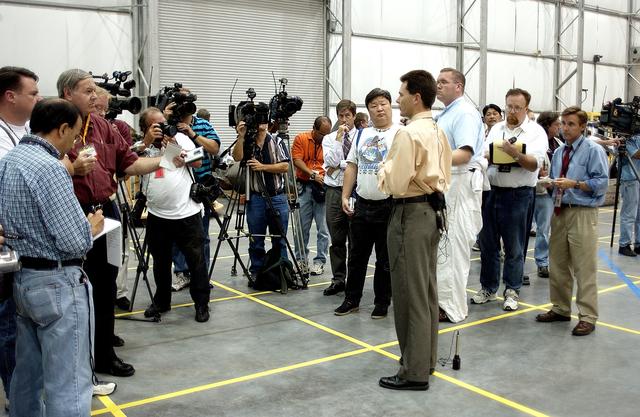
KENNEDY SPACE CENTER, FLA. - In the Columbia Debris Hangar, Scott Thurston, NASA vehicle flow manager, addresses the media about efforts to pack the debris stored in the Columbia Debris Hangar. More than 83,000 pieces of debris were shipped to KSC during search and recovery efforts in East Texas. That represents about 38 percent of the dry weight of Columbia, equaling almost 85,000 pounds. An area of the Vehicle Assembly Building is being prepared to store the debris permanently.
KSC-03pd2572
KSC | 2003-09-11
Details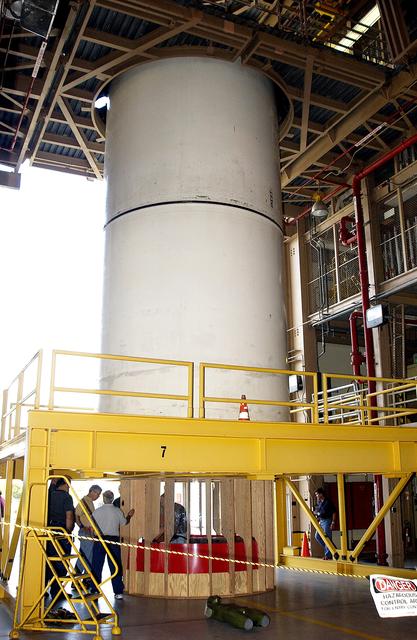
KENNEDY SPACE CENTER, FLA. - At the Rotation, Processing and Surge Facility stand a mockup of two segments of a solid rocket booster (SRB) being used to test the feasibility of a vertical SRB propellant grain inspection, required as part of safety analysis.
KSC-03pd2655
KSC | 2003-09-11
Details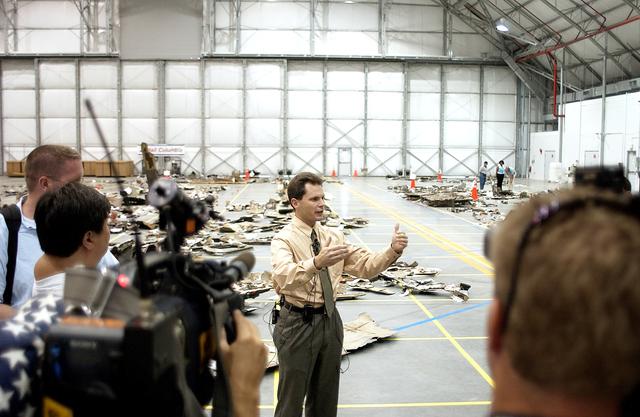
KENNEDY SPACE CENTER, FLA. - In the Columbia Debris Hangar, Scott Thurston, NASA vehicle flow manager, addresses the media about efforts to pack the debris stored in the Columbia Debris Hangar. More than 83,000 pieces of debris were shipped to KSC during search and recovery efforts in East Texas. That represents about 38 percent of the dry weight of Columbia, equaling almost 85,000 pounds. An area of the Vehicle Assembly Building is being prepared to store the debris permanently.
KSC-03pd2570
KSC | 2003-09-11
Details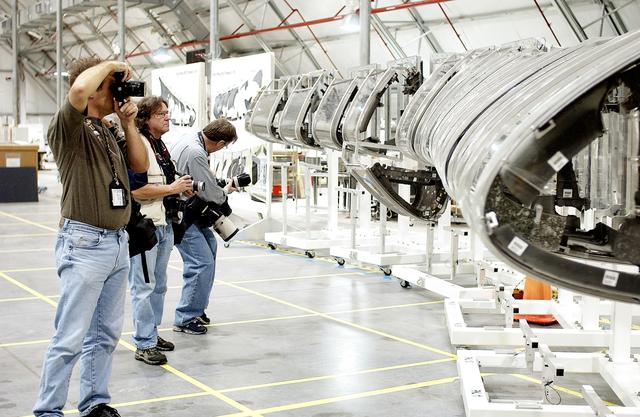
KENNEDY SPACE CENTER, FLA. - During a media tour of the Columbia Debris Hangar, photographers pause at the mockup of the leading edge of Columbia’s left wing. About 83,000 pieces of debris from Columbia were shipped to KSC from search and recovery efforts in East Texas. About 83,000 pieces of debris were shipped to KSC, which represents about 38 percent of the dry weight of Columbia, equaling almost 85,000 pounds. The debris is being packaged for storage in an area of the Vehicle Assembly Building.
KSC-03pd2575
KSC | 2003-09-11
Details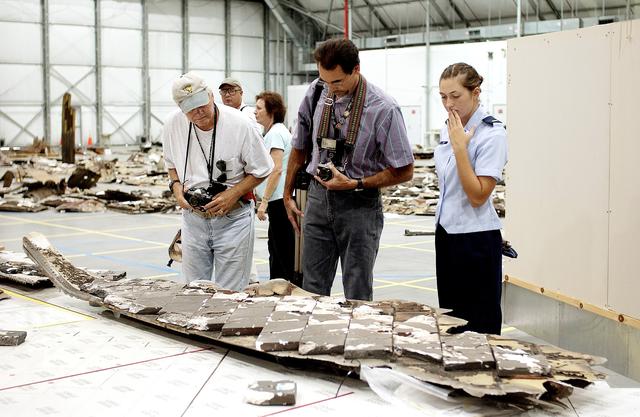
KENNEDY SPACE CENTER, FLA. - During a media tour of the Columbia Debris Hangar, photographers look at pieces of tile collected during search and recovery efforts in East Texas. About 83,000 pieces of debris from Columbia were shipped to KSC, which represents about 38 percent of the dry weight of Columbia, equaling almost 85,000 pounds. The debris is being packaged for storage in an area of the Vehicle Assembly Building.
KSC-03pd2574
KSC | 2003-09-11
Details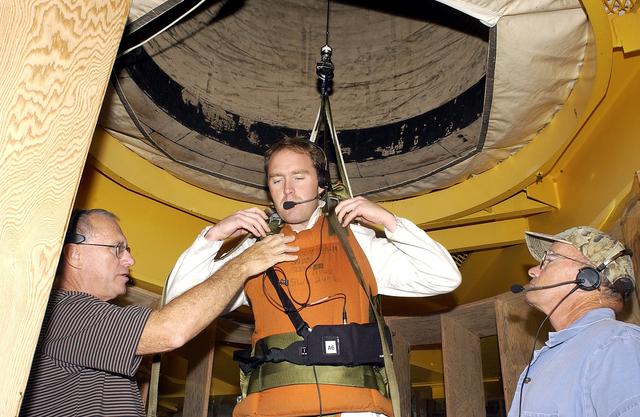
KENNEDY SPACE CENTER, FLA. - Jeff Thon, an SRB mechanic with United Space Alliance, is fitted with a harness to test a vertical solid rocket booster propellant grain inspection technique. Thon will be lowered inside a mockup of two segments of the SRBs. The inspection of segments is required as part of safety analysis.
KSC-03pd2649
KSC | 2003-09-11
Details

KENNEDY SPACE CENTER, FLA. - James Harrison (left), Jack Nowling (center) and Amy Norris (right) pack up part of the debris stored in the Columbia Debris Hangar. An area of the Vehicle Assembly Building is being prepared to store the debris. About 83,000 pieces were shipped to KSC during search and recovery efforts in East Texas.
KSC-03pd2560
KSC | 2003-09-10
Details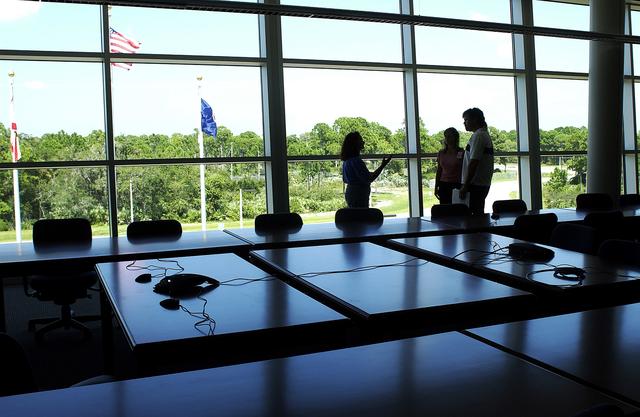
KENNEDY SPACE CENTER, FLA. - Dynamac employees Debbie Wells, Michelle Crouch and Larry Burns are silhouetted as they talk inside a conference room of the Space Life Sciences Lab (SLSL), formerly known as the Space Experiment Research and Processing Laboratory (SERPL). They have been transferring equipment from Hangar L. The new lab is a state-of-the-art facility being built for ISS biotechnology research. Developed as a partnership between NASA-KSC and the State of Florida, NASA’s life sciences contractor will be the primary tenant of the facility, leasing space to conduct flight experiment processing and NASA-sponsored research. About 20 percent of the facility will be available for use by Florida’s university researchers through the Florida Space Research Institute.
KSC-03pd2647
KSC | 2003-09-10
Details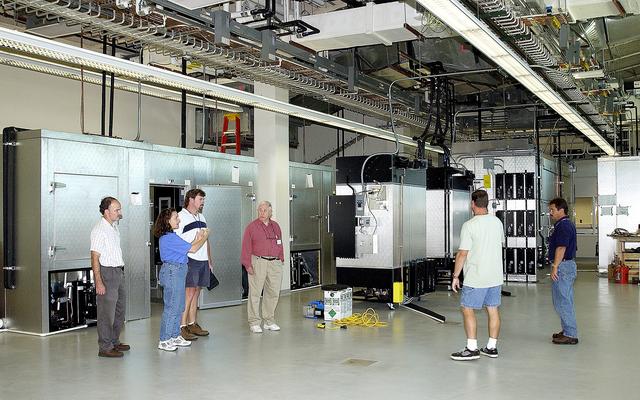
KENNEDY SPACE CENTER, FLA. - Employees check out the new chamber facilities of the Space Life Sciences Lab (SLSL), formerly known as the Space Experiment Research and Processing Laboratory (SERPL). From left are Ray Wheeler, with NASA; Debbie Wells and Larry Burns, with Dynamac; A.O. Rule, president of Environmental Growth Chambers, Inc. (ECG); Neil Yorio, with Dynamac; and John Wiezchowski, with ECG. The SLSL is a state-of-the-art facility being built for ISS biotechnology research. Developed as a partnership between NASA-KSC and the State of Florida, NASA’s life sciences contractor will be the primary tenant of the facility, leasing space to conduct flight experiment processing and NASA-sponsored research. About 20 percent of the facility will be available for use by Florida’s university researchers through the Florida Space Research Institute.
KSC-03pd2644
KSC | 2003-09-10
Details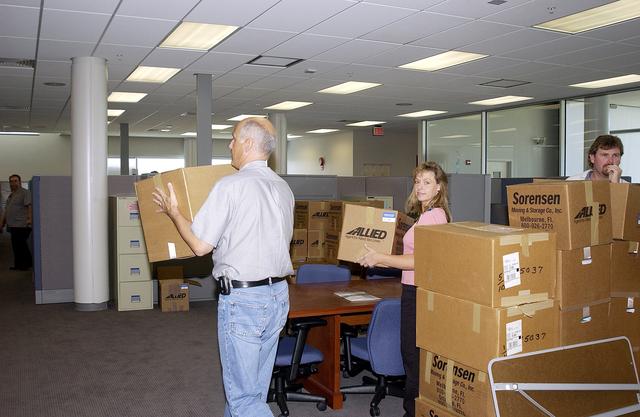
KENNEDY SPACE CENTER, FLA. - Ivan Rodriguez, with Bionetics, and Michelle Crouch and Larry Burns, with Dynamac, carry boxes of equipment into the Space Life Sciences Lab (SLSL), formerly known as the Space Experiment Research and Processing Laboratory (SERPL). They are transferring equipment from Hangar L. The new lab is a state-of-the-art facility being built for ISS biotechnology research. Developed as a partnership between NASA-KSC and the State of Florida, NASA’s life sciences contractor will be the primary tenant of the facility, leasing space to conduct flight experiment processing and NASA-sponsored research. About 20 percent of the facility will be available for use by Florida’s university researchers through the Florida Space Research Institute.
KSC-03pd2645
KSC | 2003-09-10
Details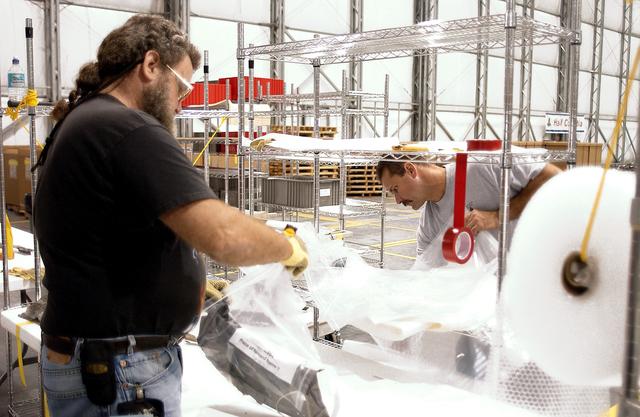
KENNEDY SPACE CENTER, FLA. - In the Columbia Debris Hangar, Larry Tarver (left) and Don Eitel bag and wrap pieces of debris to be packed into storage boxes. About 83,000 pieces of debris were shipped to KSC during search and recovery efforts in East Texas. That represents about 38 percent of the dry weight of Columbia, equaling almost 85,000 pounds. An area of the Vehicle Assembly Building is being prepared to store the debris.
KSC-03pd2567
KSC | 2003-09-10
Details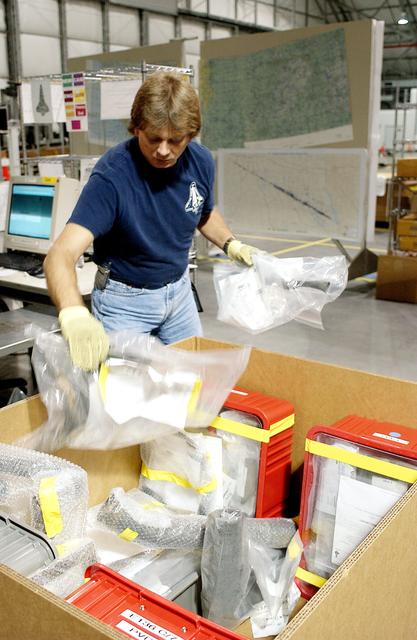
KENNEDY SPACE CENTER, FLA. - In the Columbia Debris Hangar, Jack Nowling transfers bags with debris pieces into a storage box. About 83,000 pieces of debris were shipped to KSC during search and recovery efforts in East Texas. That represents about 38 percent of the dry weight of Columbia, equaling almost 85,000 pounds. An area of the Vehicle Assembly Building is being prepared to store the debris.
KSC-03pd2563
KSC | 2003-09-10
Details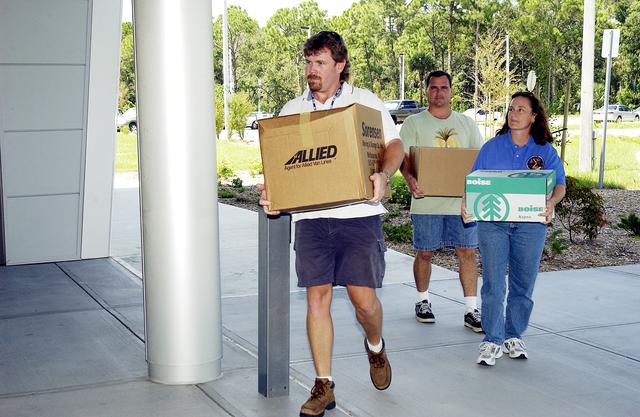
KENNEDY SPACE CENTER, FLA. - Dynamac employees (from left) Larry Burns, Debbie Wells and Neil Yorio carry boxes of hardware into the Space Life Sciences Lab (SLSL), formerly known as the Space Experiment Research and Processing Laboratory (SERPL). They are transferring equipment from Hangar L. The new lab is a state-of-the-art facility being built for ISS biotechnology research. Developed as a partnership between NASA-KSC and the State of Florida, NASA’s life sciences contractor will be the primary tenant of the facility, leasing space to conduct flight experiment processing and NASA-sponsored research. About 20 percent of the facility will be available for use by Florida’s university researchers through the Florida Space Research Institute.
KSC-03pd2643
KSC | 2003-09-10
Details