NASA Media Archive
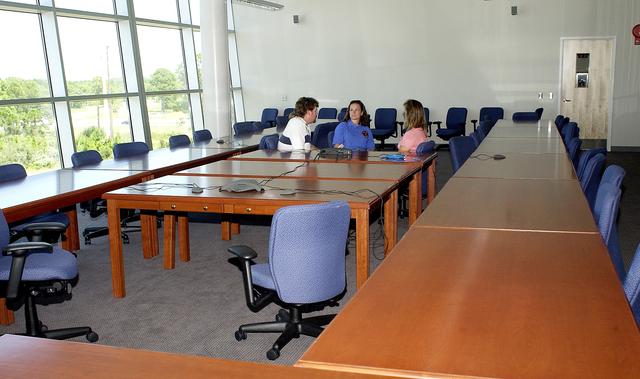
KENNEDY SPACE CENTER, FLA. - Dynamac employees (from left) Larry Burns, Debbie Wells and Michelle Crouch talk in a conference room of the Space Life Sciences Lab (SLSL), formerly known as the Space Experiment Research and Processing Laboratory (SERPL). They have been transferring equipment from Hangar L. The new lab is a state-of-the-art facility being built for ISS biotechnology research. Developed as a partnership between NASA-KSC and the State of Florida, NASA’s life sciences contractor will be the primary tenant of the facility, leasing space to conduct flight experiment processing and NASA-sponsored research. About 20 percent of the facility will be available for use by Florida’s university researchers through the Florida Space Research Institute.
KSC-03pd2646
KSC | 2003-09-10
Details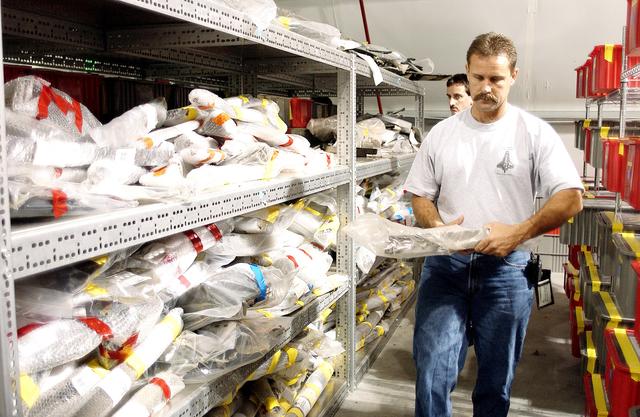
KENNEDY SPACE CENTER, FLA. - In the Columbia Debris Hangar, Don Eitel (in front) and Jim Delie carry pieces of debris to be packed into storage boxes. About 83,000 pieces of debris were shipped to KSC during search and recovery efforts in East Texas. That represents about 38 percent of the dry weight of Columbia, equaling almost 85,000 pounds. An area of the Vehicle Assembly Building is being prepared to store the debris.
KSC-03pd2566
KSC | 2003-09-10
Details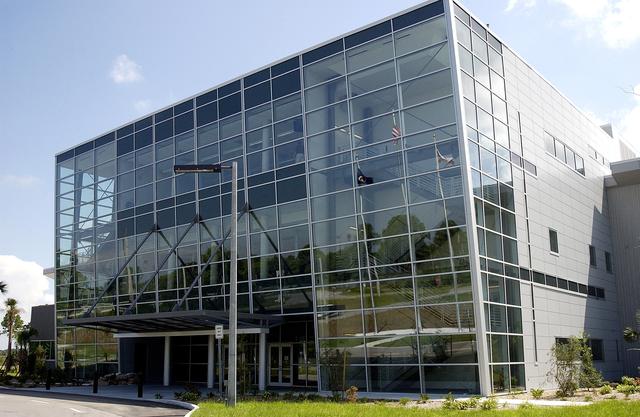
KENNEDY SPACE CENTER, FLA. - The Space Life Sciences Lab (SLSL), formerly known as the Space Experiment Research and Processing Laboratory (SERPL), is nearing completion. The new lab is a state-of-the-art facility being built for ISS biotechnology research. Developed as a partnership between NASA-KSC and the State of Florida, NASA’s life sciences contractor will be the primary tenant of the facility, leasing space to conduct flight experiment processing and NASA-sponsored research. About 20 percent of the facility will be available for use by Florida’s university researchers through the Florida Space Research Institute.
KSC-03pd2648
KSC | 2003-09-10
Details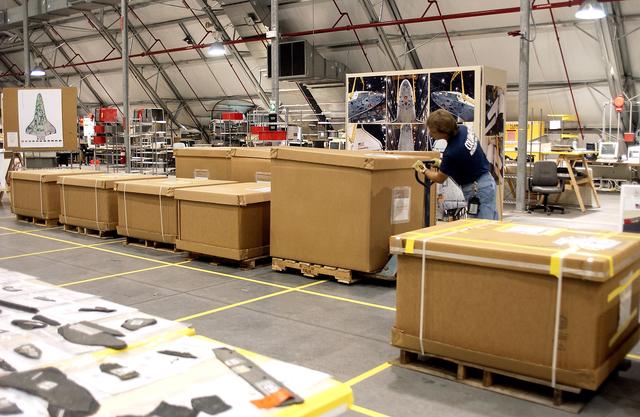
KENNEDY SPACE CENTER, FLA. - In the Columbia Debris Hangar, Jack Nowling moves a box filled with part of the Columbia debris. About 83,000 pieces were shipped to KSC during search and recovery efforts in East Texas. An area of the Vehicle Assembly Building is being prepared to store the debris.
KSC-03PD2559
KSC | 2003-09-10
Details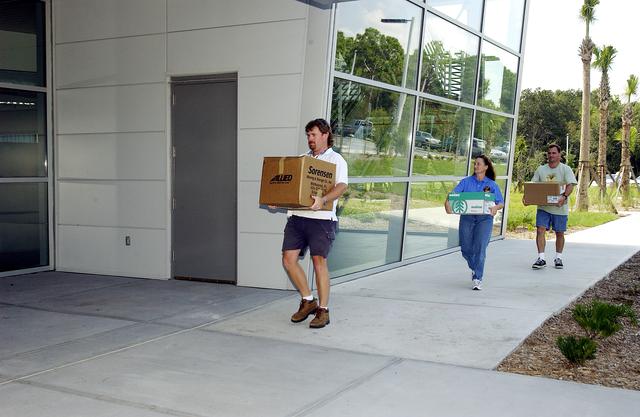
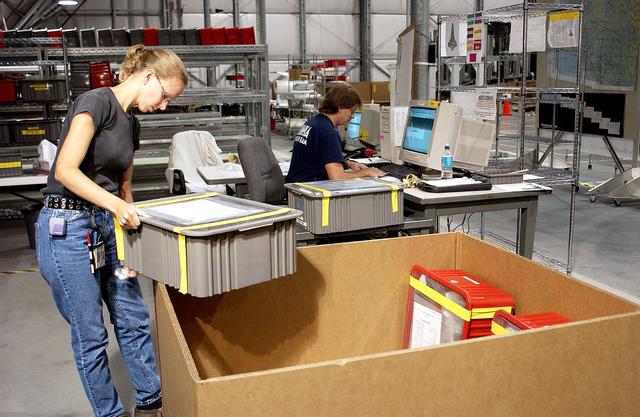
KENNEDY SPACE CENTER, FLA. - Amy Norris (left) packs some of the debris stored in the Columbia Debris Hangar. Jack Nowling works on the computer. About 83,000 pieces of debris were shipped to KSC during search and recovery efforts in East Texas. That represents about 38 percent of the dry weight of Columbia, equaling almost 85,000 pounds. An area of the Vehicle Assembly Building is being prepared to store the debris.
KSC-03pd2562
KSC | 2003-09-10
Details
KENNEDY SPACE CENTER, FLA. - James Harrison (left), Jack Nowling (center) and Amy Norris (right) pack up some of the debris stored in the Columbia Debris Hangar. About 83,000 pieces were shipped to KSC during search and recovery efforts in East Texas. An area of the Vehicle Assembly Building is being prepared to store the debris.
KSC-03pd2561
KSC | 2003-09-10
Details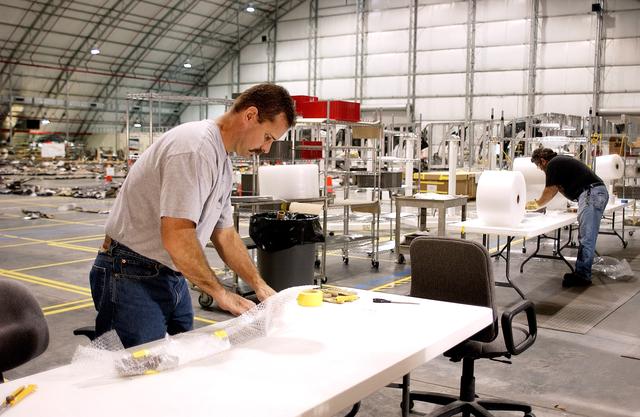
KENNEDY SPACE CENTER, FLA. -In the Columbia Debris Hangar, Don Eitel (left) wraps pieces of Columbia debris for storage. About 83,000 pieces of debris were shipped to KSC during search and recovery efforts in East Texas. That represents about 38 percent of the dry weight of Columbia, equaling almost 85,000 pounds. An area of the Vehicle Assembly Building is being prepared to store the debris.
KSC-03pd2564
KSC | 2003-09-10
Details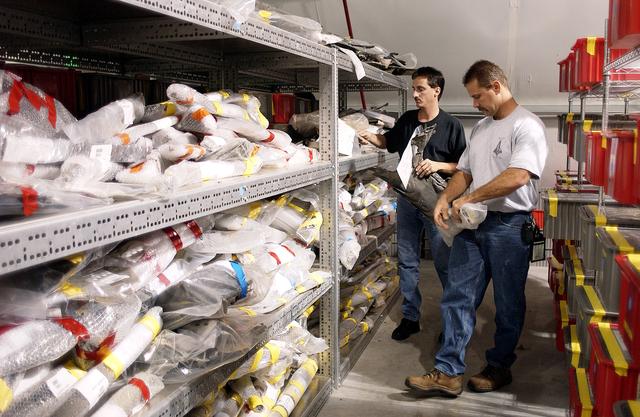
KENNEDY SPACE CENTER, FLA. - In the Columbia Debris Hangar, Jim Delie (left) and Don Eitel select from the shelves wrapped pieces of debris to be packed into storage boxes. About 83,000 pieces of debris were shipped to KSC during search and recovery efforts in East Texas. That represents about 38 percent of the dry weight of Columbia, equaling almost 85,000 pounds. An area of the Vehicle Assembly Building is being prepared to store the debris.
KSC-03pd2565
KSC | 2003-09-10
Details

KENNEDY SPACE CENTER, FLA. - In the Orbiter Processing Facility, United Space Alliance workers Dan Kenna and Jim Landy prepare to examine a Reinforced Carbon Carbon panel using flash thermography. Attached to the leading edge of the wing of the orbiters, the gray carbon composite RCC panels have sufficient strength to withstand the aerodynamic forces experienced during launch and reentry, which can reach as high as 800 pounds per square foot. The operating range of RCC is from minus 250º F to about 3,000º F, the temperature produced by friction with the atmosphere during reentry.
KSC-03pd2636
KSC | 2003-09-09
Details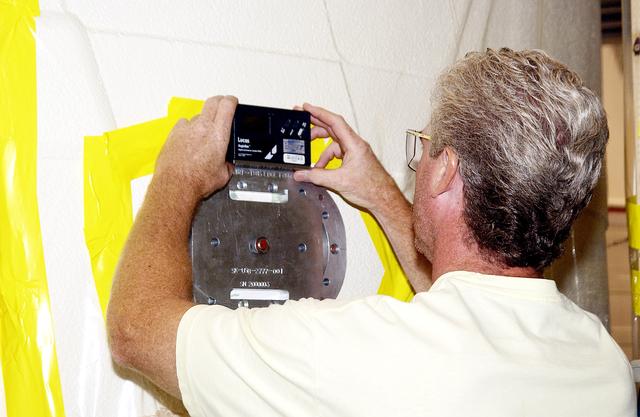
KENNEDY SPACE CENTER, FLA. - Mark Northcraft adjusts the position of the parachute camera just installed on the solid rocket booster forward skirt in the Solid Rocket Booster Assembly and Refurbishment Facility (ARF). Refurbishment and subassembly of Shuttle SRB hardware - primarily the forward and aft assemblies - is carried out in the ARF.
KSC-03pd2631
KSC | 2003-09-09
Details
KENNEDY SPACE CENTER, FLA. - In the Orbiter Processing Facility, United Space Alliance workers (left to right) Jim Landy, Dan Phillips, Paul Ogletree and Dan Kenna check results of flash thermography on the Reinforced Carbon Carbon panel on the table (foreground). Attached to the leading edge of the wing of the orbiters, the gray carbon composite RCC panels have sufficient strength to withstand the aerodynamic forces experienced during launch and reentry, which can reach as high as 800 pounds per square foot. The operating range of RCC is from minus 250º F to about 3,000º F, the temperature produced by friction with the atmosphere during reentry.
KSC-03pd2639
KSC | 2003-09-09
Details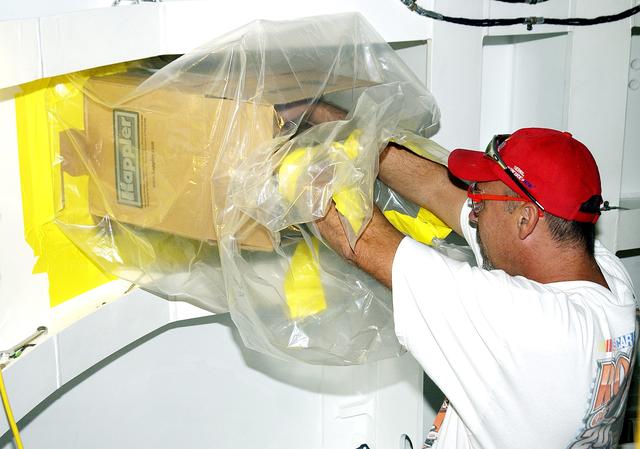
KENNEDY SPACE CENTER, FLA. - In the Solid Rocket Booster Assembly and Refurbishment Facility (ARF), Troy Krout, with United Space Alliance, works on positioning the parachute camera after installation on the solid rocket booster forward skirt. Refurbishment and subassembly of Shuttle SRB hardware - primarily the forward and aft assemblies - is carried out in the ARF.
KSC-03pd2632
KSC | 2003-09-09
Details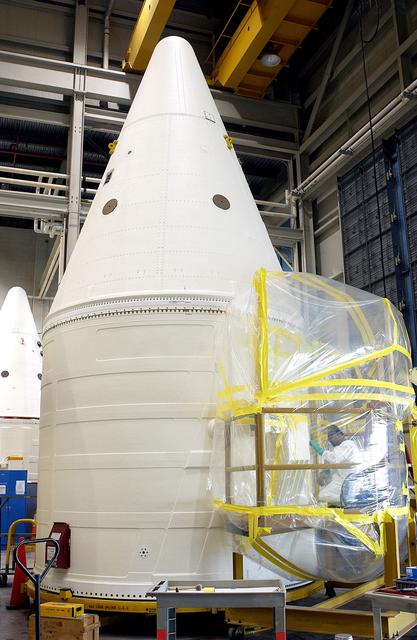
KENNEDY SPACE CENTER, FLA. - In the Solid Rocket Booster Assembly and Refurbishment Facility (ARF), Vernon Gibbs, with United Space Alliance, prepares the forward skirt of a solid rocket booster for installation of the parachute camera. Refurbishment and subassembly of Shuttle SRB hardware - primarily the forward and aft assemblies - is carried out in the ARF.
KSC-03pd2626
KSC | 2003-09-09
Details
KENNEDY SPACE CENTER, FLA. - In the Orbiter Processing Facility, United Space Alliance workers Jim Landy (front), Dan Phillips and Dan Kenna watch a monitor showing results of flash thermography on the Reinforced Carbon Carbon panel on the table (foreground). Attached to the leading edge of the wing of the orbiters, the gray carbon composite RCC panels have sufficient strength to withstand the aerodynamic forces experienced during launch and reentry, which can reach as high as 800 pounds per square foot. The operating range of RCC is from minus 250º F to about 3,000º F, the temperature produced by friction with the atmosphere during reentry.
KSC-03pd2638
KSC | 2003-09-09
Details
KENNEDY SPACE CENTER, FLA. - In the Orbiter Processing Facility, United Space Alliance workers (left to right) Jim Landy, Paul Ogletree, Dan Kenna and Dan Phillips check results of flash thermography on the Reinforced Carbon Carbon panel on the table (foreground). Attached to the leading edge of the wing of the orbiters, the gray carbon composite RCC panels have sufficient strength to withstand the aerodynamic forces experienced during launch and reentry, which can reach as high as 800 pounds per square foot. The operating range of RCC is from minus 250º F to about 3,000º F, the temperature produced by friction with the atmosphere during reentry.
KSC-03pd2640
KSC | 2003-09-09
Details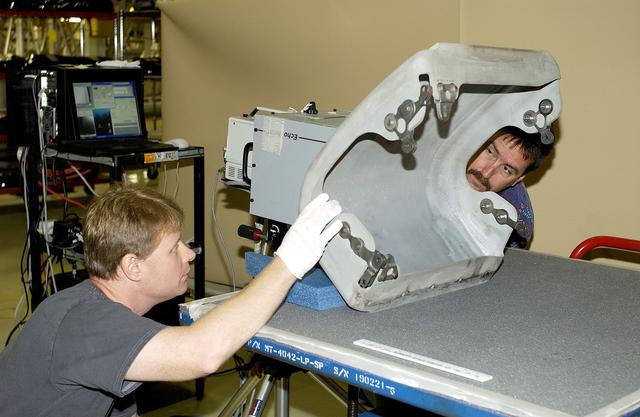
KENNEDY SPACE CENTER, FLA. - In the Orbiter Processing Facility, Jim Landy (left), NDE specialist with United Space Alliance (USA), prepares to examine a Reinforced Carbon Carbon panel using flash thermography. Helping out, at right, is Dan Phillips, also with USA. Attached to the leading edge of the wing of the orbiters, the gray carbon composite RCC panels have sufficient strength to withstand the aerodynamic forces experienced during launch and reentry, which can reach as high as 800 pounds per square foot. The operating range of RCC is from minus 250º F to about 3,000º F, the temperature produced by friction with the atmosphere during reentry.
KSC-03pd2633
KSC | 2003-09-09
Details
KENNEDY SPACE CENTER, FLA. - In the Orbiter Processing Facility, Jim Landy, NDE specialist with United Space Alliance (USA), watches a monitor off-screen to examine a Reinforced Carbon Carbon panel using flash thermography. Attached to the leading edge of the wing of the orbiters, the gray carbon composite RCC panels have sufficient strength to withstand the aerodynamic forces experienced during launch and reentry, which can reach as high as 800 pounds per square foot. The operating range of RCC is from minus 250º F to about 3,000º F, the temperature produced by friction with the atmosphere during reentry.
KSC-03pd2634
KSC | 2003-09-09
Details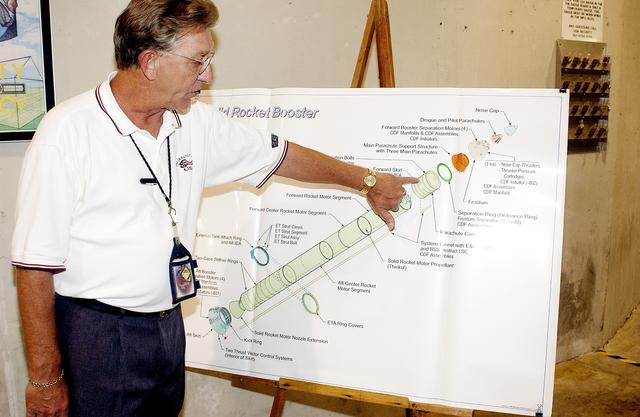
KENNEDY SPACE CENTER, FLA. - On a drawing of a solid rocket booster (SRB), Mark Northcraft, with United Space Alliance, points to the spot where a parachute camera will be installed, on the forward skirt of the SRB. The work is being done in the Solid Rocket Booster Assembly and Refurbishment Facility, which routinely carries out refurbishment and subassembly of Shuttle SRB hardware.
KSC-03pd2629
KSC | 2003-09-09
Details
KENNEDY SPACE CENTER, FLA. - In the Orbiter Processing Facility, United Space Alliance workers share the task of examining a Reinforced Carbon Carbon panel using flash thermography. From left are Paul Ogletree, Jim Landy (kneeling), Dan Phillips and Dan Kenna. Attached to the leading edge of the wing of the orbiters, the gray carbon composite RCC panels have sufficient strength to withstand the aerodynamic forces experienced during launch and reentry, which can reach as high as 800 pounds per square foot. The operating range of RCC is from minus 250º F to about 3,000º F, the temperature produced by friction with the atmosphere during reentry.
KSC-03pd2637
KSC | 2003-09-09
Details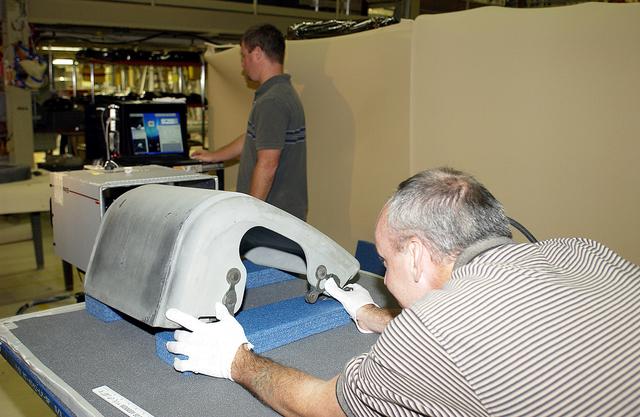
KENNEDY SPACE CENTER, FLA. - In the Orbiter Processing Facility, United Space Alliance worker Dan Kenna (right) positions a Reinforced Carbon Carbon panel on the table to perform flash thermography. In the background, Paul Ogletree observes the monitor. Attached to the leading edge of the wing of the orbiters, the gray carbon composite RCC panels have sufficient strength to withstand the aerodynamic forces experienced during launch and reentry, which can reach as high as 800 pounds per square foot. The operating range of RCC is from minus 250º F to about 3,000º F, the temperature produced by friction with the atmosphere during reentry.
KSC-03pd2641
KSC | 2003-09-09
Details


KENNEDY SPACE CENTER, FLA. - In the Orbiter Processing Facility, United Space Alliance workers share the task of examining a Reinforced Carbon Carbon panel using flash thermography. From left are Dan Kenna, Jim Landy, Paul Ogletree and Dan Phillips. Attached to the leading edge of the wing of the orbiters, the gray carbon composite RCC panels have sufficient strength to withstand the aerodynamic forces experienced during launch and reentry, which can reach as high as 800 pounds per square foot. The operating range of RCC is from minus 250º F to about 3,000º F, the temperature produced by friction with the atmosphere during reentry.
KSC-03pd2635
KSC | 2003-09-09
Details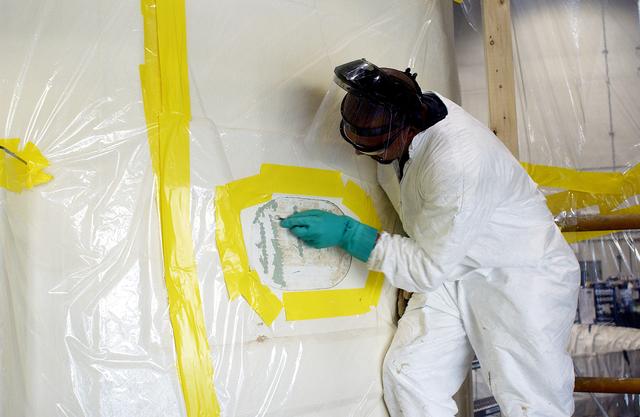
KENNEDY SPACE CENTER, FLA. - In the Solid Rocket Booster Assembly and Refurbishment Facility (ARF), Vernon Gibbs, with United Space Alliance, prepares the forward skirt of a solid rocket booster for installation of the parachute camera. Refurbishment and subassembly of Shuttle SRB hardware - primarily the forward and aft assemblies - is carried out in the ARF.
KSC-03pd2627
KSC | 2003-09-09
Details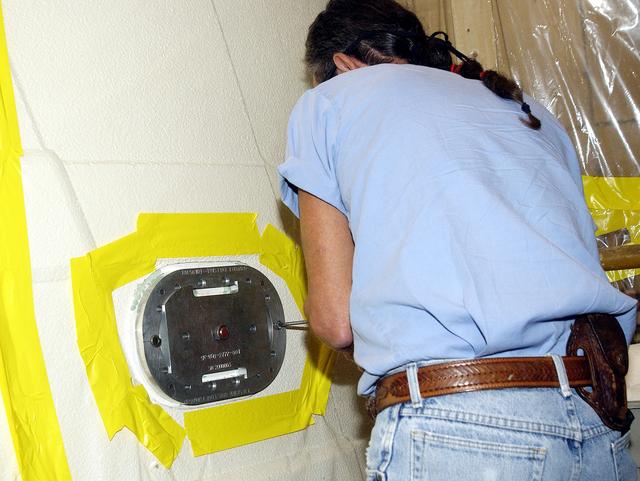
KENNEDY SPACE CENTER, FLA. - In the Solid Rocket Booster Assembly and Refurbishment Facility (ARF), Donnie Cardigan, with United Space Alliance, installs the parachute camera on the solid rocket booster forward skirt. Refurbishment and subassembly of Shuttle SRB hardware - primarily the forward and aft assemblies - is carried out in the ARF.
KSC-03pd2630
KSC | 2003-09-09
Details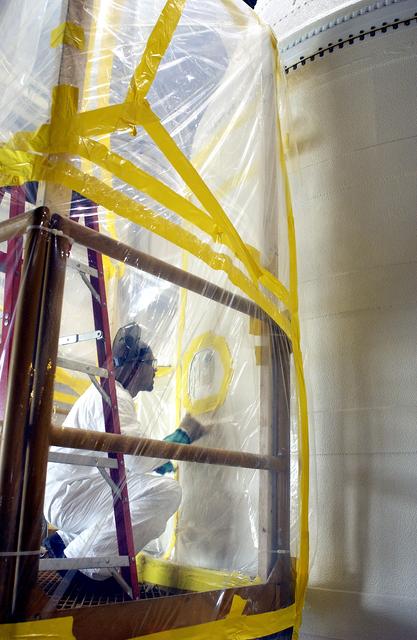
KENNEDY SPACE CENTER, FLA. - In the Solid Rocket Booster Assembly and Refurbishment Facility (ARF), Vernon Gibbs, with United Space Alliance, prepares the forward skirt of a solid rocket booster for installation of the parachute camera. Refurbishment and subassembly of Shuttle SRB hardware - primarily the forward and aft assemblies - is carried out in the ARF.
KSC-03pd2628
KSC | 2003-09-09
Details





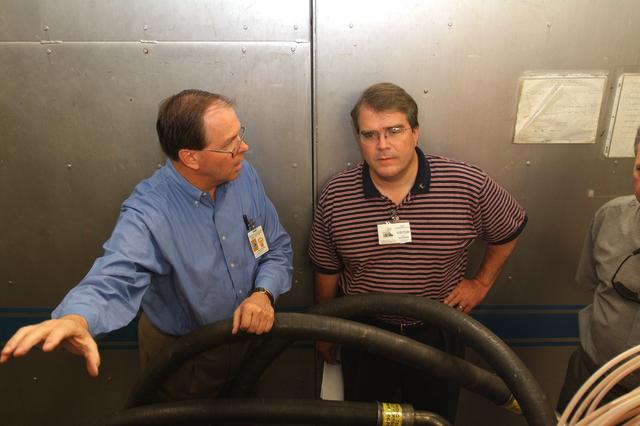
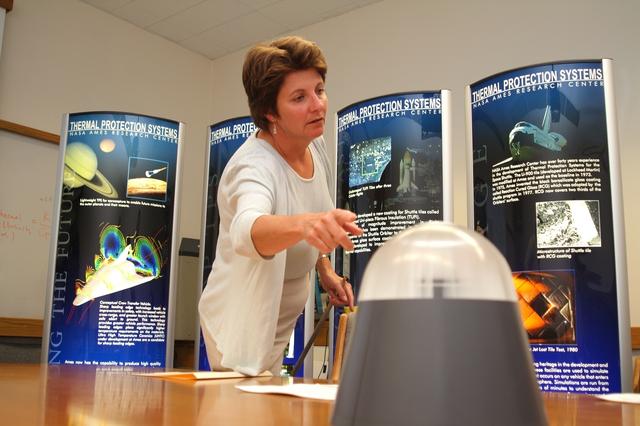
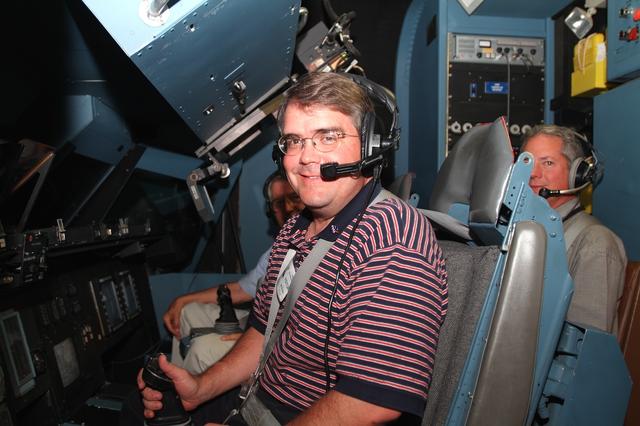
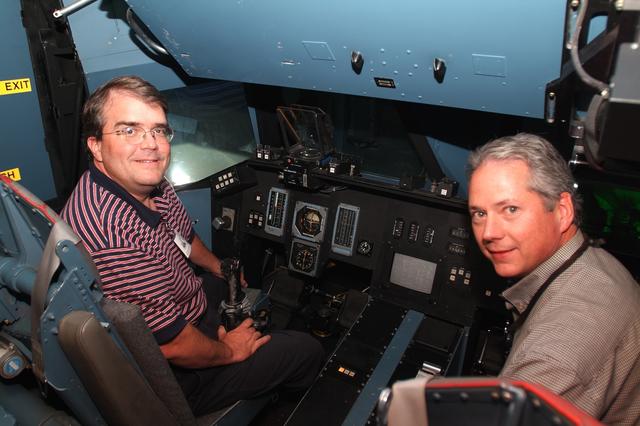

KENNEDY SPACE CENTER, FLA. - In the Orbiter Processing Facility, United Space Alliance workers Mike Hyatt (above), Saul Ngy (right) and Jerry Belt (below) install a Reinforced Carbon Carbon (RCC) panel to the leading edge of the wing of the orbiter Atlantis. The gray carbon composite RCC panels have sufficient strength to withstand the aerodynamic forces experienced during launch and reentry, which can reach as high as 800 pounds per square foot. The operating range of RCC is from minus 250º F to about 3,000º F, the temperature produced by friction with the atmosphere during reentry.
KSC-03pd2603
KSC | 2003-09-08
Details
KENNEDY SPACE CENTER, FLA. - In the Orbiter Processing Facility, United Space Alliance workers Mike Hyatt (above) and Saul Ngy (below right) finish installing a Reinforced Carbon Carbon (RCC) panel to the leading edge of the wing of the orbiter Atlantis. The gray carbon composite RCC panels have sufficient strength to withstand the aerodynamic forces experienced during launch and reentry, which can reach as high as 800 pounds per square foot. The operating range of RCC is from minus 250º F to about 3,000º F, the temperature produced by friction with the atmosphere during reentry.
KSC-03pd2604
KSC | 2003-09-08
Details