NASA Media Archive

KENNEDY SPACE CENTER, FLA. - In the Orbiter Processing Facility, United Space Alliance worker Mike Hyatt (right) attaches a Reinforced Carbon Carbon (RCC) panel onto the leading edge of the wing of the orbiter Atlantis. The gray carbon composite RCC panels have sufficient strength to withstand the aerodynamic forces experienced during launch and reentry, which can reach as high as 800 pounds per square foot. The operating range of RCC is from minus 250º F to about 3,000º F, the temperature produced by friction with the atmosphere during reentry.
KSC-03pd2555
KSC | 2003-09-05
Details
KENNEDY SPACE CENTER, FLA. - In the Orbiter Processing Facility, United Space Alliance worker Mike Hyatt attaches a Reinforced Carbon Carbon (RCC) panel onto the leading edge of the wing of the orbiter Atlantis. The gray carbon composite RCC panels have sufficient strength to withstand the aerodynamic forces experienced during launch and reentry, which can reach as high as 800 pounds per square foot. The operating range of RCC is from minus 250º F to about 3,000º F, the temperature produced by friction with the atmosphere during reentry.
KSC-03pd2556
KSC | 2003-09-05
Details
KENNEDY SPACE CENTER, FLA. - Technicians in the Orbiter Processing Facility oversee removal of one of two orbital maneuvering system (OMS) pods from Endeavour. The OMS pods are attached to the upper aft fuselage left and right sides. Fabricated primarily of graphite epoxy composite and aluminum, each pod is 21.8 feet long and 11.37 feet wide at its aft end and 8.41 feet wide at its forward end, with a surface area of approximately 435 square feet. Each pod houses the Reaction Control System propulsion components used for inflight maneuvering and is attached to the aft fuselage with 11 bolts. OMS pods are removed during Orbiter Major Modifications. Once removed, the OMS pods undergo in-depth structural inspections, system checks and the thrusters are changed out.
KSC-03pd2591
KSC | 2003-09-05
Details
KENNEDY SPACE CENTER, FLA. - Workers in the Orbiter Processing Facility prepare to remove one of two orbital maneuvering system (OMS) pods from Endeavour. The OMS pods are attached to the upper aft fuselage left and right sides. Fabricated primarily of graphite epoxy composite and aluminum, each pod is 21.8 feet long and 11.37 feet wide at its aft end and 8.41 feet wide at its forward end, with a surface area of approximately 435 square feet. Each pod houses the Reaction Control System propulsion components used for inflight maneuvering and is attached to the aft fuselage with 11 bolts. OMS pods are removed during Orbiter Major Modifications. Once removed, the OMS pods undergo in-depth structural inspections, system checks and the thrusters are changed out.
KSC-03pd2588
KSC | 2003-09-05
Details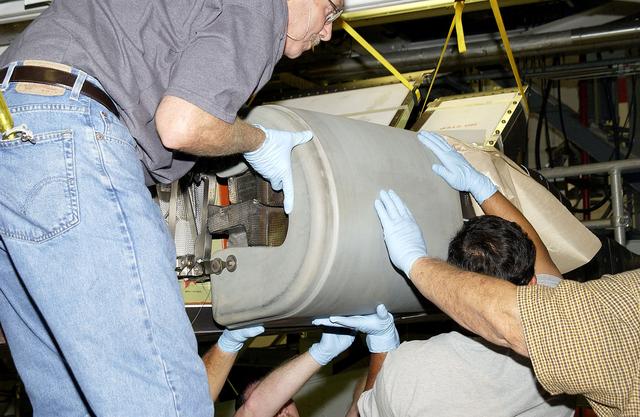
KENNEDY SPACE CENTER, FLA. - In the Orbiter Processing Facility, United Space Alliance workers Mike Hyatt (left) Saul Ngy (center) and Jerry Belt (right) lift a Reinforced Carbon Carbon (RCC) panel to attach onto the leading edge of the wing of the orbiter Atlantis. The gray carbon composite RCC panels have sufficient strength to withstand the aerodynamic forces experienced during launch and reentry, which can reach as high as 800 pounds per square foot. The operating range of RCC is from minus 250º F to about 3,000º F, the temperature produced by friction with the atmosphere during reentry.
KSC-03pd2554
KSC | 2003-09-05
Details
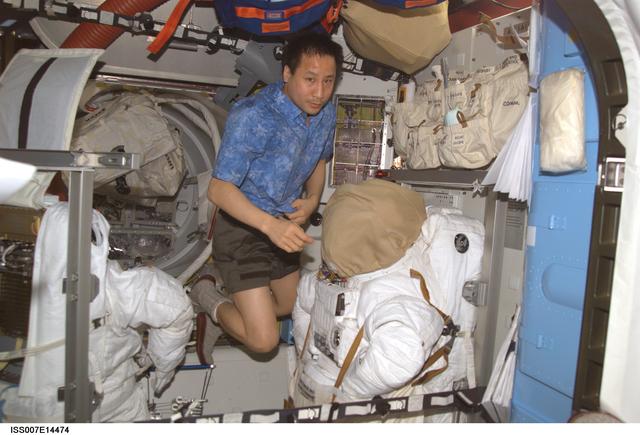
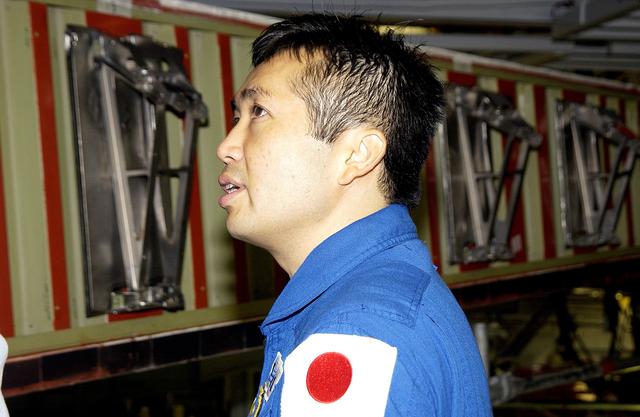
KENNEDY SPACE CENTER, FLA. - Japanese astronaut Koichi Wakata looks at the spars installed on the wing of the orbiter Atlantis. Reinforced Carbon Carbon (RCC) panels are mechanically attached to the wing via the spars - a series of floating joints - to reduce loading on the panels caused by wing deflections. The aluminum and the metallic attachments are protected from exceeding temperature limits by internal insulation.
KSC-03pd2582
KSC | 2003-09-05
Details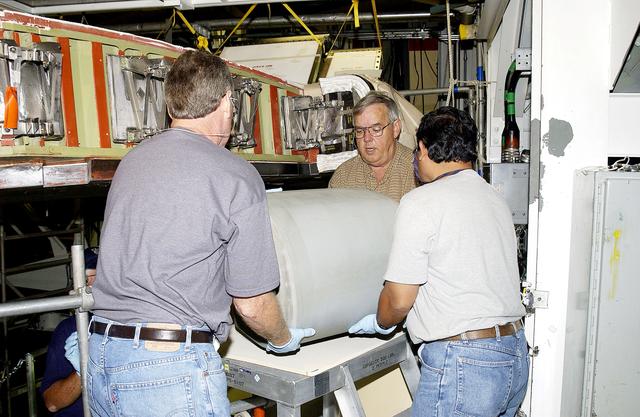
KENNEDY SPACE CENTER, FLA. - In the Orbiter Processing Facility, United Space Alliance workers Mike Hyatt (left) Jerry Belt (center), and Saul Ngy (right), lift a Reinforced Carbon Carbon (RCC) panel they will attach to the leading edge of the wing of the orbiter Atlantis. The gray carbon composite RCC panels have sufficient strength to withstand the aerodynamic forces experienced during launch and reentry, which can reach as high as 800 pounds per square foot. The operating range of RCC is from minus 250º F to about 3,000º F, the temperature produced by friction with the atmosphere during reentry.
KSC-03pd2552
KSC | 2003-09-05
Details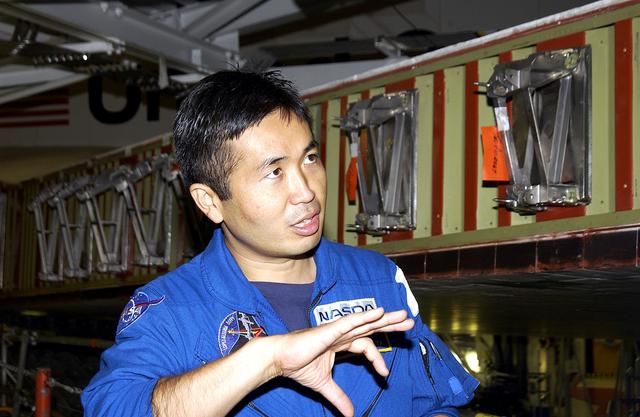
KENNEDY SPACE CENTER, FLA. - Japanese astronaut Koichi Wakata gestures as he examines the spar installation (behind him) on the wing of the orbiter Atlantis. Reinforced Carbon Carbon (RCC) panels are mechanically attached to the wing via the spars - a series of floating joints - to reduce loading on the panels caused by wing deflections. The aluminum and the metallic attachments are protected from exceeding temperature limits by internal insulation.
KSC-03pd2586
KSC | 2003-09-05
Details
KENNEDY SPACE CENTER, FLA. - In the Orbiter Processing Facility, one of two orbital maneuvering system (OMS) pods removed from Endeavour is suspended overhead. The OMS pods are attached to the upper aft fuselage left and right sides. Fabricated primarily of graphite epoxy composite and aluminum, each pod is 21.8 feet long and 11.37 feet wide at its aft end and 8.41 feet wide at its forward end, with a surface area of approximately 435 square feet. Each pod houses the Reaction Control System propulsion components used for inflight maneuvering and is attached to the aft fuselage with 11 bolts. OMS pods are removed during Orbiter Major Modifications. Once removed, the OMS pods undergo in-depth structural inspections, system checks and the thrusters are changed out.
KSC-03pd2592
KSC | 2003-09-05
Details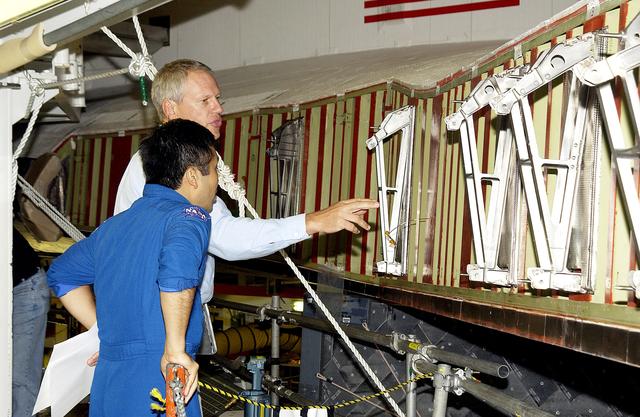
KENNEDY SPACE CENTER, FLA. - William Gaetjens (background), with the Vehicle Integration Test Team (VITT) directs Japanese astronaut Koichi Wakata’s attention to the spars installed on the wing of the orbiter Atlantis. Reinforced Carbon Carbon (RCC) panels are mechanically attached to the wing via the spars - a series of floating joints - to reduce loading on the panels caused by wing deflections. The aluminum and the metallic attachments are protected from exceeding temperature limits by internal insulation.
KSC-03pd2581
KSC | 2003-09-05
Details
KENNEDY SPACE CENTER, FLA. - In the Orbiter Processing Facility, United Space Alliance worker Mike Hyatt (above) attaches a Reinforced Carbon Carbon (RCC) panel onto the leading edge of the wing of the orbiter Atlantis. The gray carbon composite RCC panels have sufficient strength to withstand the aerodynamic forces experienced during launch and reentry, which can reach as high as 800 pounds per square foot. The operating range of RCC is from minus 250º F to about 3,000º F, the temperature produced by friction with the atmosphere during reentry.
KSC-03pd2557
KSC | 2003-09-05
Details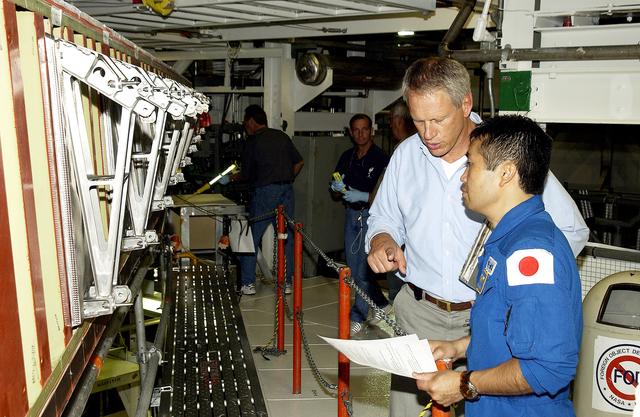
KENNEDY SPACE CENTER, FLA. - Japanese astronaut Koichi Wakata (right) listens to William Gaetjens, with the Vehicle Integration Test Team (VITT), who is providing details about the spar installation (left) on the wing of the orbiter Atlantis. Reinforced Carbon Carbon (RCC) panels are mechanically attached to the wing via the spars - a series of floating joints - to reduce loading on the panels caused by wing deflections. The aluminum and the metallic attachments are protected from exceeding temperature limits by internal insulation.
KSC-03pd2583
KSC | 2003-09-05
Details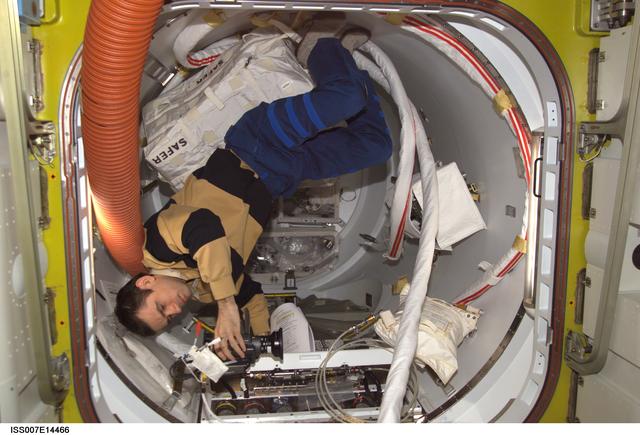
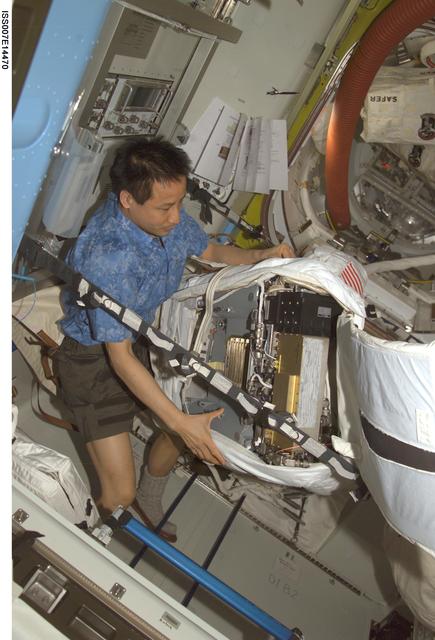
Expedition Seven Malenchenko with video camera in Quest airlock
iss007e14466
JSC | 2003-09-05
Details
KENNEDY SPACE CENTER, FLA. - Workers in the Orbiter Processing Facility prepare to remove one of two orbital maneuvering system (OMS) pods from Endeavour. The OMS pods are attached to the upper aft fuselage left and right sides. Fabricated primarily of graphite epoxy composite and aluminum, each pod is 21.8 feet long and 11.37 feet wide at its aft end and 8.41 feet wide at its forward end, with a surface area of approximately 435 square feet. Each pod houses the Reaction Control System propulsion components used for inflight maneuvering and is attached to the aft fuselage with 11 bolts. OMS pods are removed during Orbiter Major Modifications. Once removed, the OMS pods undergo in-depth structural inspections, system checks and the thrusters are changed out.
KSC-03pd2587
KSC | 2003-09-05
Details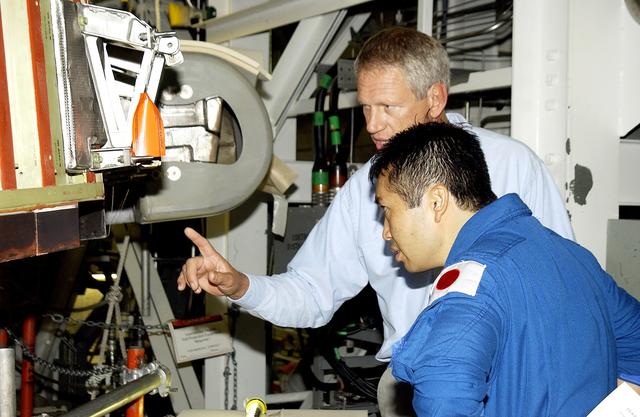
KENNEDY SPACE CENTER, FLA. - Japanese astronaut Koichi Wakata (front) listens to William Gaetjens, with the Vehicle Integration Test Team (VITT), who is providing details about the spar installation (left) on the wing of the orbiter Atlantis. Reinforced Carbon Carbon (RCC) panels are mechanically attached to the wing via the spars - a series of floating joints - to reduce loading on the panels caused by wing deflections. The aluminum and the metallic attachments are protected from exceeding temperature limits by internal insulation.
KSC-03pd2584
KSC | 2003-09-05
Details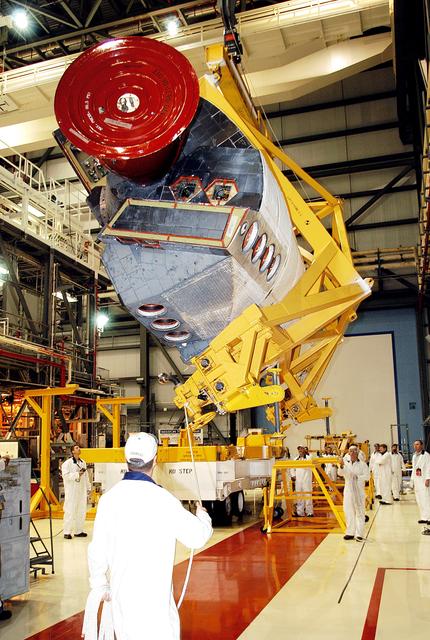
KENNEDY SPACE CENTER, FLA. - In the Orbiter Processing Facility, one of two orbital maneuvering system (OMS) pods removed from Endeavour is lowered toward a transporter. The OMS pods are attached to the upper aft fuselage left and right sides. Fabricated primarily of graphite epoxy composite and aluminum, each pod is 21.8 feet long and 11.37 feet wide at its aft end and 8.41 feet wide at its forward end, with a surface area of approximately 435 square feet. Each pod houses the Reaction Control System propulsion components used for inflight maneuvering and is attached to the aft fuselage with 11 bolts. OMS pods are removed during Orbiter Major Modifications. Once removed, the OMS pods undergo in-depth structural inspections, system checks and the thrusters are changed out.
KSC-03pd2593
KSC | 2003-09-05
Details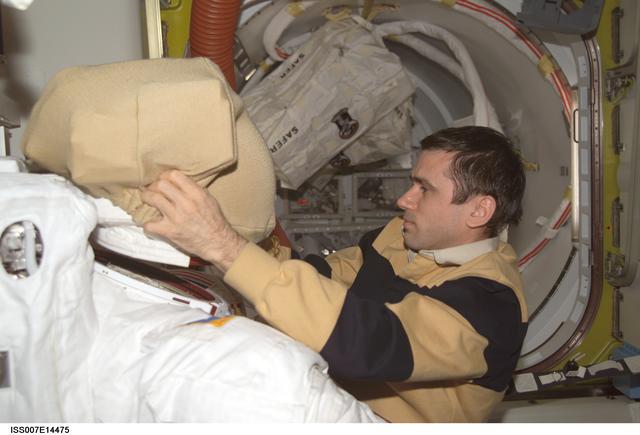
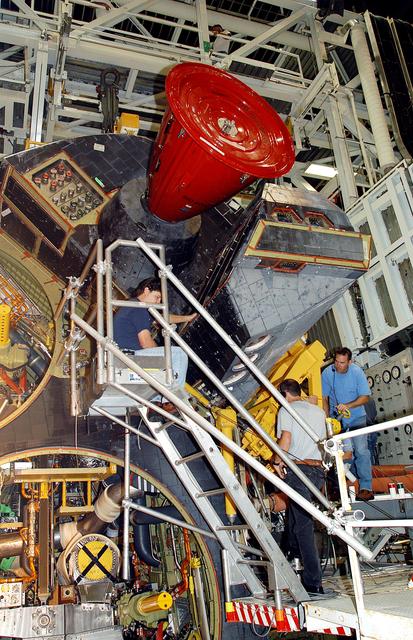
KENNEDY SPACE CENTER, FLA. - Workers in the Orbiter Processing Facility prepare to remove one of two orbital maneuvering system (OMS) pods from Endeavour. The OMS pods are attached to the upper aft fuselage left and right sides. Fabricated primarily of graphite epoxy composite and aluminum, each pod is 21.8 feet long and 11.37 feet wide at its aft end and 8.41 feet wide at its forward end, with a surface area of approximately 435 square feet. Each pod houses the Reaction Control System propulsion components used for inflight maneuvering and is attached to the aft fuselage with 11 bolts. OMS pods are removed during Orbiter Major Modifications. Once removed, the OMS pods undergo in-depth structural inspections, system checks and the thrusters are changed out.
KSC-03pd2589
KSC | 2003-09-05
Details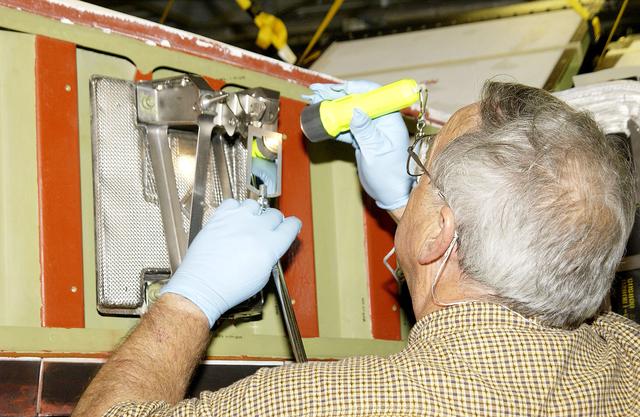
KENNEDY SPACE CENTER, FLA. - In the Orbiter Processing Facility, Jerry Belt, with United Space Alliance, checks a spar attachment on the wing of the orbiter Atlantis before installing Reinforced Carbon Carbon (RCC) panels on the wing. The spars - floating joints - reduce loading on the panels caused by wing deflections. The gray carbon composite RCC panels have sufficient strength to withstand the aerodynamic forces experienced during launch and reentry, which can reach as high as 800 pounds per square foot. The operating range of RCC is from minus 250º F to about 3,000º F, the temperature produced by friction with the atmosphere during reentry.
KSC-03pd2551
KSC | 2003-09-05
Details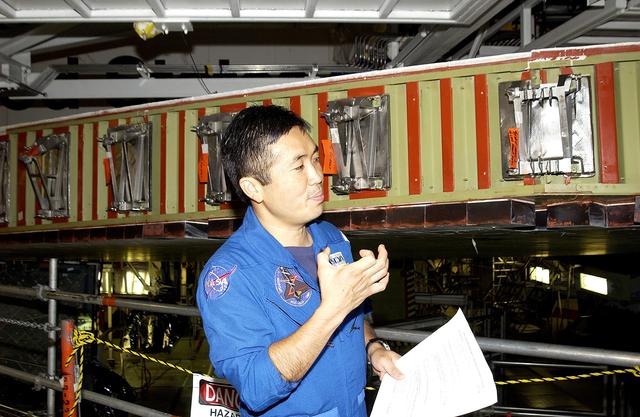
KENNEDY SPACE CENTER, FLA. - Japanese astronaut Koichi Wakata gestures as he examines the spar installation (behind him) on the wing of the orbiter Atlantis. Reinforced Carbon Carbon (RCC) panels are mechanically attached to the wing via the spars - a series of floating joints - to reduce loading on the panels caused by wing deflections. The aluminum and the metallic attachments are protected from exceeding temperature limits by internal insulation.
KSC-03pd2585
KSC | 2003-09-05
Details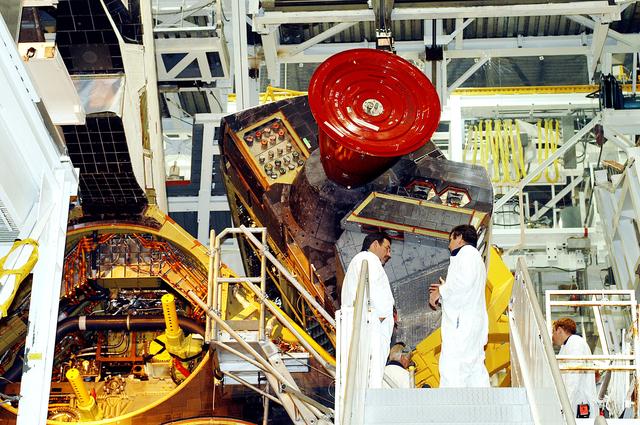
KENNEDY SPACE CENTER, FLA. - Technicians in the Orbiter Processing Facility oversee removal of one of two orbital maneuvering system (OMS) pods from Endeavour. The OMS pods are attached to the upper aft fuselage left and right sides. Fabricated primarily of graphite epoxy composite and aluminum, each pod is 21.8 feet long and 11.37 feet wide at its aft end and 8.41 feet wide at its forward end, with a surface area of approximately 435 square feet. Each pod houses the Reaction Control System propulsion components used for inflight maneuvering and is attached to the aft fuselage with 11 bolts. OMS pods are removed during Orbiter Major Modifications. Once removed, the OMS pods undergo in-depth structural inspections, system checks and the thrusters are changed out.
KSC-03pd2590
KSC | 2003-09-05
Details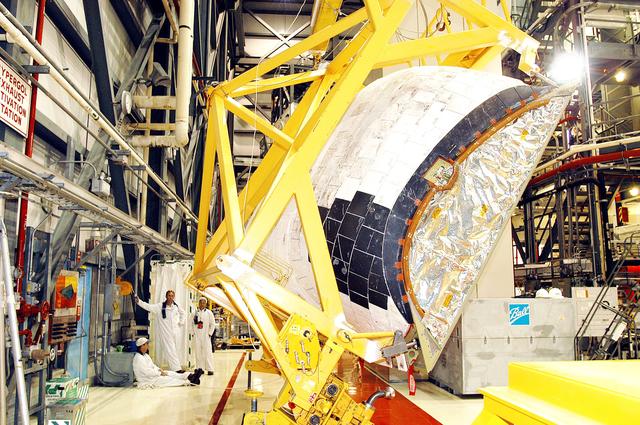
KENNEDY SPACE CENTER, FLA. - In the Orbiter Processing Facility, one of two orbital maneuvering system (OMS) pods removed from Endeavour is lowered onto a transporter. The OMS pods are attached to the upper aft fuselage left and right sides. Fabricated primarily of graphite epoxy composite and aluminum, each pod is 21.8 feet long and 11.37 feet wide at its aft end and 8.41 feet wide at its forward end, with a surface area of approximately 435 square feet. Each pod houses the Reaction Control System propulsion components used for inflight maneuvering and is attached to the aft fuselage with 11 bolts. OMS pods are removed during Orbiter Major Modifications. Once removed, the OMS pods undergo in-depth structural inspections, system checks and the thrusters are changed out.
KSC-03pd2594
KSC | 2003-09-05
Details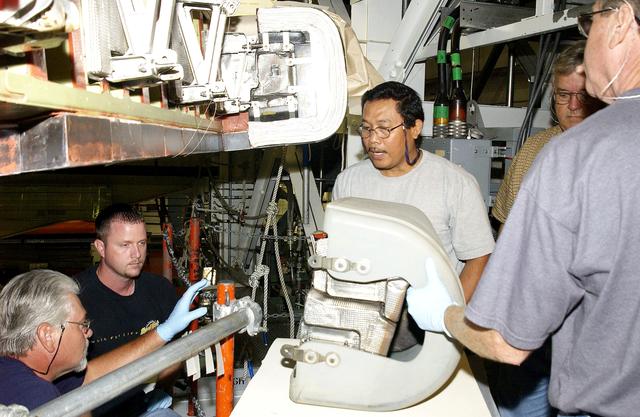
KENNEDY SPACE CENTER, FLA. - In the Orbiter Processing Facility, United Space Alliance workers, from center, left to right, Saul Ngy, Jerry Belt and Mike Hyatt, prepare to attach a Reinforced Carbon Carbon (RCC) panel (on the table) to the leading edge of the wing of the orbiter Atlantis. The gray carbon composite RCC panels have sufficient strength to withstand the aerodynamic forces experienced during launch and reentry, which can reach as high as 800 pounds per square foot. The operating range of RCC is from minus 250º F to about 3,000º F, the temperature produced by friction with the atmosphere during reentry.
KSC-03pd2553
KSC | 2003-09-05
Details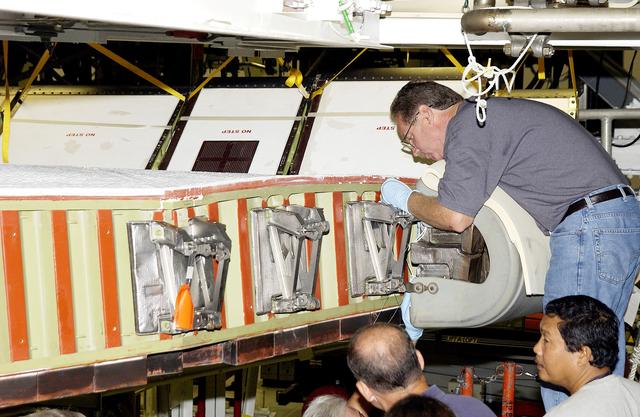
KENNEDY SPACE CENTER, FLA. - In the Orbiter Processing Facility, United Space Alliance worker Mike Hyatt (above) completes installation of a Reinforced Carbon Carbon (RCC) panel onto the leading edge of the wing of the orbiter Atlantis. The gray carbon composite RCC panels have sufficient strength to withstand the aerodynamic forces experienced during launch and reentry, which can reach as high as 800 pounds per square foot. The operating range of RCC is from minus 250º F to about 3,000º F, the temperature produced by friction with the atmosphere during reentry.
KSC-03pd2558
KSC | 2003-09-05
Details
KENNEDY SPACE CENTER, FLA. - In the Vehicle Assembly Building, Jim Landy, NDE specialist, examines flight crew lockers using flash thermography. He is screening the lockers for hidden damage underneath dings and dents that might occur during handling.
KSC-03pd2549
KSC | 2003-09-04
Details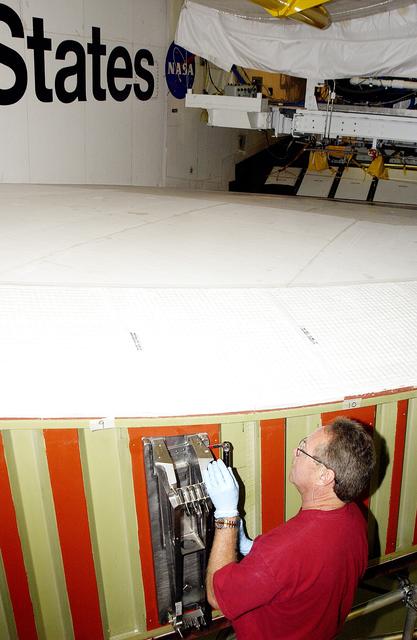
KENNEDY SPACE CENTER, FLA. - In the Orbiter Processing Facility, Mike Hyatt, with United Space Alliance, installs a spar on the wing of the orbiter Atlantis. Reinforced Carbon Carbon (RCC) panels are mechanically attached to the wing with a series of floating joints - spars - to reduce loading on the panels caused by wing deflections. The aluminum and the metallic attachments are protected from exceeding temperature limits by internal insulation.
KSC-03pd2537
KSC | 2003-09-04
Details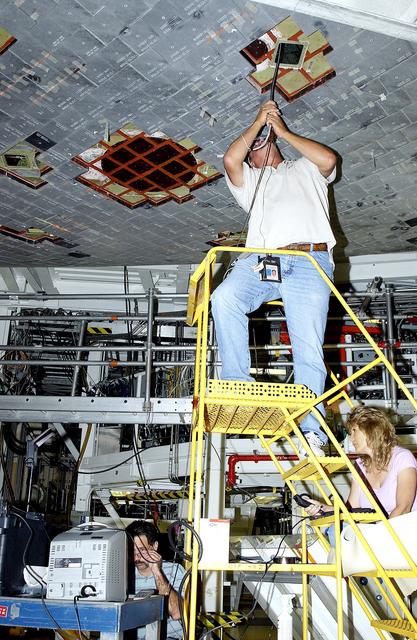
KENNEDY SPACE CENTER, FLA. - In the Orbiter Processing Facility, while Greg Harlow, with United Space Alliance (USA), (above) threads a camera under the tiles of the orbiter Endeavour, NASA’s Richard Parker (below left) and Peggy Ritchie, with USA, (at right) watch the images on a monitor to inspect for corrosion.
KSC-03pd2542
KSC | 2003-09-04
Details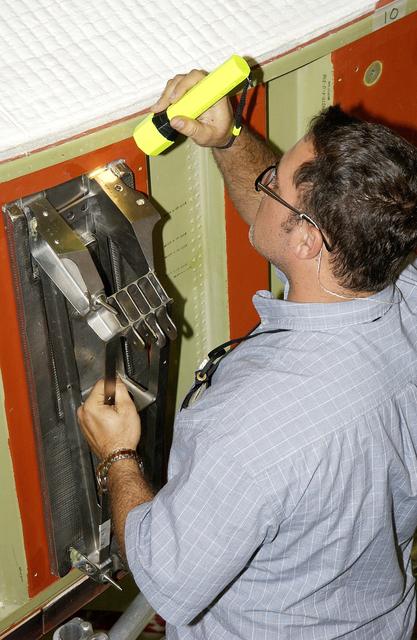
KENNEDY SPACE CENTER, FLA. - In the Orbiter Processing Facility, John Newport, with United Space Alliance, inspects spar installation on the wing of the orbiter Atlantis. Reinforced Carbon Carbon (RCC) panels are mechanically attached to the wing with a series of floating joints - spars - to reduce loading on the panels caused by wing deflections. The aluminum and the metallic attachments are protected from exceeding temperature limits by internal insulation.
KSC-03pd2536
KSC | 2003-09-04
Details