NASA Media Archive
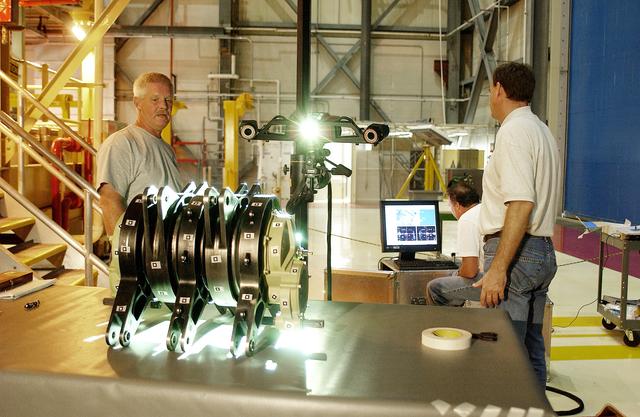
KENNEDY SPACE CENTER, FLA. - Boeing workers perform a 3D digital scan of the actuator on the table. At left is Dan Clark. At right are Alden Pitard (seated at computer) and John Macke, from Boeing, St. Louis. . There are two actuators per engine on the Shuttle, one for pitch motion and one for yaw motion. The Space Shuttle Main Engine hydraulic servoactuators are used to gimbal the main engine.
KSC-03pd2513
KSC | 2003-09-03
Details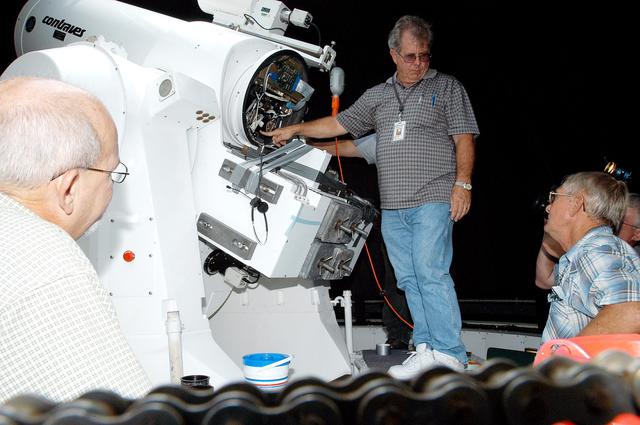
KENNEDY SPACE CENTER, FLA. - Workers calibrate a tracking telescope, part of the Distant Object Attitude Measurement System (DOAMS), located in Cocoa Beach, Fla. The telescope provides optical support for launches from KSC and Cape Canaveral.
KSC-03pd2505
KSC | 2003-09-03
Details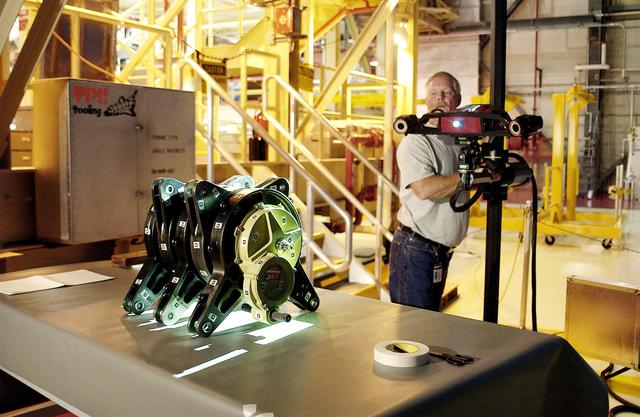
KENNEDY SPACE CENTER, FLA. - In the Orbiter Processing Facility, Dan Clark, with KSC Boeing, operates the camera for a 3D digital scan of the actuator on the table. There are two actuators per engine on the Shuttle, one for pitch motion and one for yaw motion. The Space Shuttle Main Engine hydraulic servoactuators are used to gimbal the main engine.
KSC-03pd2512
KSC | 2003-09-03
Details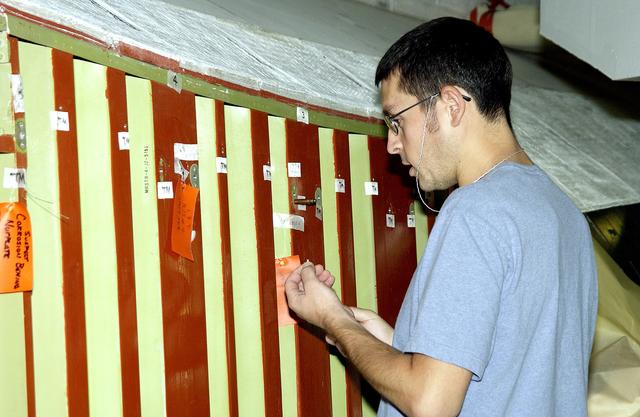
KENNEDY SPACE CENTER, FLA. -In the Orbiter Processing Facility (OPF), a United Space Alliance technician examines the attachment points for the spars on the exterior of a wing of Space Shuttle Atlantis. Reinforced Carbon Carbon (RCC) panels are mechanically attached to the wing with a series of floating joints - spars - to reduce loading on the panels caused by wing deflections. The aluminum and the metallic attachments are protected from exceeding temperature limits by internal insulation. The next launch of Atlantis will be on mission STS-114, a utilization and logistics flight to the International Space Station.
KSC-03pd2492
KSC | 2003-09-03
Details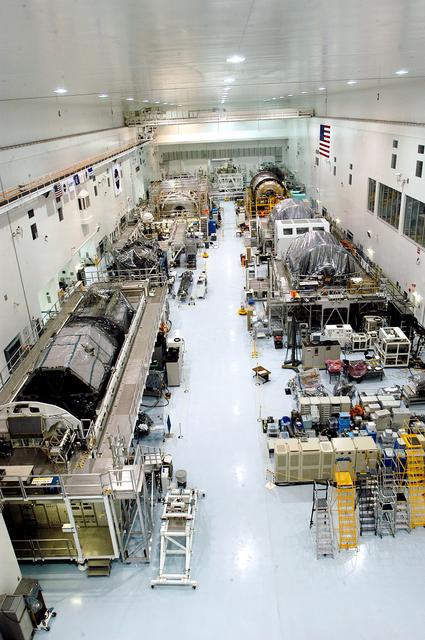
KENNEDY SPACE CENTER, FLA. - Various elements intended for the International Space Station are lined up in the Space Station Processing Facility. The newest to arrive at KSC are in the rear: at left, the U.S. Node 2, and next to it at right, the Japanese Experiment Module (JEM). The two elements are undergoing a Multi-Element Integrated Test (MEIT). Node 2 attaches to the end of the U.S. Lab on the ISS and provides attach locations for the Japanese laboratory, European laboratory, the Centrifuge Accommodation Module and, eventually, Multipurpose Logistics Modules. It will provide the primary docking location for the Shuttle when a pressurized mating adapter is attached to Node 2. Installation of the module will complete the U.S. Core of the ISS. Developed by the National Space Development Agency of Japan (NASDA), the JEM is Japan's primary contribution to the Station. It will enhance the unique research capabilities of the orbiting complex by providing an additional environment for astronauts to conduct science experiments.
KSC-03pd2530
KSC | 2003-09-03
Details
KENNEDY SPACE CENTER, FLA. - Workstands at various levels surround the orbiter Endeavour in the Orbiter Processing Facility (OPF). The OPF provides postflight servicing and checkout, as well as vehicle modifications.
KSC-03pd2516
KSC | 2003-09-03
Details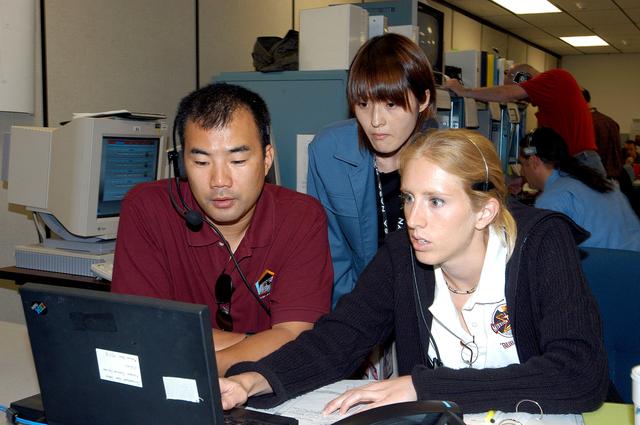
KENNEDY SPACE CENTER, FLA. - Astronaut Soichi Noguchi (left), with the National Space Development Agency of Japan (NASDA), works at a console during a Multi-Element Integrated Test (MEIT) of the U.S. Node 2 and the Japanese Experiment Module (JEM) in the Space Station Processing Facility. The JEM, developed by NASDA, is Japan's primary contribution to the Station. It will enhance the unique research capabilities of the orbiting complex by providing an additional environment for astronauts to conduct science experiments. Noguchi is assigned to mission STS-114 as a mission specialist. Node 2 provides attach locations for the Japanese laboratory, as well as European laboratory, the Centrifuge Accommodation Module and, eventually, Multipurpose Logistics Modules. Installation of the module will complete the U.S. Core of the ISS.
KSC-03pd2544
KSC | 2003-09-03
Details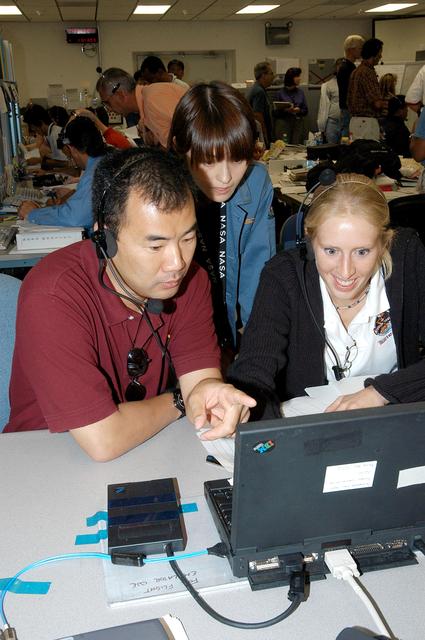
KENNEDY SPACE CENTER, FLA. - Astronaut Soichi Noguchi (left), with the National Space Development Agency of Japan (NASDA), points to data on the console during a Multi-Element Integrated Test (MEIT) of the U.S. Node 2 and the Japanese Experiment Module (JEM) in the Space Station Processing Facility. The JEM, developed by NASDA, is Japan's primary contribution to the Station. It will enhance the unique research capabilities of the orbiting complex by providing an additional environment for astronauts to conduct science experiments. Noguchi is assigned to mission STS-114 as a mission specialist. Node 2 provides attach locations for the Japanese laboratory, as well as European laboratory, the Centrifuge Accommodation Module and, eventually, Multipurpose Logistics Modules. Installation of the module will complete the U.S. Core of the ISS.
KSC-03pd2545
KSC | 2003-09-03
Details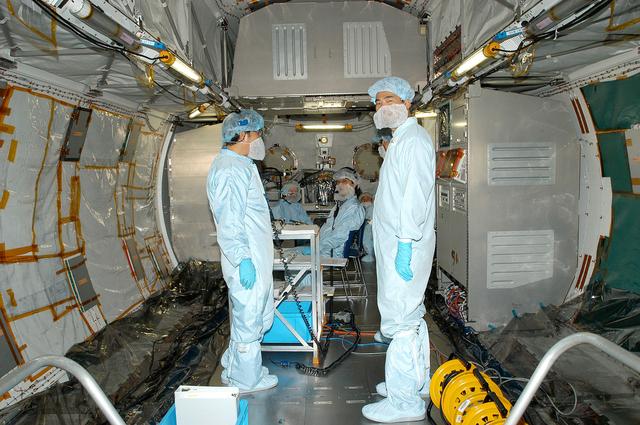
KENNEDY SPACE CENTER, FLA. - In the Space Station Processing Facility, astronaut Soichi Noguchi (right), with the National Space Development Agency of Japan (NASDA), stands inside the Japanese Experiment Module (JEM) that is undergoing a Multi-Element Integrated Test (MEIT) with the U.S. Node 2. The JEM, developed by NASDA, is Japan's primary contribution to the Station. It will enhance the unique research capabilities of the orbiting complex by providing an additional environment for astronauts to conduct science experiments. Noguchi is assigned to mission STS-114 as a mission specialist. Node 2 provides attach locations for the Japanese laboratory, as well as European laboratory, the Centrifuge Accommodation Module and, eventually, Multipurpose Logistics Modules. Installation of the module will complete the U.S. Core of the ISS.
KSC-03pd2547
KSC | 2003-09-03
Details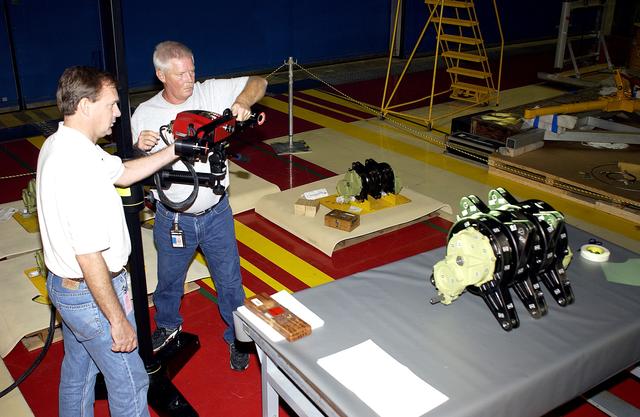
KENNEDY SPACE CENTER, FLA. - Boeing workers get ready to perform a 3D digital scan of the actuator on the table. At left is John Macke, from Boeing, St. Louis. At right is Dan Clark.. There are two actuators per engine on the Shuttle, one for pitch motion and one for yaw motion. The Space Shuttle Main Engine hydraulic servoactuators are used to gimbal the main engine.
KSC-03pd2515
KSC | 2003-09-03
Details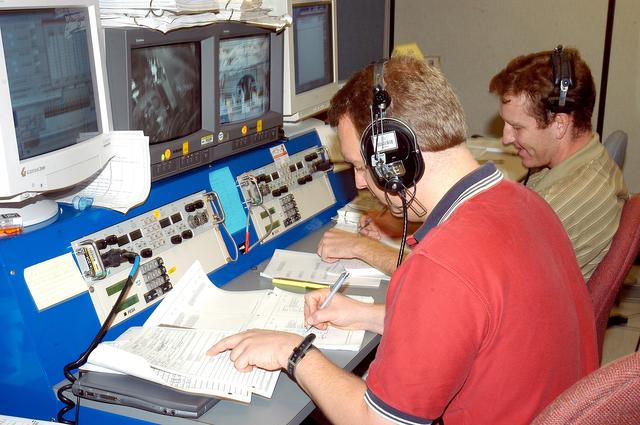
KENNEDY SPACE CENTER, FLA. - Technicians in the Space Station Processing Facility work on a Multi-Element Integrated Test (MEIT) of the U.S. Node 2 and the Japanese Experiment Module (JEM). Node 2 attaches to the end of the U.S. Lab on the ISS and provides attach locations for the Japanese laboratory, European laboratory, the Centrifuge Accommodation Module and, eventually, Multipurpose Logistics Modules. It will provide the primary docking location for the Shuttle when a pressurized mating adapter is attached to Node 2. Installation of the module will complete the U.S. Core of the ISS. The JEM, developed by the National Space Development Agency of Japan (NASDA), is Japan's primary contribution to the Station. It will enhance the unique research capabilities of the orbiting complex by providing an additional environment for astronauts to conduct science experiments.
KSC-03pd2517
KSC | 2003-09-03
Details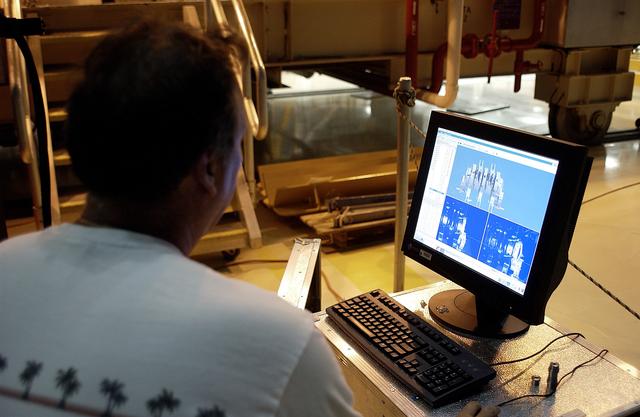
KENNEDY SPACE CENTER, FLA. - In the Orbiter Processing Facility, Boeing worker Alden Pitard looks at a 3D digital scan of an actuator. There are two actuators per engine on the Shuttle, one for pitch motion and one for yaw motion. The Space Shuttle Main Engine hydraulic servoactuators are used to gimbal the main engine.
KSC-03pd2511
KSC | 2003-09-03
Details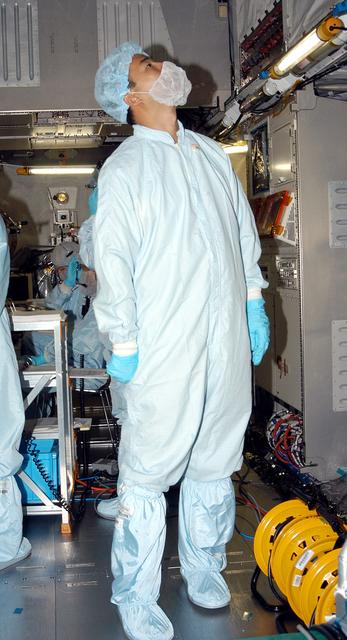
KENNEDY SPACE CENTER, FLA. - Astronaut Soichi Noguchi, with the National Space Development Agency of Japan (NASDA), is inside the Japanese Experiment Module (JEM), undergoing a Multi-Element Integrated Test (MEIT) in the Space Station Processing Facility. Noguchi is assigned to mission STS-114 as a mission specialist. Node 2 attaches to the end of the U.S. Lab on the ISS and provides attach locations for the Japanese laboratory, European laboratory, the Centrifuge Accommodation Module and, eventually, Multipurpose Logistics Modules. It will provide the primary docking location for the Shuttle when a pressurized mating adapter is attached to Node 2. Installation of the module will complete the U.S. Core of the ISS. The JEM, developed by NASDA, is Japan's primary contribution to the Station. It will enhance the unique research capabilities of the orbiting complex by providing an additional environment for astronauts to conduct science experiments.
KSC-03pd2523
KSC | 2003-09-03
Details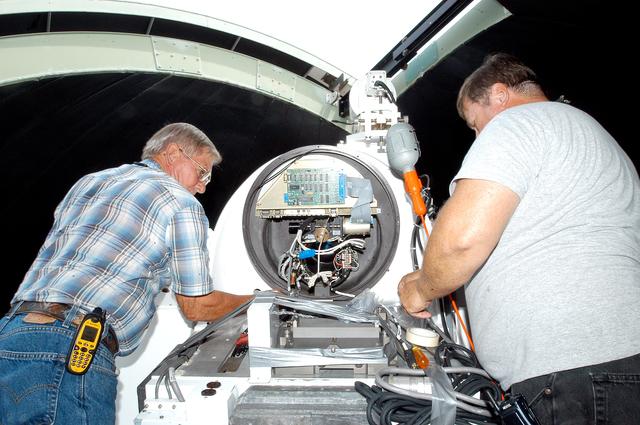
KENNEDY SPACE CENTER, FLA. - A worker calibrates a tracking telescope, part of the Distant Object Attitude Measurement System (DOAMS), located in Cocoa Beach, Fla. The telescope provides optical support for launches from KSC and Cape Canaveral.
KSC-03pd2507
KSC | 2003-09-03
Details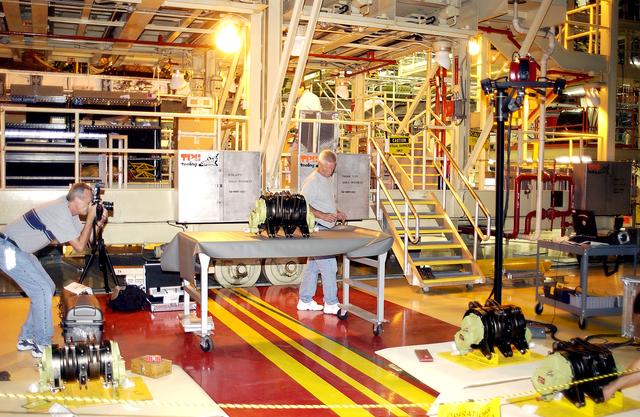
KENNEDY SPACE CENTER, FLA. - In the Orbiter Processing Facility, an actuator is set up on a table for a 3D digital scan. There are two actuators per engine on the Shuttle, one for pitch motion and one for yaw motion. The Space Shuttle Main Engine hydraulic servoactuators are used to gimbal the main engine.
KSC-03pd2514
KSC | 2003-09-03
Details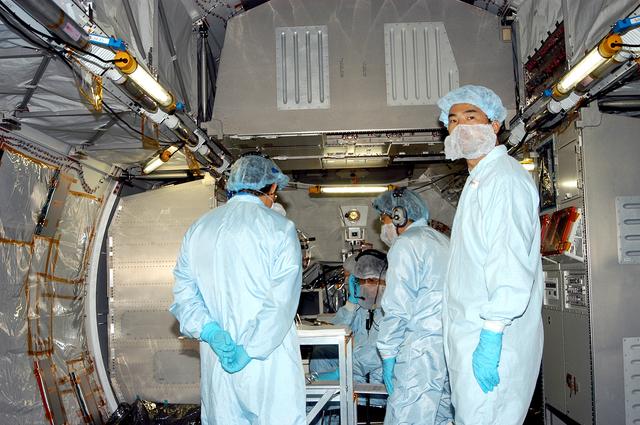
KENNEDY SPACE CENTER, FLA. - Astronaut Soichi Noguchi (right), with the National Space Development Agency of Japan (NASDA), is inside the Japanese Experiment Module (JEM), undergoing a Multi-Element Integrated Test (MEIT) in the Space Station Processing Facility. Noguchi is assigned to mission STS-114 as a mission specialist. Node 2 attaches to the end of the U.S. Lab on the ISS and provides attach locations for the Japanese laboratory, European laboratory, the Centrifuge Accommodation Module and, eventually, Multipurpose Logistics Modules. It will provide the primary docking location for the Shuttle when a pressurized mating adapter is attached to Node 2. Installation of the module will complete the U.S. Core of the ISS. The JEM, developed by NASDA, is Japan's primary contribution to the Station. It will enhance the unique research capabilities of the orbiting complex by providing an additional environment for astronauts to conduct science experiments.
KSC-03pd2522
KSC | 2003-09-03
Details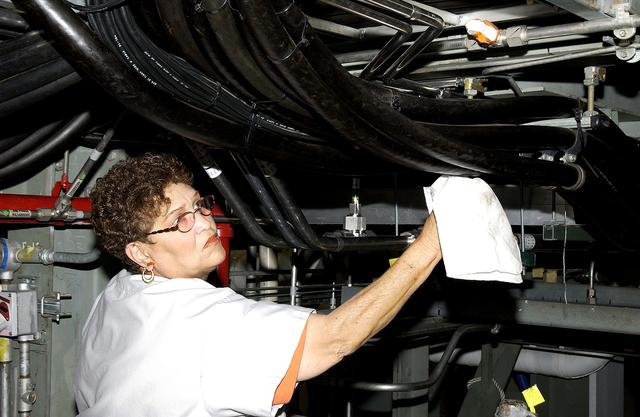
KENNEDY SPACE CENTER, FLA. - A KSC employee wipes down some of the hoses of the ground support equipment in the Orbiter Processing Facility (OPF) where Space Shuttle Atlantis is being processed for flight. Preparations are under way for the next launch of Atlantis on mission STS-114, a utilization and logistics flight to the International Space Station.
KSC-03pd2488
KSC | 2003-09-03
Details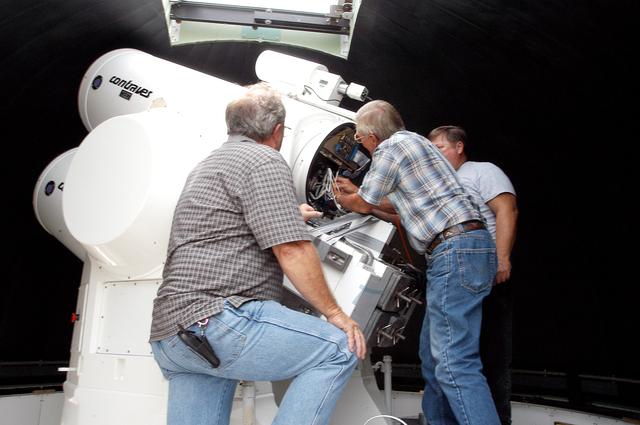
KENNEDY SPACE CENTER, FLA. - Workers calibrate a tracking telescope, part of the Distant Object Attitude Measurement System (DOAMS), located in Cocoa Beach, Fla. The telescope provides optical support for launches from KSC and Cape Canaveral.
KSC-03pd2506
KSC | 2003-09-03
Details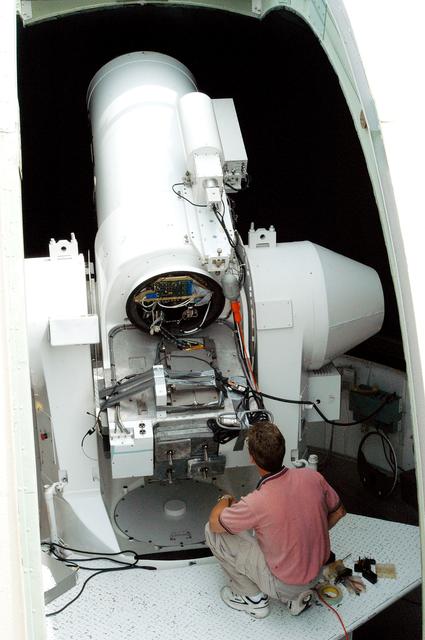
KENNEDY SPACE CENTER, FLA. - Workers calibrate a tracking telescope, part of the Distant Object Attitude Measurement System (DOAMS), located in Cocoa Beach, Fla. The telescope provides optical support for launches from KSC and Cape Canaveral.
KSC-03pd2504
KSC | 2003-09-03
Details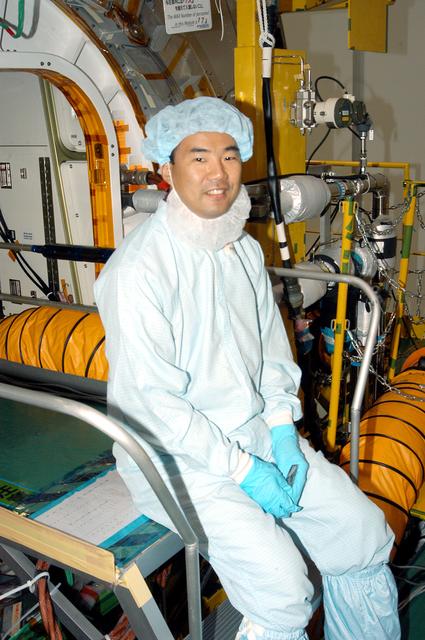
KENNEDY SPACE CENTER, FLA. - Astronaut Soichi Noguchi, with the National Space Development Agency of Japan (NASDA), rests inside the Japanese Experiment Module (JEM), undergoing a Multi-Element Integrated Test (MEIT) in the Space Station Processing Facility. Noguchi is assigned to mission STS-114 as a mission specialist. Node 2 attaches to the end of the U.S. Lab on the ISS and provides attach locations for the Japanese laboratory, European laboratory, the Centrifuge Accommodation Module and, eventually, Multipurpose Logistics Modules. It will provide the primary docking location for the Shuttle when a pressurized mating adapter is attached to Node 2. Installation of the module will complete the U.S. Core of the ISS. The JEM, developed by NASDA, is Japan's primary contribution to the Station. It will enhance the unique research capabilities of the orbiting complex by providing an additional environment for astronauts to conduct science experiments.
KSC-03pd2524
KSC | 2003-09-03
Details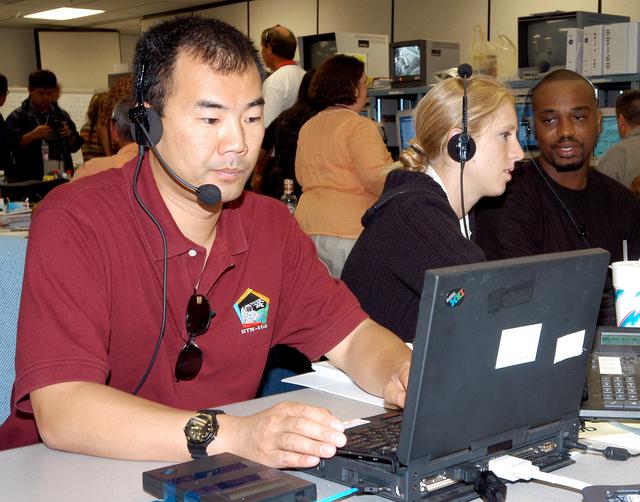
KENNEDY SPACE CENTER, FLA. - Astronaut Soichi Noguchi, with the National Space Development Agency of Japan (NASDA), works at a console during a Multi-Element Integrated Test (MEIT) of the U.S. Node 2 and the Japanese Experiment Module (JEM). Noguchi is assigned to mission STS-114 as a mission specialist. Node 2 attaches to the end of the U.S. Lab on the ISS and provides attach locations for the Japanese laboratory, European laboratory, the Centrifuge Accommodation Module and, eventually, Multipurpose Logistics Modules. It will provide the primary docking location for the Shuttle when a pressurized mating adapter is attached to Node 2. Installation of the module will complete the U.S. Core of the ISS. The JEM, developed by NASDA, is Japan's primary contribution to the Station. It will enhance the unique research capabilities of the orbiting complex by providing an additional environment for astronauts to conduct science experiments.
KSC-03pd2521
KSC | 2003-09-03
Details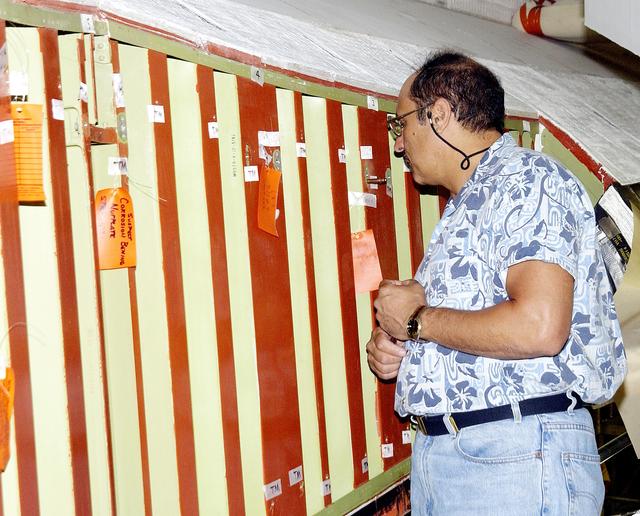
KENNEDY SPACE CENTER, FLA. - In the Orbiter Processing Facility (OPF), a United Space Alliance technician examines the attachment points for the spars on the exterior of a wing of Space Shuttle Atlantis. Reinforced Carbon Carbon (RCC) panels are mechanically attached to the wing with a series of floating joints - spars - to reduce loading on the panels caused by wing deflections. The aluminum and the metallic attachments are protected from exceeding temperature limits by internal insulation. The next launch of Atlantis will be on mission STS-114, a utilization and logistics flight to the International Space Station.
KSC-03pd2490
KSC | 2003-09-03
Details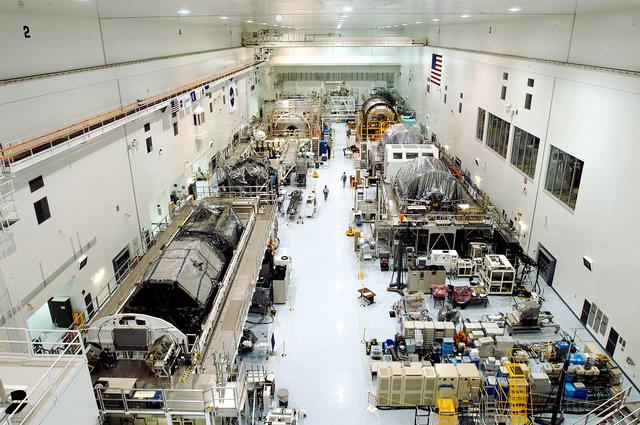
KENNEDY SPACE CENTER, FLA. - Various elements intended for the International Space Station are lined up in the Space Station Processing Facility. The newest to arrive at KSC are in the rear: at left, the U.S. Node 2, and next to it at right, the Japanese Experiment Module (JEM). The two elements are undergoing a Multi-Element Integrated Test (MEIT). Node 2 attaches to the end of the U.S. Lab on the ISS and provides attach locations for the Japanese laboratory, European laboratory, the Centrifuge Accommodation Module and, eventually, Multipurpose Logistics Modules. It will provide the primary docking location for the Shuttle when a pressurized mating adapter is attached to Node 2. Installation of the module will complete the U.S. Core of the ISS. Developed by the National Space Development Agency of Japan (NASDA), the JEM is Japan's primary contribution to the Station. It will enhance the unique research capabilities of the orbiting complex by providing an additional environment for astronauts to conduct science experiments.
KSC-03pd2529
KSC | 2003-09-03
Details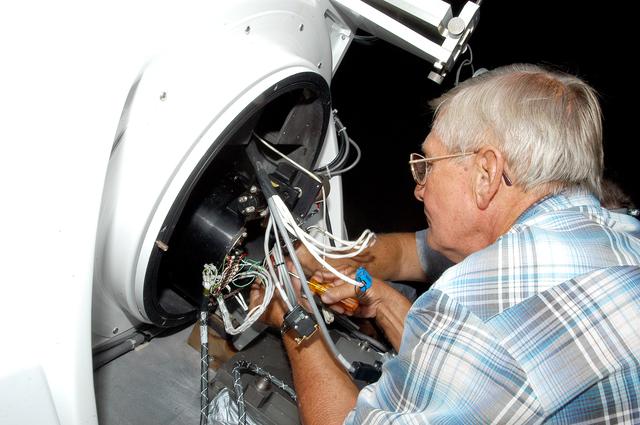
KENNEDY SPACE CENTER, FLA. - A worker calibrates a tracking telescope, part of the Distant Object Attitude Measurement System (DOAMS), located in Cocoa Beach, Fla. The telescope provides optical support for launches from KSC and Cape Canaveral.
KSC-03pd2508
KSC | 2003-09-03
Details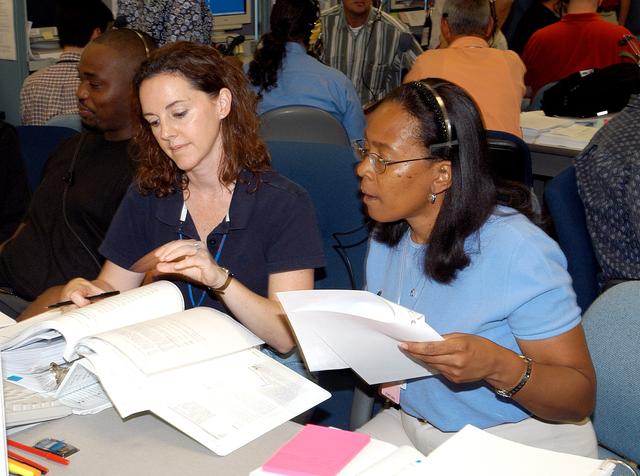
KENNEDY SPACE CENTER, FLA. - Workers in the Space Station Processing Facility look over paperwork during a Multi-Element Integrated Test (MEIT) of the U.S. Node 2 and the Japanese Experiment Module (JEM). Node 2 attaches to the end of the U.S. Lab on the ISS and provides attach locations for the Japanese laboratory, European laboratory, the Centrifuge Accommodation Module and, eventually, Multipurpose Logistics Modules. It will provide the primary docking location for the Shuttle when a pressurized mating adapter is attached to Node 2. Installation of the module will complete the U.S. Core of the ISS. The JEM, developed by the National Space Development Agency of Japan (NASDA), is Japan's primary contribution to the Station. It will enhance the unique research capabilities of the orbiting complex by providing an additional environment for astronauts to conduct science experiments.
KSC-03pd2519
KSC | 2003-09-03
Details

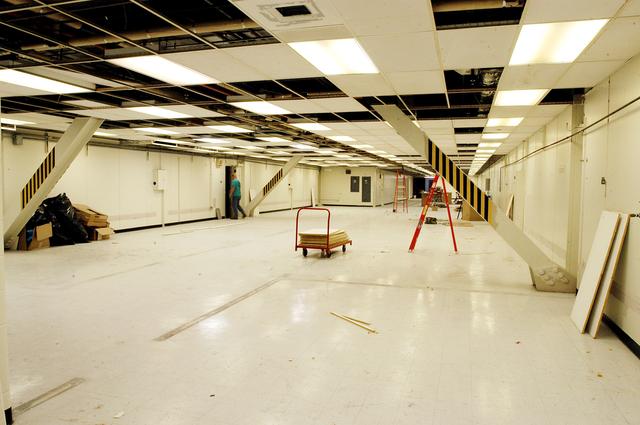
KENNEDY SPACE CENTER, FLA. - An area of the Vehicle Assembly Building is being prepared to store the debris collected from Space Shuttle Columbia. About 83,000 pieces were shipped to KSC during search and recovery efforts in East Texas.
KSC-03pd2502
KSC | 2003-09-02
Details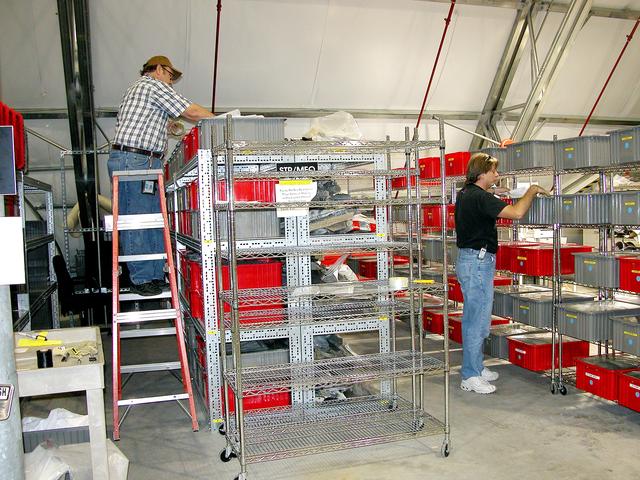
KENNEDY SPACE CENTER, FLA. - Workers in the Columbia Debris Hangar pull items from storage containers to transfer to storage in the Vehicle Assembly Building. About 83,000 pieces were shipped to KSC during search and recovery efforts in East Texas.
KSC-03pd2497
KSC | 2003-09-02
Details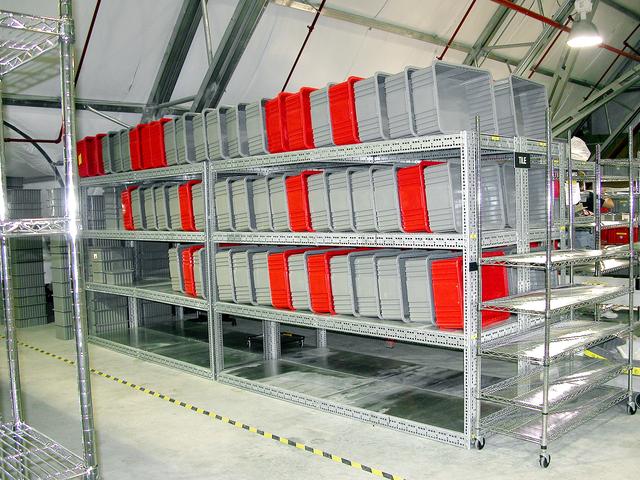
KENNEDY SPACE CENTER, FLA. - Containers in the Columbia Debris Hangar are lined up after being emptied of the Columbia debris. The debris is being transferred to storage in the Vehicle Assembly Building. About 83,000 pieces were shipped to KSC during search and recovery efforts in East Texas.
KSC-03pd2499
KSC | 2003-09-02
Details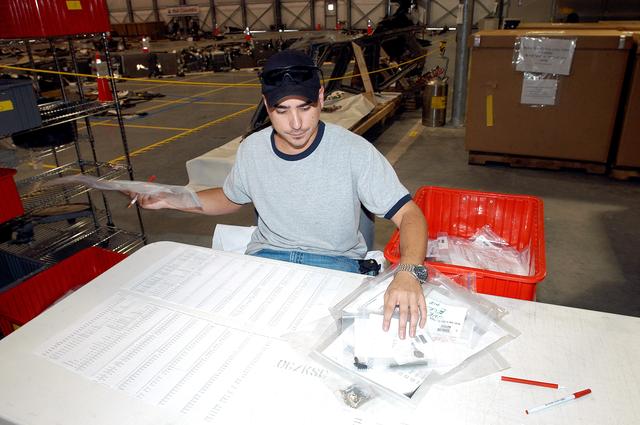
KENNEDY SPACE CENTER, FLA. - A worker in the Columbia Debris Hangar sorts bagged items of Columbia debris that will be transferred to storage in the Vehicle Assembly Building. About 83,000 pieces were shipped to KSC during search and recovery efforts in East Texas.
KSC-03pd2501
KSC | 2003-09-02
Details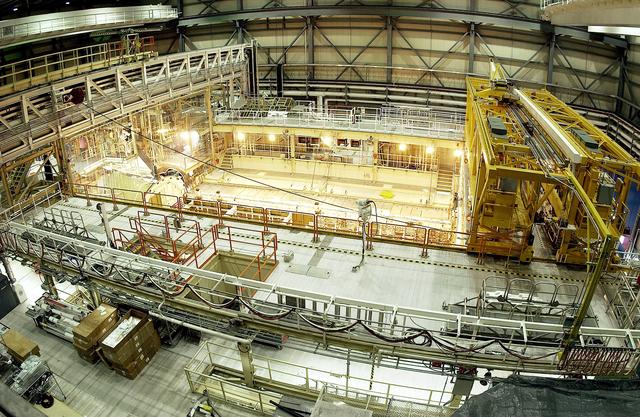
KENNEDY SPACE CENTER, FLA. - This bird's-eye view of a high bay in the Orbiter Processing Facility (OPF) shows the open payload bay of Space Shuttle Discovery surrounded by the standard platforms and equipment required to process a Space Shuttle orbiter. The high bay is 197 feet (60 meters) long, 150 feet (46 meters) wide, 95 feet (29 meters) high, and encompasses a 29,000-square-foot (2,694-meter) area. The 30-ton (27-metric-ton) bridge crane (yellow device, right) has a hook height of approximately 66 feet (20 meters). Platforms, a main access bridge, and two rolling bridges with trucks provide access to various parts of the orbiter. In addition to routine servicing and checkout, the inspections and modifications made to enhance Discovery's performance and upgrade its systems were performed in the OPF during its recently completed Orbiter Major Modification (OMM) period.
KSC-03pd2486
KSC | 2003-09-02
Details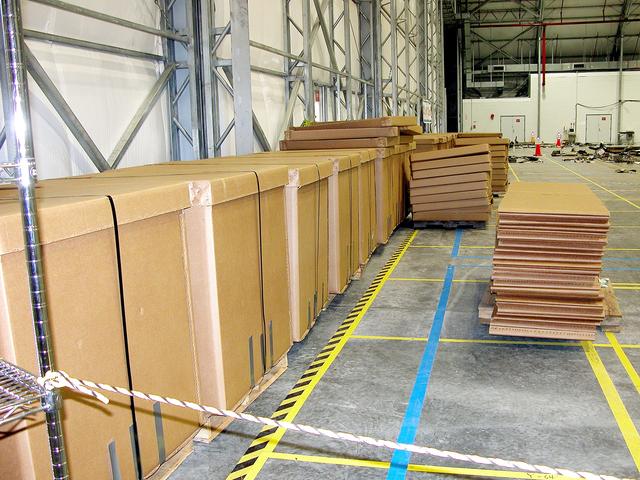
KENNEDY SPACE CENTER, FLA. - Storage boxes filled with Columbia debris (left) await transfer to storage in the Vehicle Assembly Building. Empty boxes at right wait to be filled with more of the approximately 83,000 pieces shipped to KSC during search and recovery efforts in East Texas.
KSC-03pd2498
KSC | 2003-09-02
Details
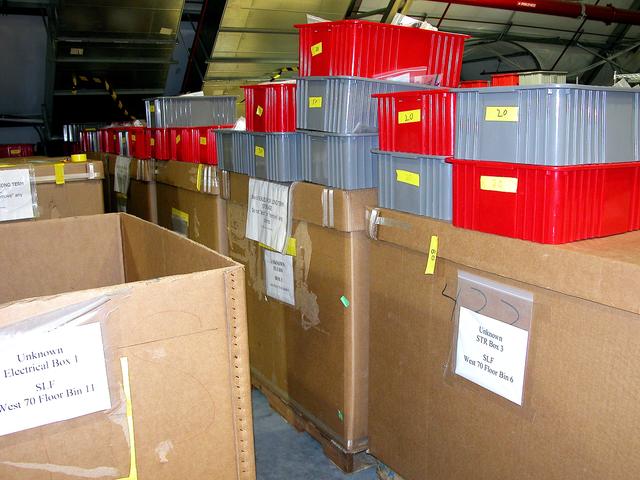
KENNEDY SPACE CENTER, FLA. - Storage boxes and other containers of Columbia debris wait in the Columbia Debris Hangar for transfer to storage in the Vehicle Assembly Building. About 83,000 pieces were shipped to KSC during search and recovery efforts in East Texas.
KSC-03pd2500
KSC | 2003-09-02
Details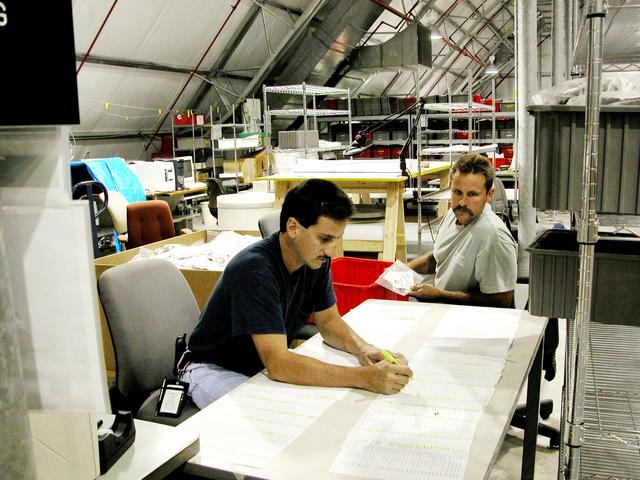
KENNEDY SPACE CENTER, FLA. - Workers in the Columbia Debris Hangar record the first items of the STS-107 debris to be transferred to storage in the Vehicle Assembly Building. About 83,000 pieces were shipped to KSC during search and recovery efforts in East Texas.
KSC-03pd2495
KSC | 2003-09-02
Details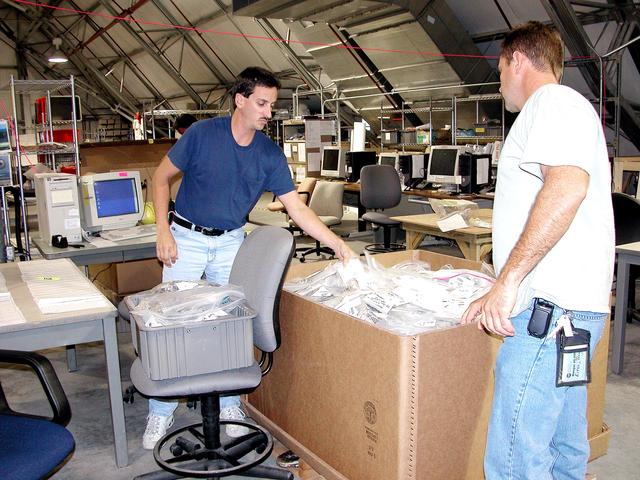
KENNEDY SPACE CENTER, FLA. - Workers in the Columbia Debris Hangar move some of the STS-107 debris into boxes for transfer to storage in the Vehicle Assembly Building. About 83,000 pieces were shipped to KSC during search and recovery efforts in East Texas.
KSC-03pd2496
KSC | 2003-09-02
Details