NASA Media Archive
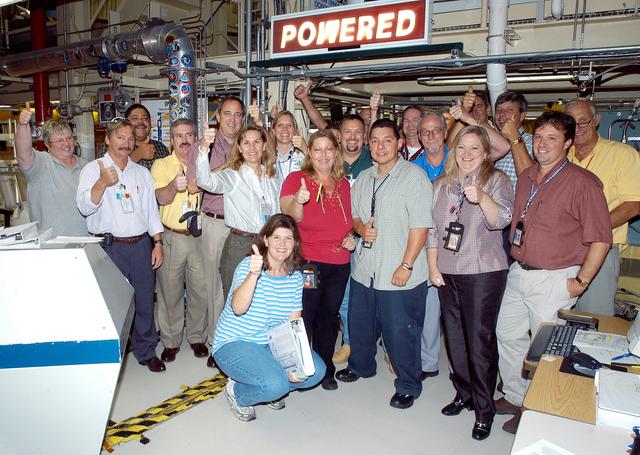
KENNEDY SPACE CENTER, FLA. - In the Orbiter Processing Facility, the processing team celebrates the successful power-up of the orbiter Discovery. The vehicle has been undergoing Orbiter Major Modifications in the past year, ranging from wiring, control panels and black boxes to gaseous and fluid systems tubing and components. These systems were deserviced, disassembled, inspected, modified, reassembled, checked out and reserviced, as were most other systems onboard. The work includes the installation of the Multifunction Electronic Display Subsystem (MEDS) - a state-of-the-art “glass cockpit.”
KSC-03pd2455
KSC | 2003-08-27
Details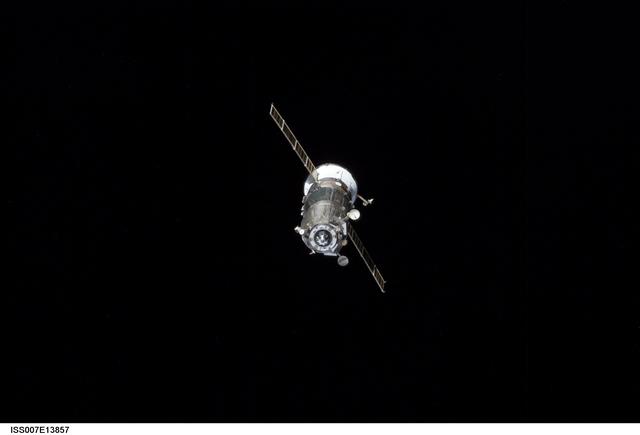
View of the Progress Spacecraft after undocking from the ISS during Expedition Seven
iss007e13857
JSC | 2003-08-27
Details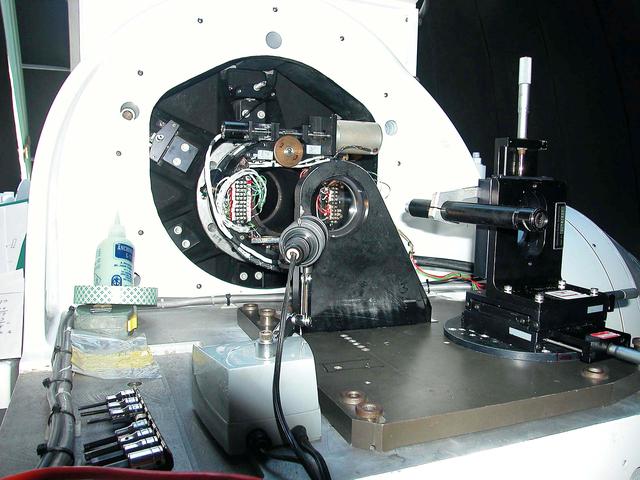

View of the Progress Spacecraft after undocking from the ISS during Expedition Seven
iss007e13852
JSC | 2003-08-27
Details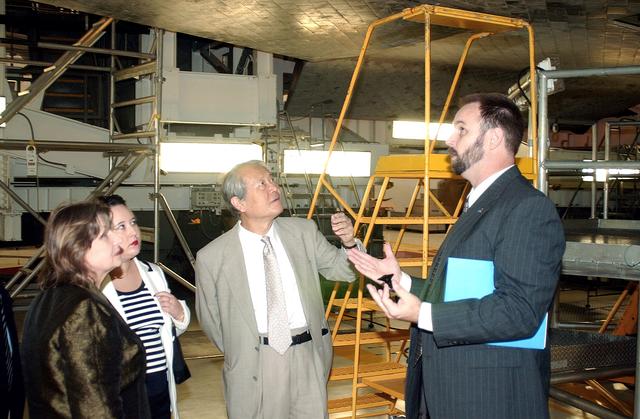
KENNEDY SPACE CENTER, FLA. - NASA Manager Steve Cain explains aspects of Space Shuttle processing to Consul General of Japan Ko Kodaira and his family in the Orbiter Processing Facility during their visit to Kennedy Space Center (KSC). From left are Kodaira's wife Marie, his daughter Reiko, Kodaira, and Cain, Senior Future International Space Station Element Manager. Kodaira is touring the facilities at KSC at the invitation of the local office of the National Space Development Agency of Japan (NASDA) to acquaint him with KSC's unique processing capabilities.
KSC-03pd2444
KSC | 2003-08-26
Details
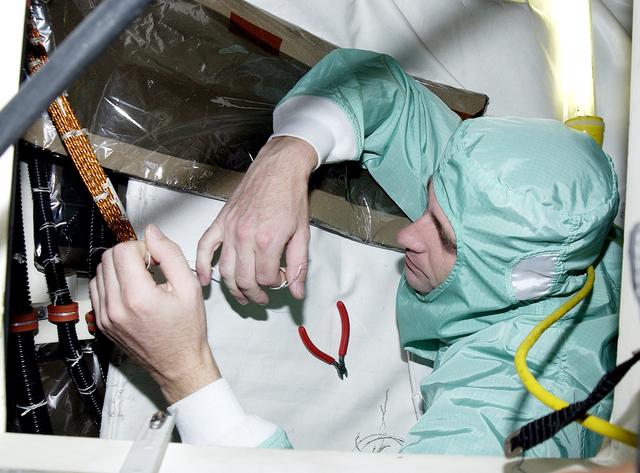
KENNEDY SPACE CENTER, FLA. - A technician with United Space Alliance checks wiring in the mid-body and flight deck of orbiter Atlantis as part of routine maintenance.
KSC-03pd2433
KSC | 2003-08-26
Details
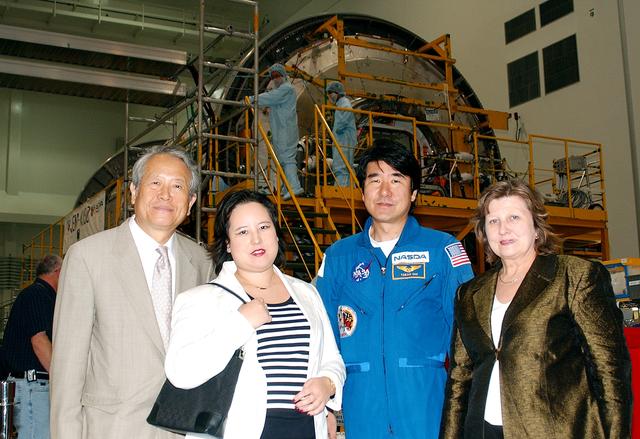
KENNEDY SPACE CENTER, FLA. - From left, the Consul General of Japan Ko Kodaira, his daughter Reiko, astronaut Dr. Takao Doi, and Kodaira's wife Marie pause for a photograph in the Space Station Processing Facility during their visit to Kennedy Space Center (KSC). Doi represented Japan on Space Shuttle mission STS-87, the fourth U.S Microgravity Payload flight. Kodaira is touring the facilities at KSC at the invitation of the local office of the National Space Development Agency of Japan (NASDA) to acquaint him with KSC's unique processing capabilities.
KSC-03pd2443
KSC | 2003-08-26
Details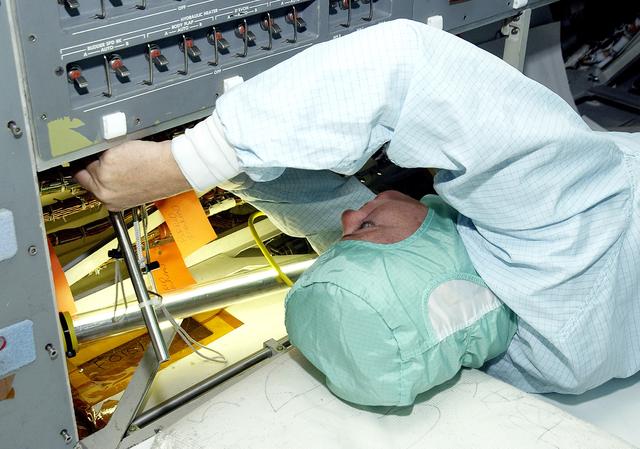
KENNEDY SPACE CENTER, FLA. - A technician with United Space Alliance checks wiring in the mid-body and flight deck of orbiter Atlantis as part of routine maintenance.
KSC-03pd2436
KSC | 2003-08-26
Details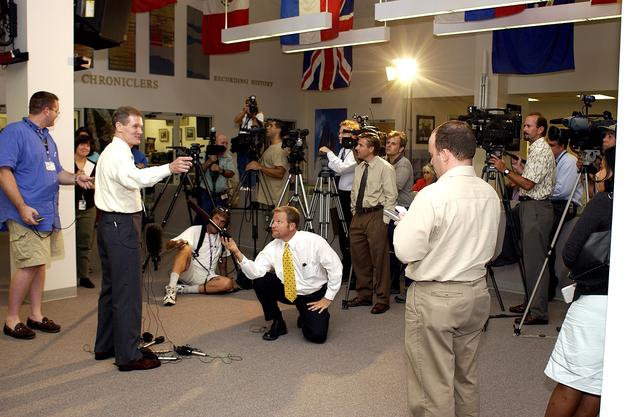
KENNEDY SPACE CENTER, FLA. - Sen. Bill Nelson talks to the media at the NASA KSC News Center about the Columbia Accident Investigation Board report released today.
KSC-03pd2435
KSC | 2003-08-26
Details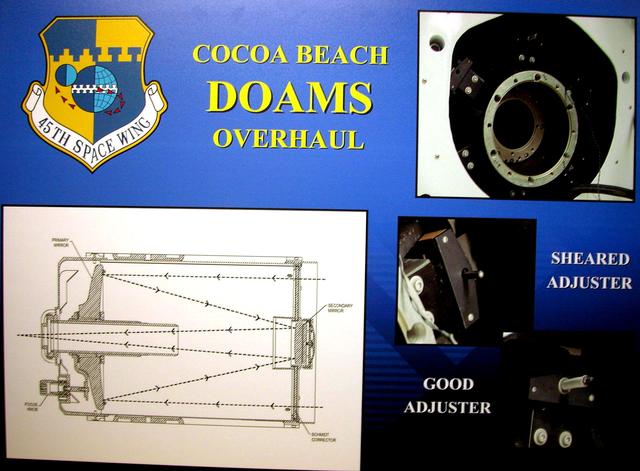
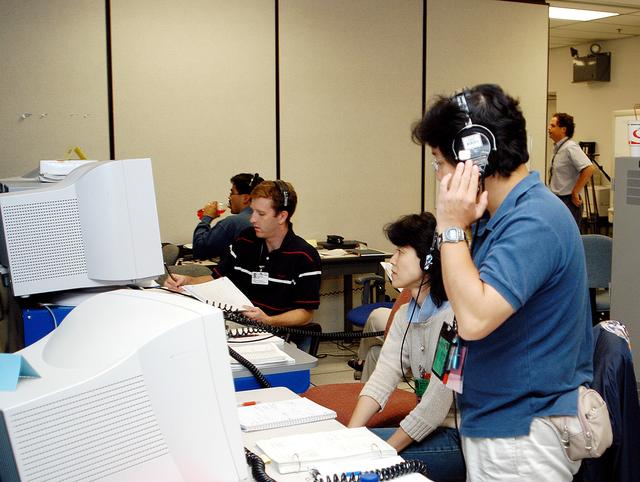
KENNEDY SPACE CENTER, FLA. - In the Space Station Processing Facility, Japanaese astronauts and personnel observe sensors during a Multi-Equipment Interface Test (MEIT) on the Japanese Experiment Module (JEM). The National Space Development Agency of Japan (NASDA) developed the laboratory at the Tsukuba Space Center near Tokyo. It is the first element, named "Kibo" (Hope), to be delivered to KSC. The JEM is Japan's primary contribution to the Station. It will enhance the unique research capabilities of the orbiting complex by providing an additional environment for astronauts to conduct science experiments.
KSC-03pd2462
KSC | 2003-08-26
Details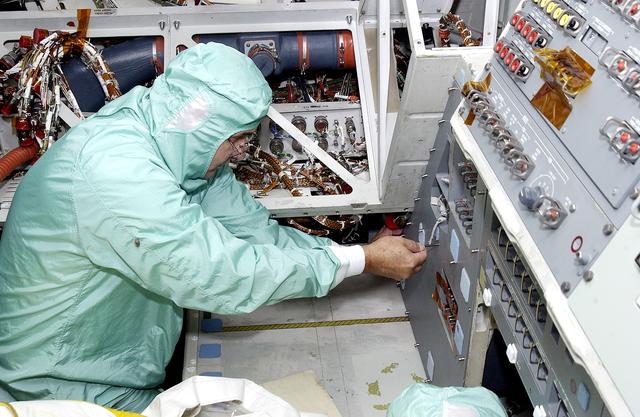
KENNEDY SPACE CENTER, FLA. - A technician with United Space Alliance checks wiring in the mid-body of orbiter Atlantis as part of routine maintenance.
KSC-03pd2437
KSC | 2003-08-26
Details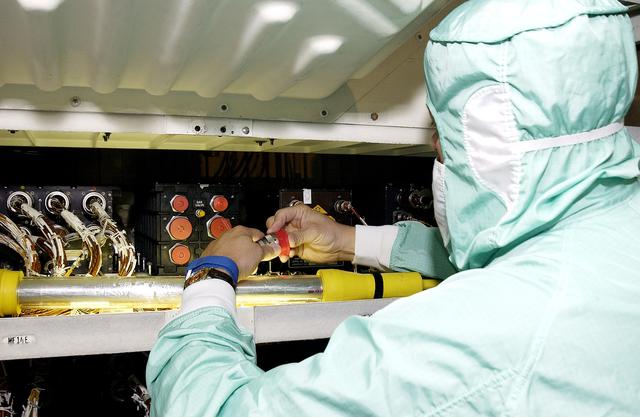
KENNEDY SPACE CENTER, FLA. - A technician with United Space Alliance checks wiring in the mid-body and flight deck of orbiter Atlantis as part of routine maintenance.
KSC-03pd2432
KSC | 2003-08-26
Details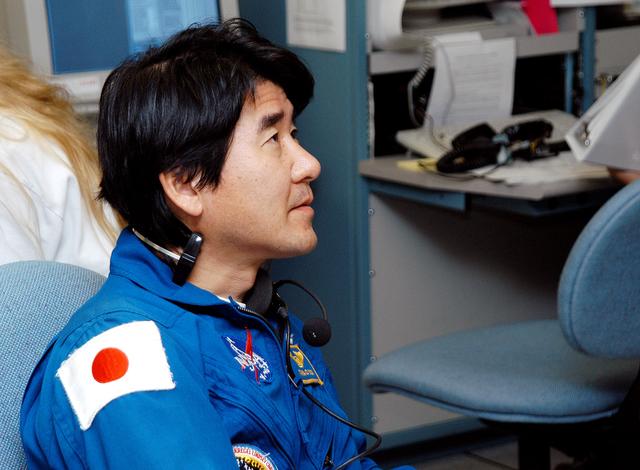
KENNEDY SPACE CENTER, FLA. - Takao Doi, an astronaut with the National Space Development Agency of Japan (NASDA), watches the sensors during a Multi-Equipment Interface Test (MEIT) on the Japanese Experiment Module (JEM). NASDA developed the laboratory at the Tsukuba Space Center near Tokyo. It is the first element, named "Kibo" (Hope), to be delivered to KSC. The JEM is Japan's primary contribution to the Station. It will enhance the unique research capabilities of the orbiting complex by providing an additional environment for astronauts to conduct science experiments.
KSC-03pd2461
KSC | 2003-08-26
Details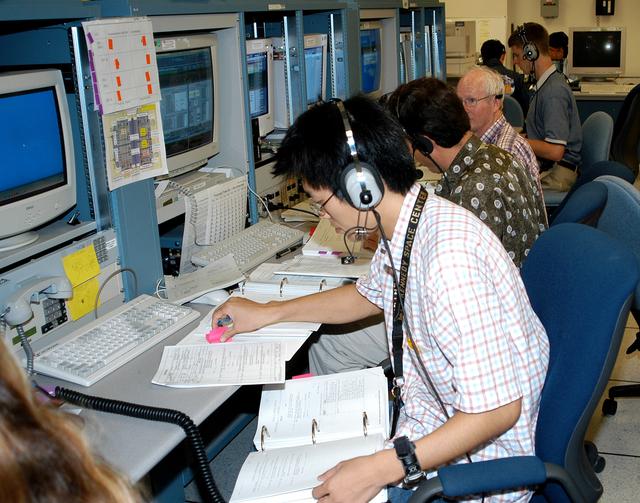
KENNEDY SPACE CENTER, FLA. - In the Space Station Processing Facility, personnel observe sensors during a Multi-Equipment Interface Test (MEIT) on the Japanese Experiment Module (JEM). The National Space Development Agency of Japan (NASDA) developed the laboratory at the Tsukuba Space Center near Tokyo. It is the first element, named "Kibo" (Hope), to be delivered to KSC. The JEM is Japan's primary contribution to the Station. It will enhance the unique research capabilities of the orbiting complex by providing an additional environment for astronauts to conduct science experiments.
KSC-03pd2463
KSC | 2003-08-26
Details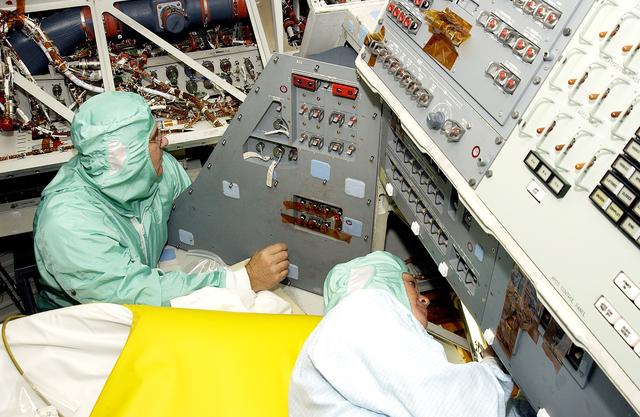
KENNEDY SPACE CENTER, FLA. - Technicians with United Space Alliance work in close quarters as they check the wiring on the mid-body of orbiter Atlantis. The inspection is part of routine maintenance.
KSC-03pd2438
KSC | 2003-08-26
Details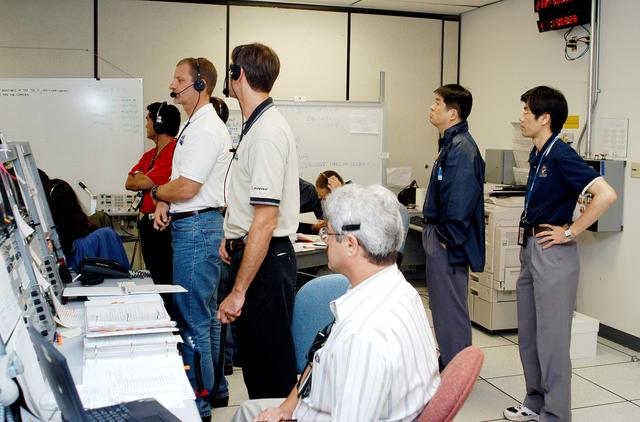
KENNEDY SPACE CENTER, FLA. - Japanese astronauts and other personnel in the Space Station Processing Facility observe sensors during a Multi-Equipment Interface Test (MEIT) on the Japanese Experiment Module (JEM). The National Space Development Agency of Japan (NASDA) developed the laboratory at the Tsukuba Space Center near Tokyo. It is the first element, named "Kibo" (Hope), to be delivered to KSC. The JEM is Japan's primary contribution to the Station. It will enhance the unique research capabilities of the orbiting complex by providing an additional environment for astronauts to conduct science experiments.
KSC-03pd2460
KSC | 2003-08-26
Details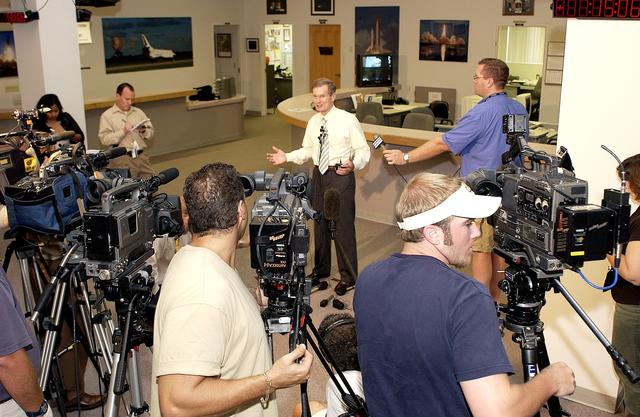
KENNEDY SPACE CENTER, FLA. - Sen. Bill Nelson talks to the media at the NASA KSC News Center about the Columbia Accident Investigation Board report released today.
KSC-03pd2434
KSC | 2003-08-26
Details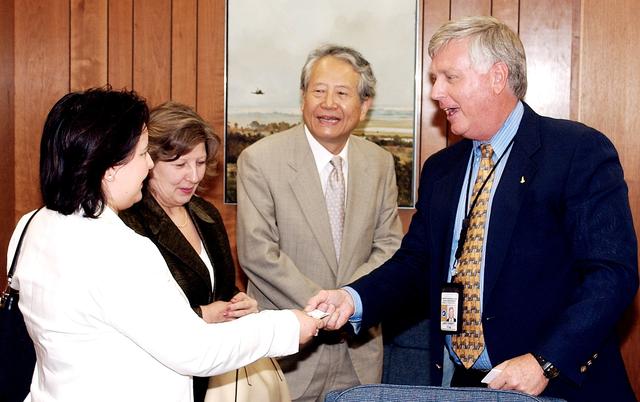
KENNEDY SPACE CENTER, FLA. - KSC Director James W. Kennedy receives Consul General of Japan Ko Kodaira and his family in his office in Headquarters Building during their visit to Kennedy Space Center (KSC). From left are Kodaira's daughter Reiko, his wife Marie, Kodaira, and Kennedy. Kodaira is touring the facilities at KSC at the invitation of the local office of the National Space Development Agency of Japan (NASDA) to acquaint him with KSC's unique processing capabilities.
KSC-03pd2442
KSC | 2003-08-26
Details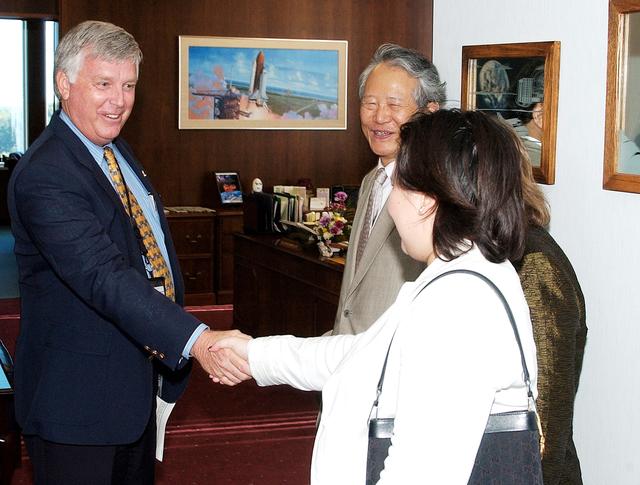
KENNEDY SPACE CENTER, FLA. - KSC Director James W. Kennedy receives Consul General of Japan Ko Kodaira and his family in his office in Headquarters Building during their visit to Kennedy Space Center (KSC). From left are Kennedy, Kodaira, his wife Marie (partially hidden), and his daughter Reiko. Kodaira is touring the facilities at KSC at the invitation of the local office of the National Space Development Agency of Japan (NASDA) to acquaint him with KSC's unique processing capabilities.
KSC-03pd2441
KSC | 2003-08-26
Details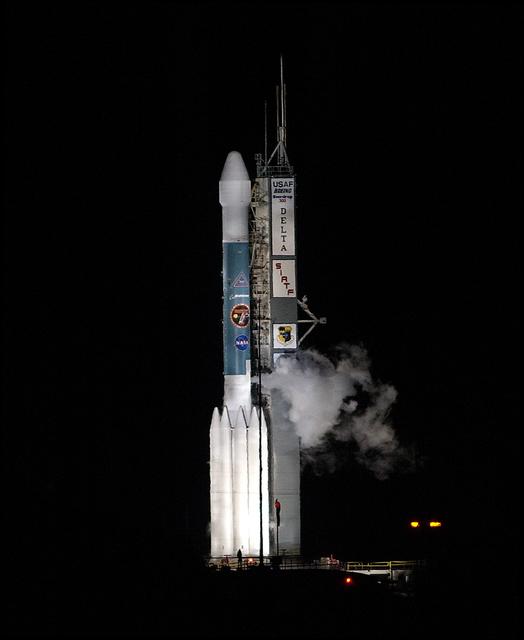
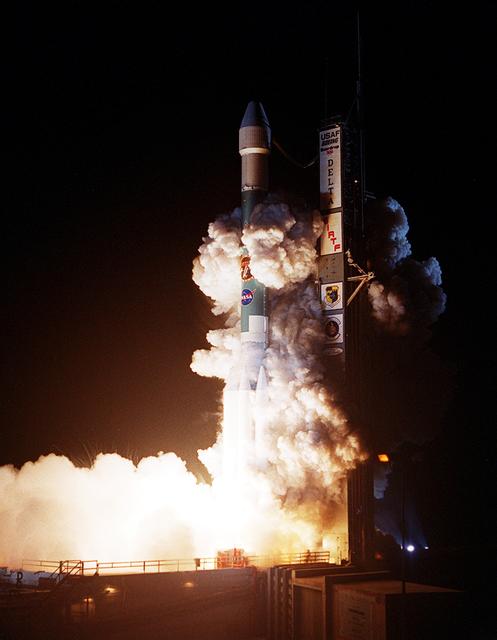
KENNEDY SPACE CENTER, FLA. - NASA's Space Infrared Telescope Facility (SIRTF) lifts off from Launch Pad 17-B, Cape Canaveral Air Force Station, on Aug. 25 at 1:35:39 a.m. EDT. SIRTF will obtain images and spectra by detecting the infrared energy, or heat, radiated by objects in space. Consisting of a 0.85-meter telescope and three cryogenically cooled science instruments, SIRTF will be the largest infrared telescope ever launched into space. It is the fourth and final element in NASA’s family of orbiting “Great Observatories.” Its highly sensitive instruments will give a unique view of the Universe and peer into regions of space that are hidden from optical telescopes.
KSC-03pp2428
KSC | 2003-08-25
Details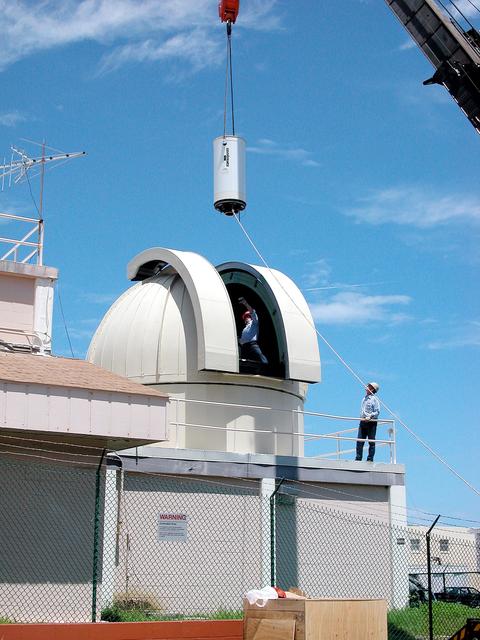
KENNEDY SPACE CENTER, FLA. - In Cocoa Beach, Fla., a new five-meter telescope is lowered toward the dome for installation. The tracking telescope is part of the Distant Object Attitude Measurement System (DOAMS) that provides optical support for launches from KSC and Cape Canaveral.
KSC-03pd2678
KSC | 2003-08-25
Details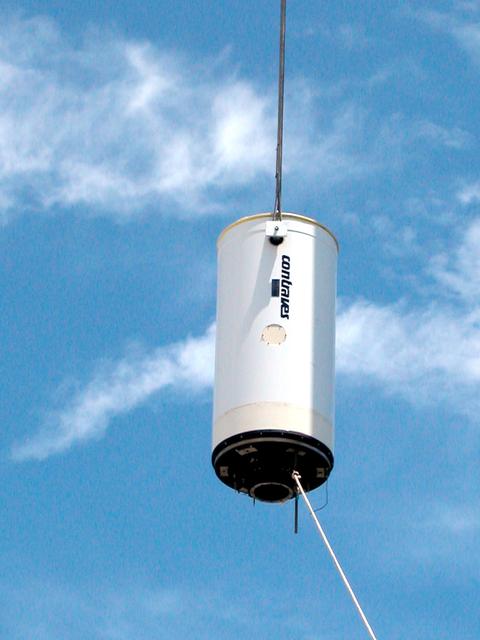
KENNEDY SPACE CENTER, FLA. - In Cocoa Beach, Fla., a new five-meter telescope is lifted up to the dome for installation. The tracking telescope is part of the Distant Object Attitude Measurement System (DOAMS) that provides optical support for launches from KSC and Cape Canaveral.
KSC-03pd2677
KSC | 2003-08-25
Details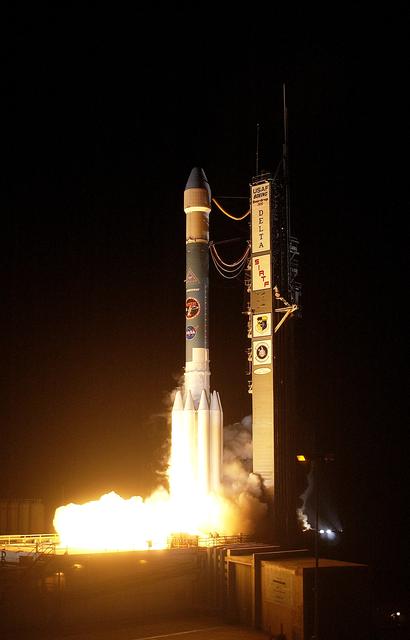
KENNEDY SPACE CENTER, FLA. - NASA's Space Infrared Telescope Facility (SIRTF) lifts off from Launch Pad 17-B, Cape Canaveral Air Force Station, on Aug. 25 at 1:35:39 a.m. EDT. SIRTF will obtain images and spectra by detecting the infrared energy, or heat, radiated by objects in space. Consisting of a 0.85-meter telescope and three cryogenically cooled science instruments, SIRTF will be the largest infrared telescope ever launched into space. It is the fourth and final element in NASA’s family of orbiting “Great Observatories.” Its highly sensitive instruments will give a unique view of the Universe and peer into regions of space that are hidden from optical telescopes.
KSC-03pd2422
KSC | 2003-08-25
Details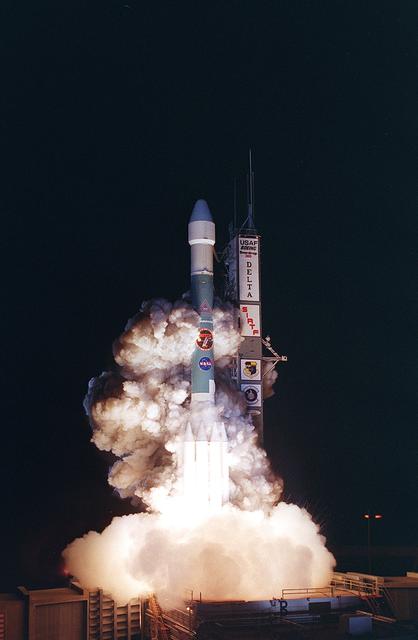
KENNEDY SPACE CENTER, FLA. - NASA's Space Infrared Telescope Facility (SIRTF) lifts off from Launch Pad 17-B, Cape Canaveral Air Force Station, on Aug. 25 at 1:35:39 a.m. EDT. SIRTF will obtain images and spectra by detecting the infrared energy, or heat, radiated by objects in space. Consisting of a 0.85-meter telescope and three cryogenically cooled science instruments, SIRTF will be the largest infrared telescope ever launched into space. It is the fourth and final element in NASA’s family of orbiting “Great Observatories.” Its highly sensitive instruments will give a unique view of the Universe and peer into regions of space that are hidden from optical telescopes.
KSC-03pp2427
KSC | 2003-08-25
Details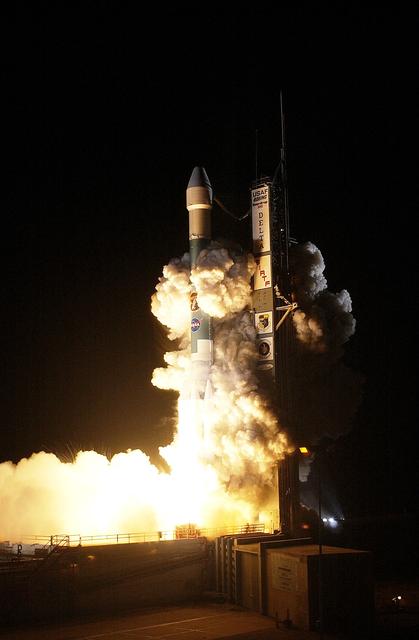
KENNEDY SPACE CENTER, FLA. - NASA's Space Infrared Telescope Facility (SIRTF) lifts off from Launch Pad 17-B, Cape Canaveral Air Force Station, on Aug. 25 at 1:35:39 a.m. EDT. SIRTF will obtain images and spectra by detecting the infrared energy, or heat, radiated by objects in space. Consisting of a 0.85-meter telescope and three cryogenically cooled science instruments, SIRTF will be the largest infrared telescope ever launched into space. It is the fourth and final element in NASA’s family of orbiting “Great Observatories.” Its highly sensitive instruments will give a unique view of the Universe and peer into regions of space that are hidden from optical telescopes.
KSC-03pd2423
KSC | 2003-08-25
Details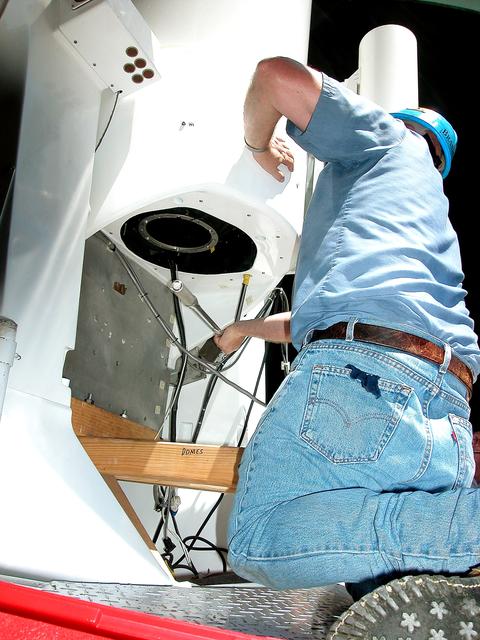
KENNEDY SPACE CENTER, FLA. - The master assembler, crane crew, removes a five-meter telescope in Cocoa Beach, Fla., for repair. The tracking telescope is part of the Distant Object Attitude Measurement System (DOAMS) that provides optical support for launches from KSC and Cape Canaveral.
KSC-03pd2674
KSC | 2003-08-25
Details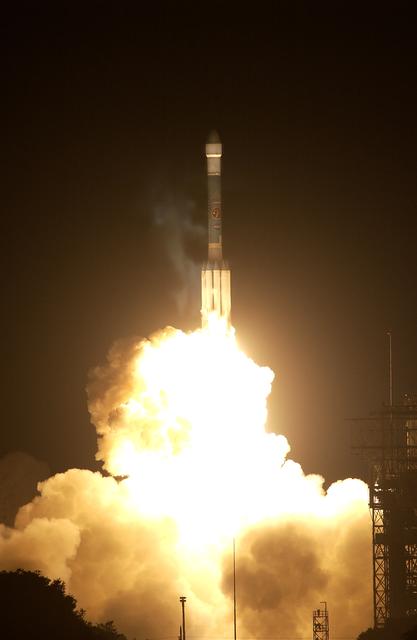
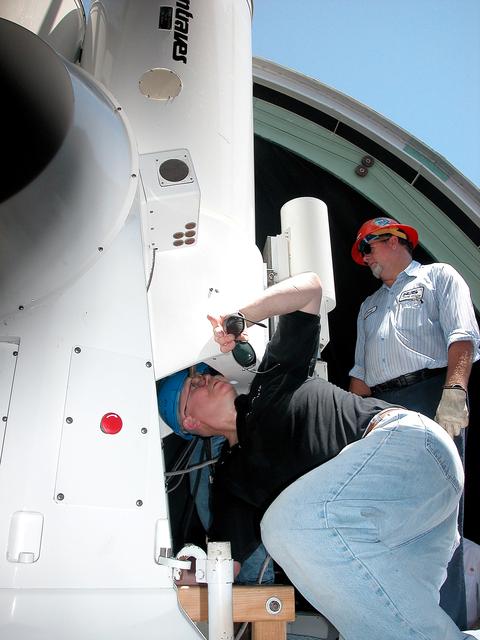
KENNEDY SPACE CENTER, FLA. - A worker looks at a five-meter (focal length) telescope being removed for repair. Part of the Distant Object Attitude Measurement System (DOAMS) in Cocoa Beach, Fla., the tracking telescope provides optical support for launches from KSC and Cape Canaveral. .
KSC-03pd2673
KSC | 2003-08-25
Details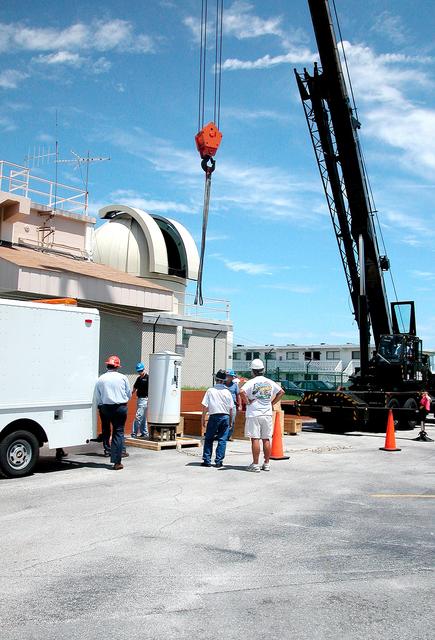
KENNEDY SPACE CENTER, FLA. - In Cocoa Beach, Fla., a new five-meter telescope sits on a pallet waiting to be lifted up to the dome above and installed. The tracking telescope is part of the Distant Object Attitude Measurement System (DOAMS) that provides optical support for launches from KSC and Cape Canaveral.
KSC-03pd2675
KSC | 2003-08-25
Details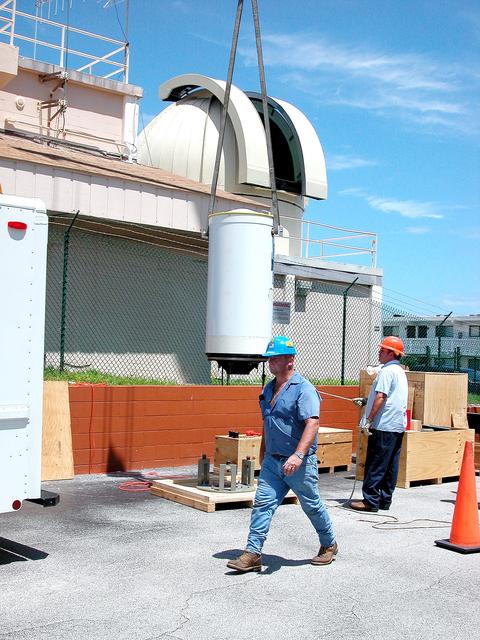
KENNEDY SPACE CENTER, FLA. - In Cocoa Beach, Fla., a new five-meter telescope is lifted up to the dome for installation. The tracking telescope is part of the Distant Object Attitude Measurement System (DOAMS) that provides optical support for launches from KSC and Cape Canaveral.
KSC-03pd2676
KSC | 2003-08-25
Details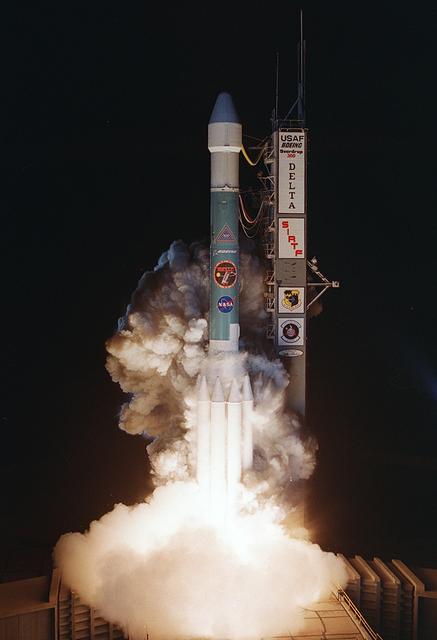
KENNEDY SPACE CENTER, FLA. - NASA's Space Infrared Telescope Facility (SIRTF) lifts off from Launch Pad 17-B, Cape Canaveral Air Force Station, on Aug. 25 at 1:35:39 a.m. EDT. SIRTF will obtain images and spectra by detecting the infrared energy, or heat, radiated by objects in space. Consisting of a 0.85-meter telescope and three cryogenically cooled science instruments, SIRTF will be the largest infrared telescope ever launched into space. It is the fourth and final element in NASA’s family of orbiting “Great Observatories.” Its highly sensitive instruments will give a unique view of the Universe and peer into regions of space that are hidden from optical telescopes.
KSC-03pp2426
KSC | 2003-08-25
Details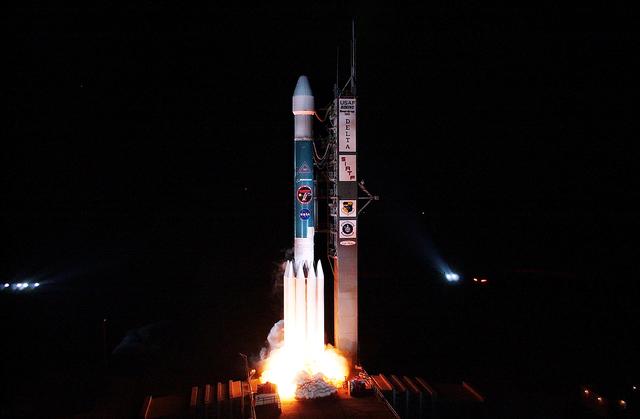
KENNEDY SPACE CENTER, FLA. - NASA's Space Infrared Telescope Facility (SIRTF) lifts off from Launch Pad 17-B, Cape Canaveral Air Force Station, on Aug. 25 at 1:35:39 a.m. EDT. SIRTF will obtain images and spectra by detecting the infrared energy, or heat, radiated by objects in space. Consisting of a 0.85-meter telescope and three cryogenically cooled science instruments, SIRTF will be the largest infrared telescope ever launched into space. It is the fourth and final element in NASA’s family of orbiting “Great Observatories.” Its highly sensitive instruments will give a unique view of the Universe and peer into regions of space that are hidden from optical telescopes.
KSC-03pd2424
KSC | 2003-08-25
Details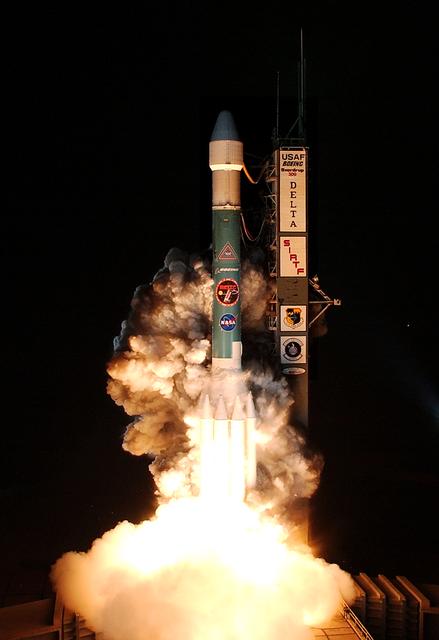
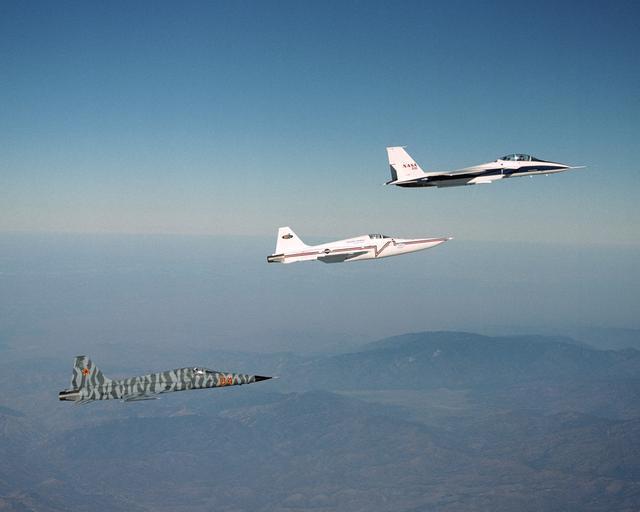
Northrop Grumman Corp.'s modified F-5E Shaped Sonic Boom Demonstration (SSBD) aircraft flies off the wing of NASA's F-15B Research testbed aircraft.
EC03-0229-6
AFRC | 2003-08-25
Details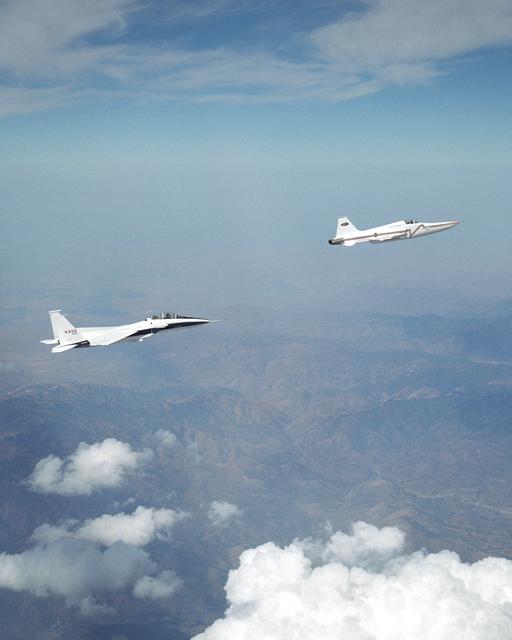
NASA's F-15B research testbed jet flew in the supersonic shockwave of a Northrop Grumman Corp. - modified U.S. Navy F-5E jet in support of the Shaped Sonic Boom Demonstration project.
EC03-0225-2
AFRC | 2003-08-25
Details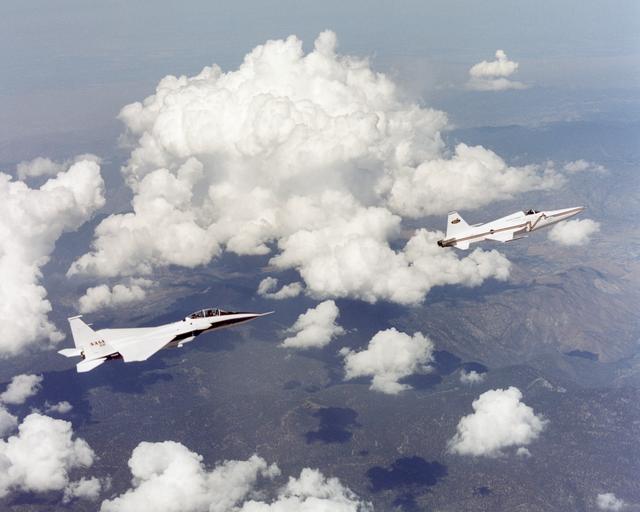
NASA's F-15B from the Dryden Flight Research Center flew in the supersonic shockwave of a modified U.S. Navy F-5E jet in support of the Shaped Sonic Boom Demonstration (SSBD) project. On Aug. 27, 2003, the F-5 SSBD aircraft demonstrated a method to reduce
EC03-0225-6
AFRC | 2003-08-25
Details