NASA Media Archive
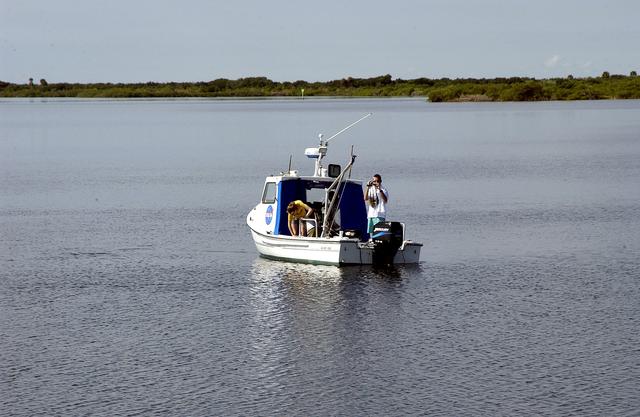
KENNEDY SPACE CENTER, FLA. - Researchers are positioned on one of the watercraft being utilized to conduct underwater acoustic research in the Launch Complex 39 turn basin. Several government agencies, including NASA, NOAA, the Navy, the Coast Guard, and the Florida Fish and Wildlife Commission are involved in the testing. The research involves demonstrations of passive and active sensor technologies, with applications in fields ranging from marine biological research to homeland security. The work is also serving as a pilot project to assess the cooperation between the agencies involved. Equipment under development includes a passive acoustic monitor developed by NASA’s Jet Propulsion Laboratory, and mobile robotic sensors from the Navy’s Mobile Diving and Salvage Unit.
KSC-03pd2376
KSC | 2003-08-19
Details
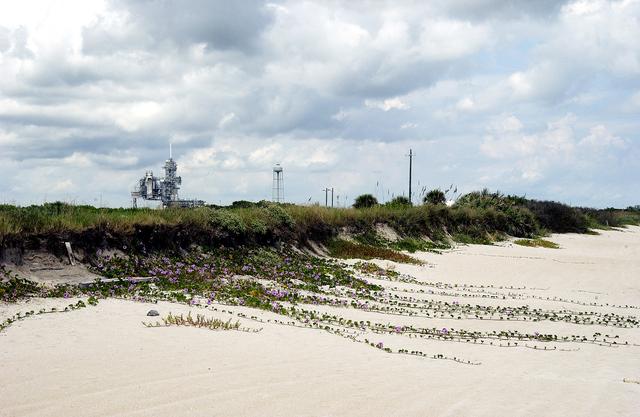
KENNEDY SPACE CENTER, FLA. - The sand dunes facing the Atlantic Ocean near Launch Pad 39A (background) at KSC spill purple flowers down its banks. The beach is just south of the Canaveral National Seashore, managed by the National Wildlife Service.
KSC-03pd2388
KSC | 2003-08-19
Details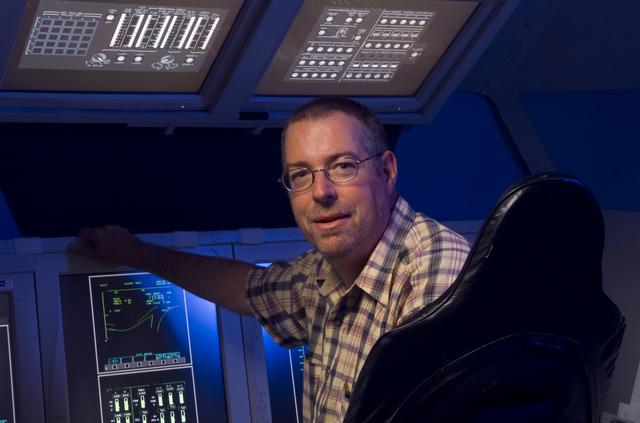
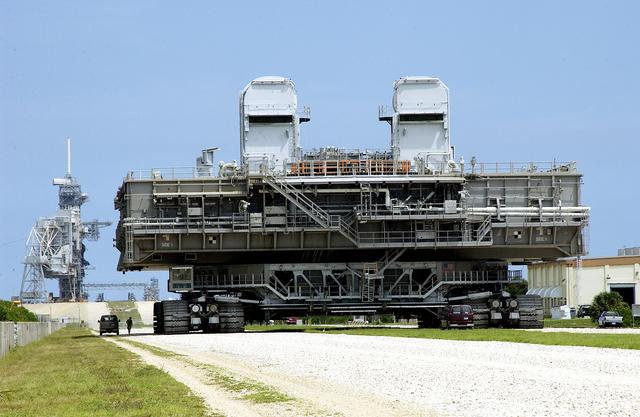
KENNEDY SPACE CENTER, FLA. - Crawler-transporter (CT) number 2 nears the launch pad with a Mobile Launcher Platform (MLP) on top. After recent modifications to the cab and muffler system, the CT was taken on a test run. The CT moves Space Shuttle vehicles, situated on the MLP, between the VAB and launch pad. Moving on four double-tracked crawlers, the CT uses a laser guidance system and a leveling system for the journey that keeps the top of a Space Shuttle vertical within plus- or minus-10 minutes of arc. The system enables the CT-MLP-Shuttle to negotiate the ramp leading to the launch pads and keep the load level. Unloaded, the CT weighs 6 million pounds. Seen on top of the MLP are two tail service masts that support the fluid, gas and electrical requirements of the orbiter’s liquid oxygen and liquid hydrogen aft umbilicals.
KSC-03pd2387
KSC | 2003-08-19
Details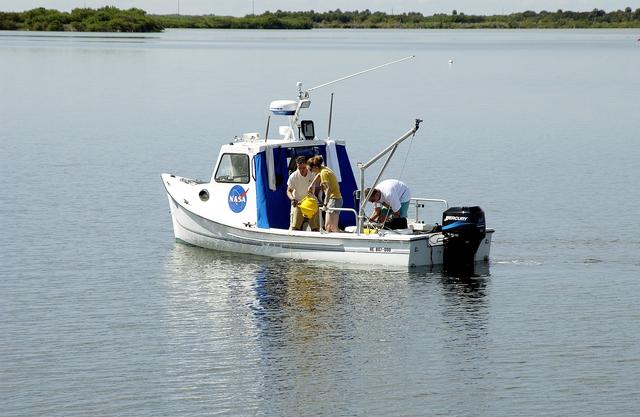
KENNEDY SPACE CENTER, FLA. - Research team members aboard one of the watercraft being utilized to conduct underwater acoustic research in the Launch Complex 39 turn basin prepare to release some of the project's equipment into the water. Several government agencies, including NASA, NOAA, the Navy, the Coast Guard, and the Florida Fish and Wildlife Commission are involved in the testing. The research involves demonstrations of passive and active sensor technologies, with applications in fields ranging from marine biological research to homeland security. The work is also serving as a pilot project to assess the cooperation between the agencies involved. Equipment under development includes a passive acoustic monitor developed by NASA’s Jet Propulsion Laboratory, and mobile robotic sensors from the Navy’s Mobile Diving and Salvage Unit.
KSC-03pd2380
KSC | 2003-08-19
Details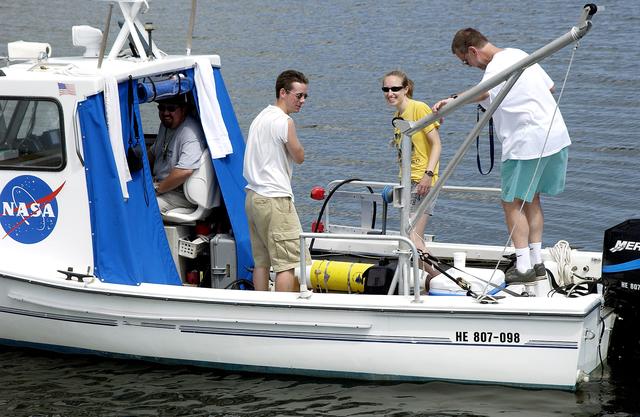
KENNEDY SPACE CENTER, FLA. - Research team members aboard one of the watercraft being utilized to conduct underwater acoustic research in the Launch Complex 39 turn basin secure some of the project's equipment back into the vessel. Several government agencies, including NASA, NOAA, the Navy, the Coast Guard, and the Florida Fish and Wildlife Commission are involved in the testing. The research involves demonstrations of passive and active sensor technologies, with applications in fields ranging from marine biological research to homeland security. The work is also serving as a pilot project to assess the cooperation between the agencies involved. Equipment under development includes a passive acoustic monitor developed by NASA’s Jet Propulsion Laboratory, and mobile robotic sensors from the Navy’s Mobile Diving and Salvage Unit.
KSC-03pd2386
KSC | 2003-08-19
Details
KENNEDY SPACE CENTER, FLA. - Joe Bartoszek, NASA, is a member of the research team conducting underwater acoustic research in the Launch Complex 39 turn basin near Launch Pad 39A. Several government agencies, including NASA, NOAA, the Navy, the Coast Guard, and the Florida Fish and Wildlife Commission are involved in the testing. The research involves demonstrations of passive and active sensor technologies, with applications in fields ranging from marine biological research to homeland security. The work is also serving as a pilot project to assess the cooperation between the agencies involved. Equipment under development includes a passive acoustic monitor developed by NASA’s Jet Propulsion Laboratory, and mobile robotic sensors from the Navy’s Mobile Diving and Salvage Unit.
KSC-03pd2368
KSC | 2003-08-18
Details
KENNEDY SPACE CENTER, FLA. - Researchers utilize several types of watercraft to conduct underwater acoustic research in the Launch Complex 39 turn basin near Launch Pad 39A. Several government agencies, including NASA, NOAA, the Navy, the Coast Guard, and the Florida Fish and Wildlife Commission are involved in the testing. The research involves demonstrations of passive and active sensor technologies, with applications in fields ranging from marine biological research to homeland security. The work is also serving as a pilot project to assess the cooperation between the agencies involved. Equipment under development includes a passive acoustic monitor developed by NASA’s Jet Propulsion Laboratory, and mobile robotic sensors from the Navy’s Mobile Diving and Salvage Unit.
KSC-03pd2366
KSC | 2003-08-18
Details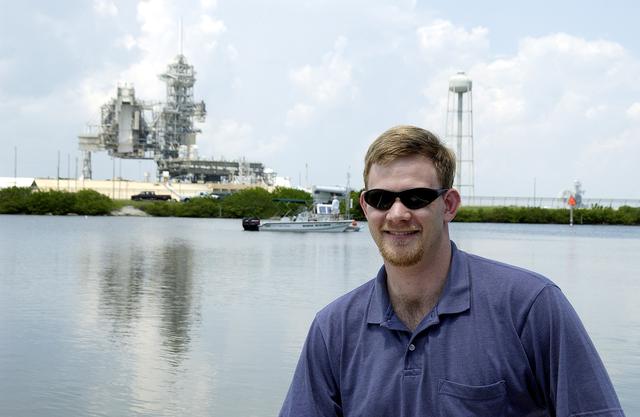
KENNEDY SPACE CENTER, FLA. - Justin Manley, of the National Oceanic and Atmospheric Administration, is a member of the research team conducting underwater acoustic research in the Launch Complex 39 turn basin near Launch Pad 39A. Several government agencies, including NASA, NOAA, the Navy, the Coast Guard, and the Florida Fish and Wildlife Commission are involved in the testing. The research involves demonstrations of passive and active sensor technologies, with applications in fields ranging from marine biological research to homeland security. The work is also serving as a pilot project to assess the cooperation between the agencies involved. Equipment under development includes a passive acoustic monitor developed by NASA’s Jet Propulsion Laboratory, and mobile robotic sensors from the Navy’s Mobile Diving and Salvage Unit.
KSC-03pd2367
KSC | 2003-08-18
Details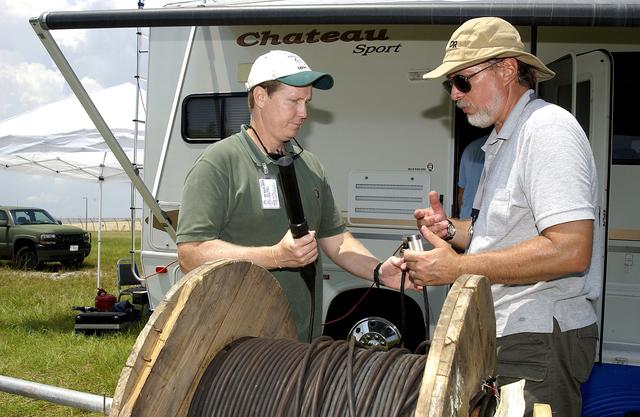
KENNEDY SPACE CENTER, FLA. - Research team members work with acoustic cable during underwater acoustic research being conducted in the Launch Complex 39 turn basin. Several government agencies, including NASA, NOAA, the Navy, the Coast Guard, and the Florida Fish and Wildlife Commission are involved in the testing. The research involves demonstrations of passive and active sensor technologies, with applications in fields ranging from marine biological research to homeland security. The work is also serving as a pilot project to assess the cooperation between the agencies involved. Equipment under development includes a passive acoustic monitor developed by NASA’s Jet Propulsion Laboratory, and mobile robotic sensors from the Navy’s Mobile Diving and Salvage Unit.
KSC-03pd2370
KSC | 2003-08-18
Details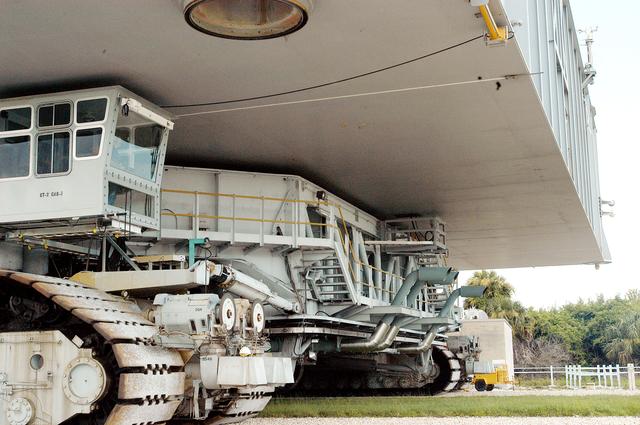
KENNEDY SPACE CENTER, FLA. - A closeup of crawler-transporter (CT) number 2 shows the cab, at left, that recently underwent modifications. The CT is transporting a Mobile Launch Platform (MLP) on a test run to the pad. The CT moves Space Shuttle vehicles, situated on the MLP, between the VAB and launch pad. Moving on four double-tracked crawlers, the CT uses a laser guidance system and a leveling system for the journey that keeps the top of a Space Shuttle vertical within plus- or minus-10 minutes of arc. The system enables the CT-MLP-Shuttle to negotiate the ramp leading to the launch pads and keep the load level. Unloaded, the CT weighs 6 million pounds. Seen on top of the MLP are two tail service masts that support the fluid, gas and electrical requirements of the orbiter’s liquid oxygen and liquid hydrogen aft umbilicals.
KSC-03pd2358
KSC | 2003-08-18
Details
KENNEDY SPACE CENTER, FLA. - Dr. Grant Gilmore (left), Dynamac Corp., talks to another member of the research team conducting underwater acoustic research in the Launch Complex 39 turn basin. Several government agencies, including NASA, NOAA, the Navy, the Coast Guard, and the Florida Fish and Wildlife Commission are involved in the testing. The research involves demonstrations of passive and active sensor technologies, with applications in fields ranging from marine biological research to homeland security. The work is also serving as a pilot project to assess the cooperation between the agencies involved. Equipment under development includes a passive acoustic monitor developed by NASA’s Jet Propulsion Laboratory, and mobile robotic sensors from the Navy’s Mobile Diving and Salvage Unit.
KSC-03pd2369
KSC | 2003-08-18
Details

KENNEDY SPACE CENTER, FLA. - Dr. Grant Gilmore, Dynamac Corp., utilizes a laptop computer to explain aspects of the underwater acoustic research under way in the Launch Complex 39 turn basin. Several government agencies, including NASA, NOAA, the Navy, the Coast Guard, and the Florida Fish and Wildlife Commission are involved in the testing. The research involves demonstrations of passive and active sensor technologies, with applications in fields ranging from marine biological research to homeland security. The work is also serving as a pilot project to assess the cooperation between the agencies involved. Equipment under development includes a passive acoustic monitor developed by NASA’s Jet Propulsion Laboratory, and mobile robotic sensors from the Navy’s Mobile Diving and Salvage Unit.
KSC-03pd2375
KSC | 2003-08-18
Details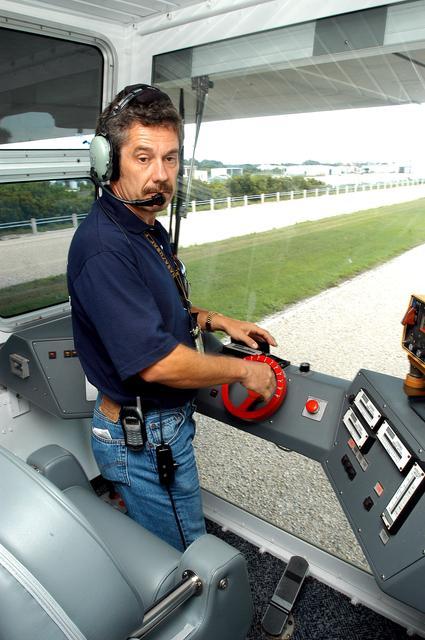
KENNEDY SPACE CENTER, FLA. - Inside the cab of crawler-transporter (CT) number 2, driver Sam Dove, with United Space Alliance, operates the vehicle on a test run to the launch pad. The CT recently underwent modifications to the cab. The CT is transporting a Mobile Launch Platform (MLP). The CT moves Space Shuttle vehicles, situated on the MLP, between the VAB and launch pad. Moving on four double-tracked crawlers, the CT uses a laser guidance system and a leveling system for the journey that keeps the top of a Space Shuttle vertical within plus- or minus-10 minutes of arc. The system enables the CT-MLP-Shuttle to negotiate the ramp leading to the launch pads and keep the load level. Unloaded, the CT weighs 6 million pounds. Seen on top of the MLP are two tail service masts that support the fluid, gas and electrical requirements of the orbiter’s liquid oxygen and liquid hydrogen aft umbilicals.
KSC-03pd2361
KSC | 2003-08-18
Details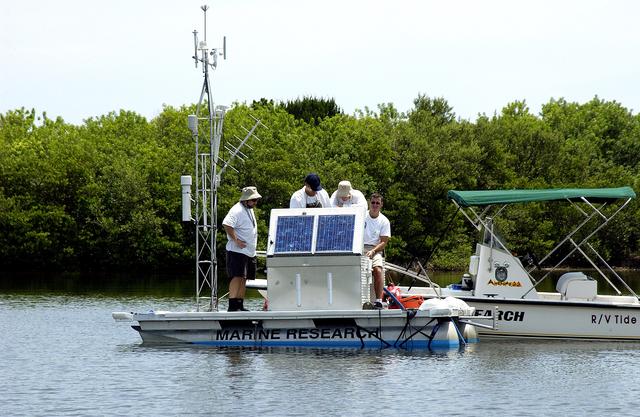
KENNEDY SPACE CENTER, FLA. - Researchers conduct underwater acoustic research in the Launch Complex 39 turn basin. Several government agencies, including NASA, NOAA, the Navy, the Coast Guard, and the Florida Fish and Wildlife Commission are involved in the testing. The research involves demonstrations of passive and active sensor technologies, with applications in fields ranging from marine biological research to homeland security. The work is also serving as a pilot project to assess the cooperation between the agencies involved. Equipment under development includes a passive acoustic monitor developed by NASA’s Jet Propulsion Laboratory, and mobile robotic sensors from the Navy’s Mobile Diving and Salvage Unit.
KSC-03pd2364
KSC | 2003-08-18
Details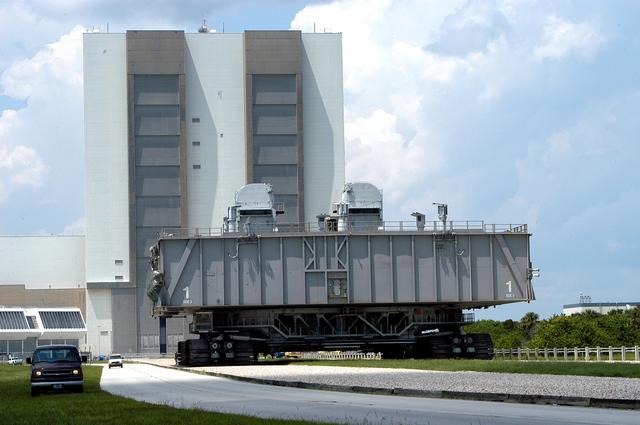
KENNEDY SPACE CENTER, FLA. - Crawler-transporter (CT) number 2, moves away from the Vehicle Assembly Building with a Mobile Launcher Platform (MLP) on top on a test run to the launch pad. The CT recently underwent modifications to the cab. The CT moves Space Shuttle vehicles, situated on the MLP, between the VAB and launch pad. Moving on four double-tracked crawlers, the CT uses a laser guidance system and a leveling system for the journey that keeps the top of a Space Shuttle vertical within plus- or minus-10 minutes of arc. The system enables the CT-MLP-Shuttle to negotiate the ramp leading to the launch pads and keep the load level. Unloaded, the CT weighs 6 million pounds. Seen on top of the MLP are two tail service masts that support the fluid, gas and electrical requirements of the orbiter’s liquid oxygen and liquid hydrogen aft umbilicals.
KSC-03pd2357
KSC | 2003-08-18
Details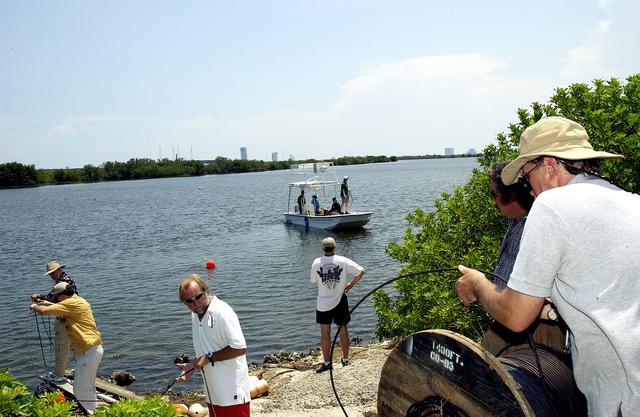
KENNEDY SPACE CENTER, FLA. - Research team members roll out acoustic cable to the water's edge as others stand by in a watercraft during underwater acoustic research being conducted in the Launch Complex 39 turn basin. Several government agencies, including NASA, NOAA, the Navy, the Coast Guard, and the Florida Fish and Wildlife Commission are involved in the testing. The research involves demonstrations of passive and active sensor technologies, with applications in fields ranging from marine biological research to homeland security. The work is also serving as a pilot project to assess the cooperation between the agencies involved. Equipment under development includes a passive acoustic monitor developed by NASA’s Jet Propulsion Laboratory, and mobile robotic sensors from the Navy’s Mobile Diving and Salvage Unit.
KSC-03pd2373
KSC | 2003-08-18
Details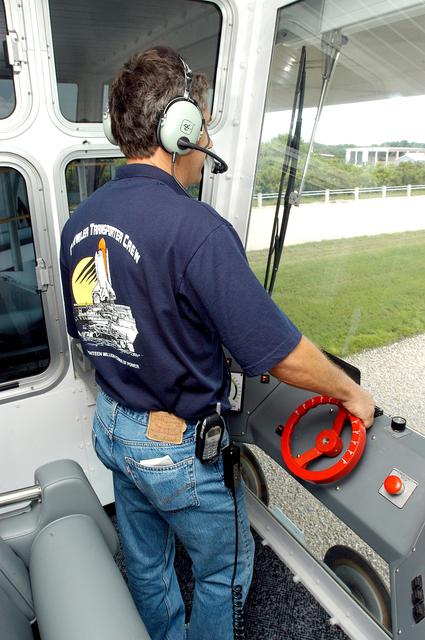
KENNEDY SPACE CENTER, FLA. - Inside the cab of crawler-transporter (CT) number 2, driver Sam Dove, with United Space Alliance, operates the vehicle on a test run to the launch pad. The CT recently underwent modifications to the cab. The CT is transporting a Mobile Launch Platform (MLP). The CT moves Space Shuttle vehicles, situated on the MLP, between the VAB and launch pad. Moving on four double-tracked crawlers, the CT uses a laser guidance system and a leveling system for the journey that keeps the top of a Space Shuttle vertical within plus- or minus-10 minutes of arc. The system enables the CT-MLP-Shuttle to negotiate the ramp leading to the launch pads and keep the load level. Unloaded, the CT weighs 6 million pounds. Seen on top of the MLP are two tail service masts that support the fluid, gas and electrical requirements of the orbiter’s liquid oxygen and liquid hydrogen aft umbilicals.
KSC-03pd2360
KSC | 2003-08-18
Details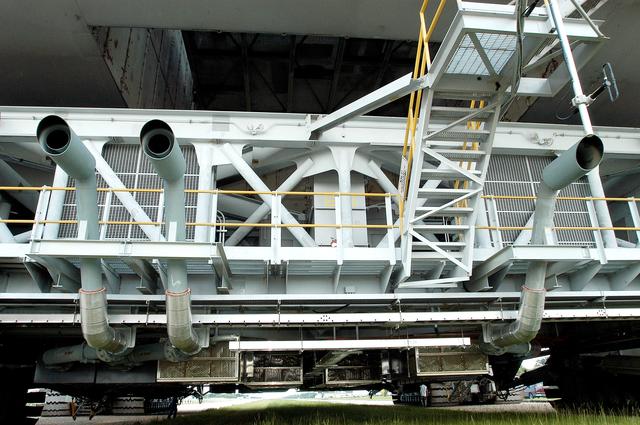
KENNEDY SPACE CENTER, FLA. - A closeup of crawler-transportation (CT) number 2 shows the new muffler system on the vehicle. The CT also recently underwent modifications to the cab. The CT is transporting a Mobile Launch Platform (MLP). The CT moves Space Shuttle vehicles, situated on the MLP, between the VAB and launch pad. Moving on four double-tracked crawlers, the CT uses a laser guidance system and a leveling system for the journey that keeps the top of a Space Shuttle vertical within plus- or minus-10 minutes of arc. The system enables the CT-MLP-Shuttle to negotiate the ramp leading to the launch pads and keep the load level. Unloaded, the CT weighs 6 million pounds. Seen on top of the MLP are two tail service masts that support the fluid, gas and electrical requirements of the orbiter’s liquid oxygen and liquid hydrogen aft umbilicals.
KSC-03pd2362
KSC | 2003-08-18
Details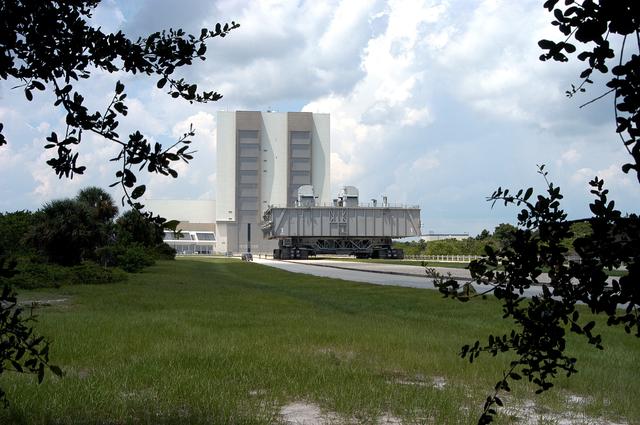
KENNEDY SPACE CENTER, FLA. -Crawler-transporter (CT) number 2, moves away from the Vehicle Assembly Building, with a Mobile Launcher Platform on top, on a test run to the launch pad. The CT recently underwent modifications to the cab. The CT moves Space Shuttle vehicles between the VAB and launch pad. Moving on four double-tracked crawlers, the CT uses a laser guidance system and a leveling system for the journey that keeps the top of a Space Shuttle vertical within plus- or minus-10 minutes of arc. The system enables the CT-MLP-Shuttle to negotiate the ramp leading to the launch pads and keep the load level. Unloaded, the CT weighs 6 million pounds.
KSC-03pd2356
KSC | 2003-08-18
Details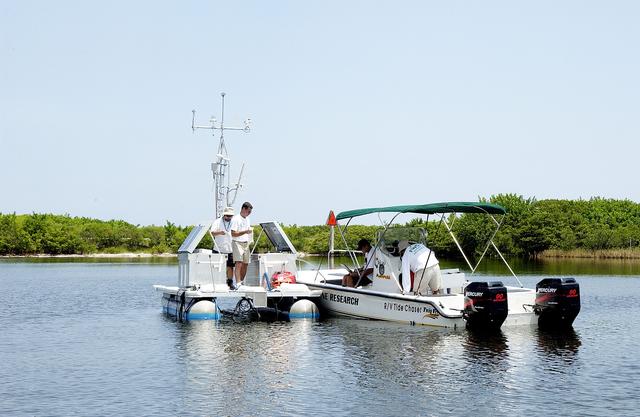
KENNEDY SPACE CENTER, FLA. - Researchers utilize several types of watercraft to conduct underwater acoustic research in the Launch Complex 39 turn basin. Several government agencies, including NASA, NOAA, the Navy, the Coast Guard, and the Florida Fish and Wildlife Commission are involved in the testing. The research involves demonstrations of passive and active sensor technologies, with applications in fields ranging from marine biological research to homeland security. The work is also serving as a pilot project to assess the cooperation between the agencies involved. Equipment under development includes a passive acoustic monitor developed by NASA’s Jet Propulsion Laboratory, and mobile robotic sensors from the Navy’s Mobile Diving and Salvage Unit.
KSC-03pd2365
KSC | 2003-08-18
Details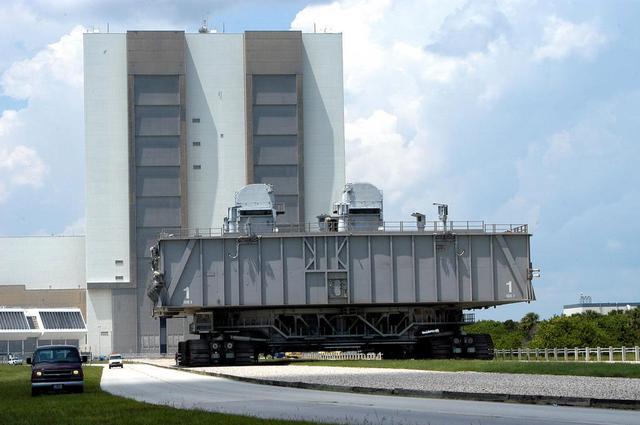
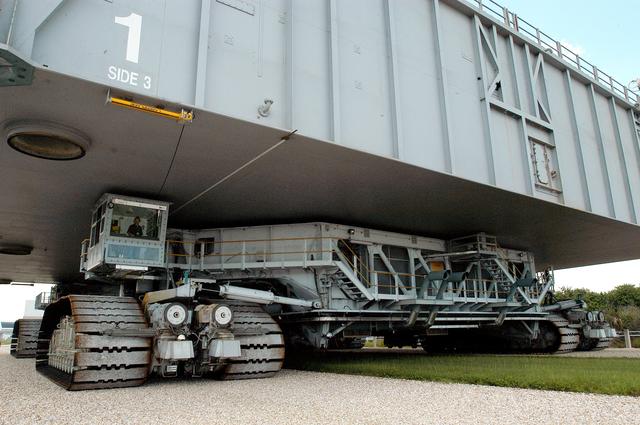
KENNEDY SPACE CENTER, FLA. - A closeup of crawler-transporter (CT) number 2 shows the cab (left, above the tracks) that recently underwent modifications. The CT is transporting a Mobile Launch Platform (MLP) on a test run to the pad. The CT moves Space Shuttle vehicles, situated on the MLP, between the VAB and launch pad. Moving on four double-tracked crawlers, the CT uses a laser guidance system and a leveling system for the journey that keeps the top of a Space Shuttle vertical within plus- or minus-10 minutes of arc. The system enables the CT-MLP-Shuttle to negotiate the ramp leading to the launch pads and keep the load level. Unloaded, the CT weighs 6 million pounds. Seen on top of the MLP are two tail service masts that support the fluid, gas and electrical requirements of the orbiter’s liquid oxygen and liquid hydrogen aft umbilicals.
KSC-03pd2359
KSC | 2003-08-18
Details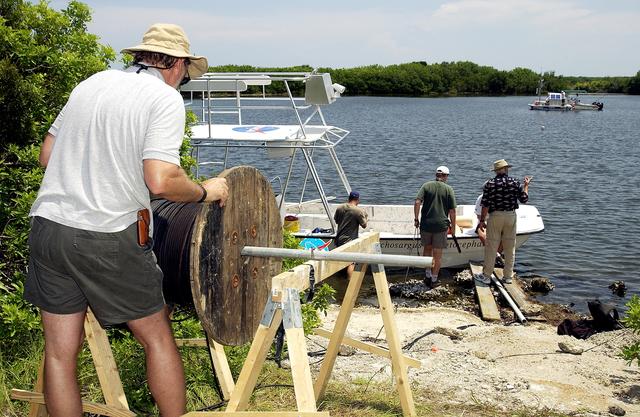
KENNEDY SPACE CENTER, FLA. - Research team members roll out acoustic cable to the water's edge during underwater acoustic research being conducted in the Launch Complex 39 turn basin. Several government agencies, including NASA, NOAA, the Navy, the Coast Guard, and the Florida Fish and Wildlife Commission are involved in the testing. The research involves demonstrations of passive and active sensor technologies, with applications in fields ranging from marine biological research to homeland security. The work is also serving as a pilot project to assess the cooperation between the agencies involved. Equipment under development includes a passive acoustic monitor developed by NASA’s Jet Propulsion Laboratory, and mobile robotic sensors from the Navy’s Mobile Diving and Salvage Unit.
KSC-03pd2372
KSC | 2003-08-18
Details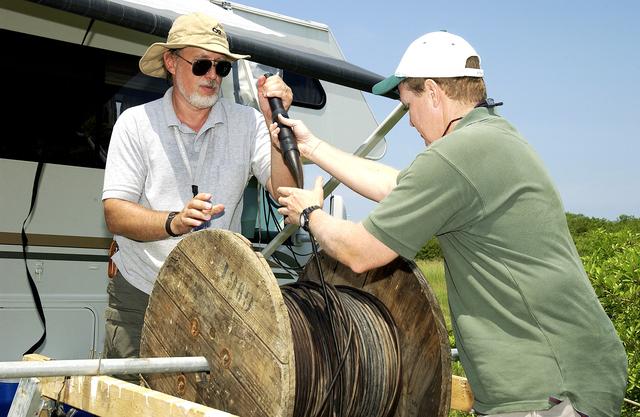
KENNEDY SPACE CENTER, FLA. - Research team members work with acoustic cable during underwater acoustic research being conducted in the Launch Complex 39 turn basin. Several government agencies, including NASA, NOAA, the Navy, the Coast Guard, and the Florida Fish and Wildlife Commission are involved in the testing. The research involves demonstrations of passive and active sensor technologies, with applications in fields ranging from marine biological research to homeland security. The work is also serving as a pilot project to assess the cooperation between the agencies involved. Equipment under development includes a passive acoustic monitor developed by NASA’s Jet Propulsion Laboratory, and mobile robotic sensors from the Navy’s Mobile Diving and Salvage Unit.
KSC-03pd2371
KSC | 2003-08-18
Details


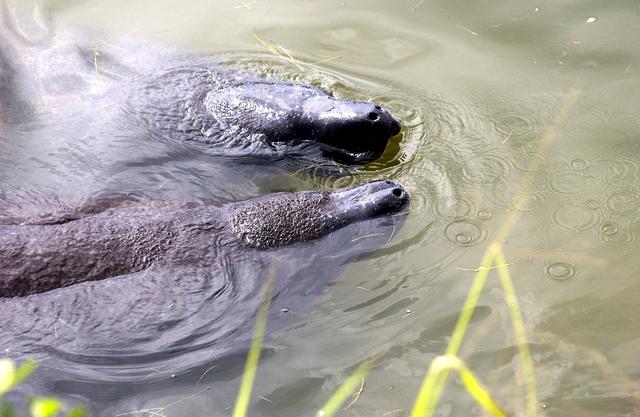
KENNEDY SPACE CENTER, FLA. - Two manatees surface for air in water on KSC. Manatees live in Florida's warm water rivers and inland springs. KSC shares a boundary with the Merritt Island National Wildlife Refuge, which encompasses 92,000 acres that are a habitat for more than 331 species of birds, 31 mammals, 117 fishes, and 65 amphibians and reptiles.
KSC-03pd2363
KSC | 2003-08-15
Details
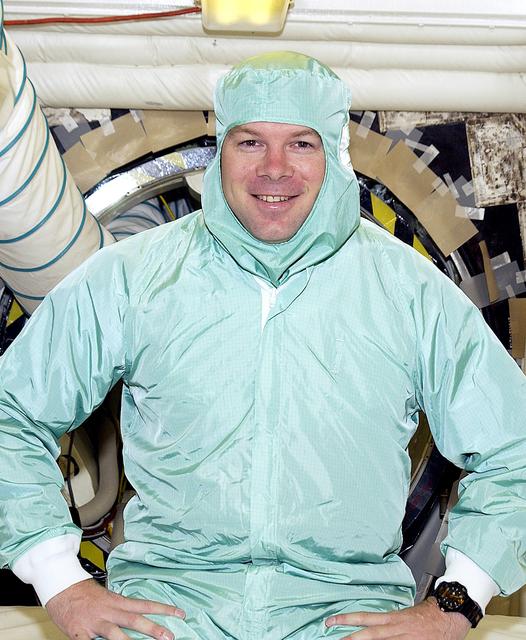
KENNEDY SPACE CENTER, FLA. - STS-114 Pilot James Kelly sits in the entry hatch to orbiter Atlantis. He and other crew members - Commander Eileen Collins and Mission Specialists Soichi Noguchi and Stephen Robinson - are at KSC for equipment familiarization. Noguchi is with the Japanese space agency NASDA. Mission STS-114 will carry the MultiPurpose Logistics Module (MPLM) Raffaello and External Stowage Platform 2 to the International Space Station. The MPLM will contain supplies and equipment. Another goal of the mission is to remove and replace a Control Moment Gyro. Launch date for mission STS-114 is under review.
KSC-03pd2344
KSC | 2003-08-14
Details
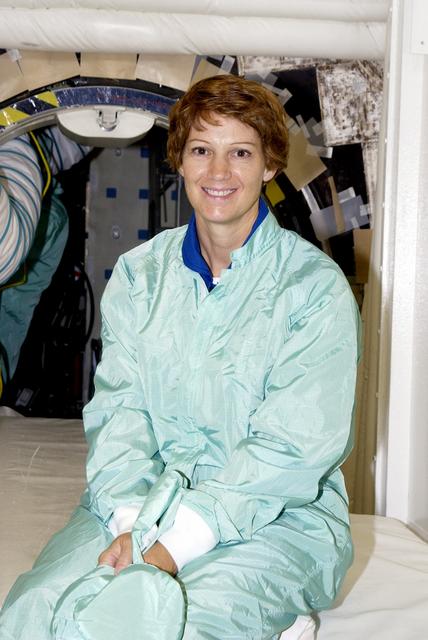
KENNEDY SPACE CENTER, FLA. - STS-114 Commander Eileen Collins sits in the entry hatch to orbiter Atlantis. She and other crew members - Pilot James Kelly and Mission Specialists Soichi Noguchi and Stephen Robinson - are at KSC for equipment familiarization. Noguchi is with the Japanese space agency NASDA. Mission STS-114 will carry the MultiPurpose Logistics Module (MPLM) Raffaello and External Stowage Platform 2 to the International Space Station. The MPLM will contain supplies and equipment. Another goal of the mission is to remove and replace a Control Moment Gyro. Launch date for mission STS-114 is under review.
KSC-03pd2346
KSC | 2003-08-14
Details