NASA Media Archive
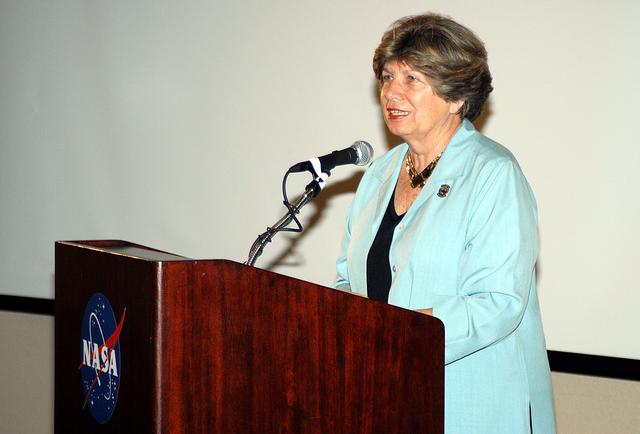
KENNEDY SPACE CENTER, FLA. - KSC External Relations and Business Development Director JoAnn Morgan speaks to attendees of The Florida Commission on the Status of Women held June 7 at the Debus Conference Facility. Morgan is a member of the group’s Hall of Fame. The commission, through coordinating, researching, communicating, and encouraging legislation, is dedicated to empowering women from all walks of life in achieving their fullest potential, to eliminating barriers to that achievement, and to recognizing women’s accomplishments.
KSC-03pd1866
KSC | 2003-06-07
Details
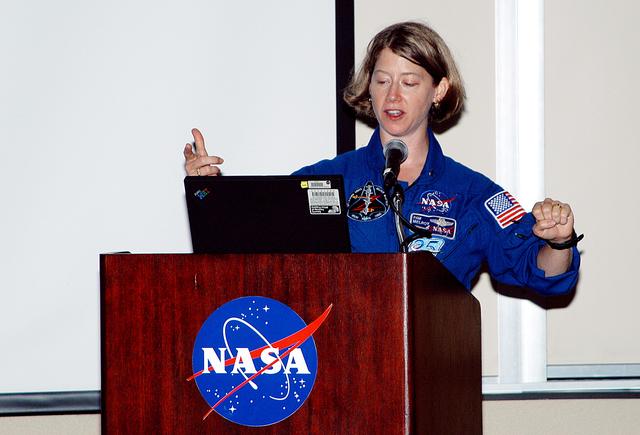
KENNEDY SPACE CENTER, FLA. - At the Florida Commission on the Status of Women held June 7 at the Debus Conference Facility, astronaut Pamela Melroy speaks to attendees. Melroy has served as pilot on two Shuttle flights (STS-92 in 2000 and STS-112 in 2002), and has logged more than 562 hours in space. The commission, through coordinating, researching, communicating, and encouraging legislation, is dedicated to empowering women from all walks of life in achieving their fullest potential, to eliminating barriers to that achievement, and to recognizing women’s accomplishments.
KSC-03pd1869
KSC | 2003-06-07
Details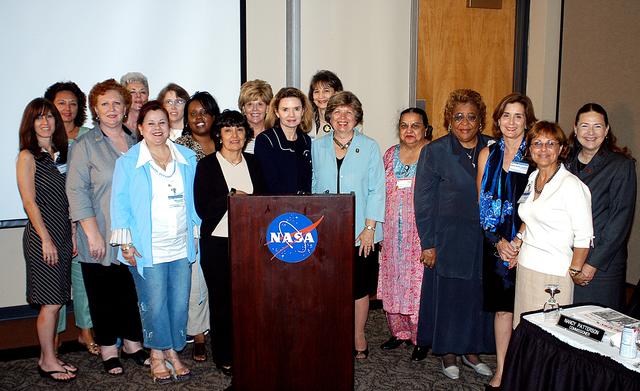
KENNEDY SPACE CENTER, FLA. - KSC External Relations and Business Development Director JoAnn Morgan (sixth from right) joins other attendees of The Florida Commission on the Status of Women held June 7 at the Debus Conference Facility. Morgan is a member of the group’s Hall of Fame. The commission, through coordinating, researching, communicating, and encouraging legislation, is dedicated to empowering women from all walks of life in achieving their fullest potential, to eliminating barriers to that achievement, and to recognizing women’s accomplishments.
KSC-03pd1867
KSC | 2003-06-07
Details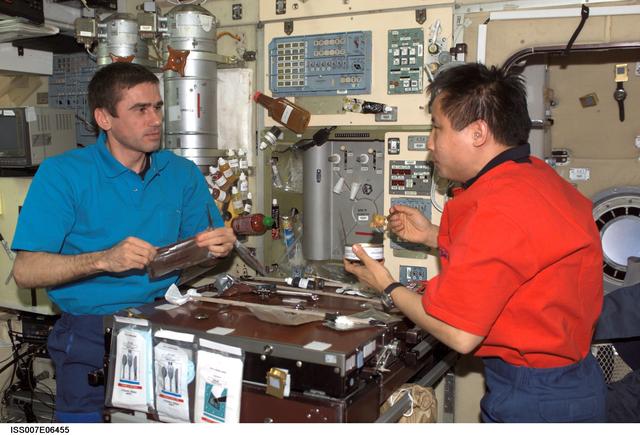
Expedition Seven CDR Malenchenko and Science Officer Lu share meal in Zvezda
iss007e06455
JSC | 2003-06-07
Details
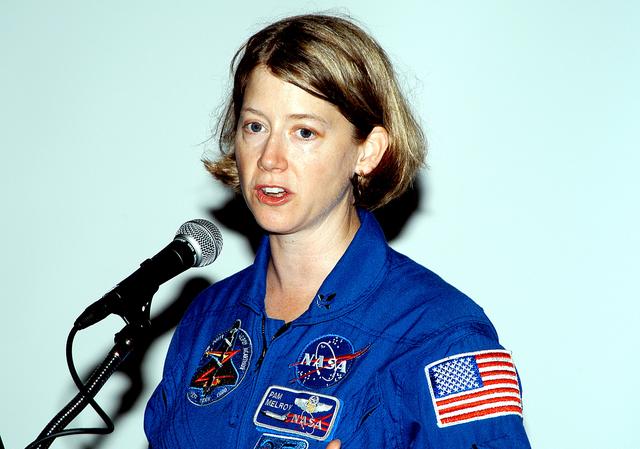
KENNEDY SPACE CENTER, FLA. - At the Florida Commission on the Status of Women held June 7 at the Debus Conference Facility, astronaut Pamela Melroy speaks to attendees. Melroy has served as pilot on two Shuttle flights (STS-92 in 2000 and STS-112 in 2002), and has logged more than 562 hours in space. The commission, through coordinating, researching, communicating, and encouraging legislation, is dedicated to empowering women from all walks of life in achieving their fullest potential, to eliminating barriers to that achievement, and to recognizing women’s accomplishments.
KSC-03pd1868
KSC | 2003-06-07
Details
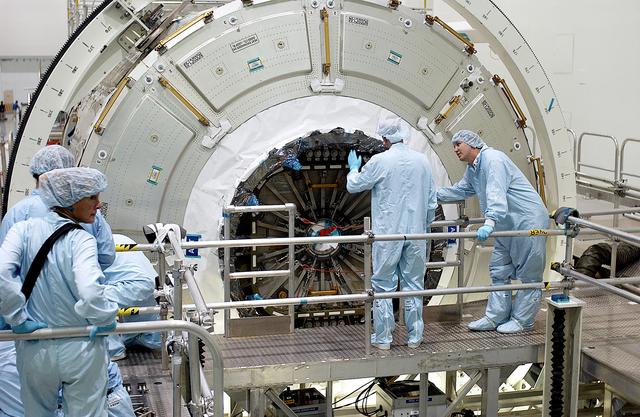
KENNEDY SPACE CENTER, FLA. - Workers in the Space Station Processing Facility look over the hatch on the Italian-built Node 2, a future element of the International Space Station. Node 2 arrived at KSC June 1. The second of three Station connecting modules, the module attaches to the end of the U.S. Lab and provides attach locations for the Japanese laboratory, European laboratory, the Centrifuge Accommodation Module and, later, Multipurpose Logistics Modules. It will provide the primary docking location for the Shuttle when a pressurized mating adapter is attached to Node 2. Installation of the module will complete the U.S. Core of the ISS. Node 2 is the designated payload for mission STS-120. No orbiter or launch date has been determined yet.
KSC-03pd1883
KSC | 2003-06-06
Details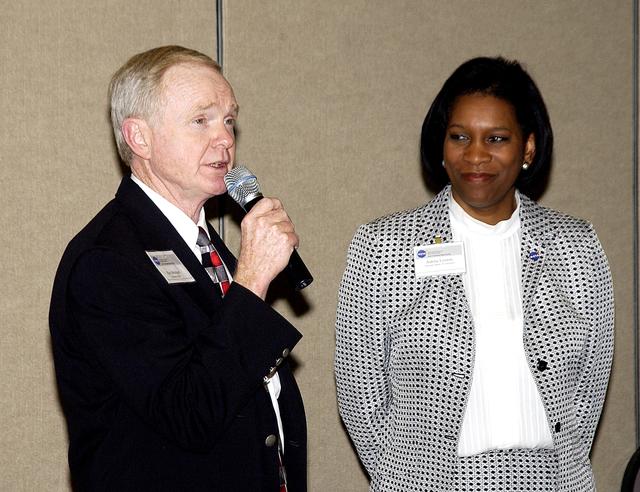
KENNEDY SPACE CENTER, FLA. - Center Director Roy Bridges Jr. introduces Dr. Adena Williams Loston at a reception and dinner in her honor at the Debus Conference Center June 6. Loston is NASA’s new associate administrator of Education and the reception was in her honor. Loston was previously NASA Administrator Sean O’Keefe’s senior advisor of education and assumed her new position in October 2002.
KSC-03pd1856
KSC | 2003-06-06
Details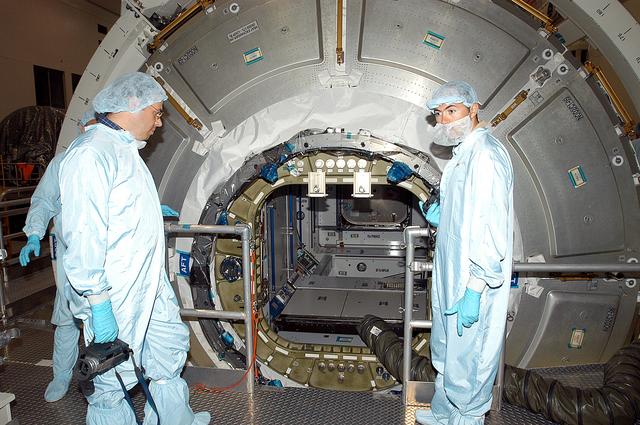
KENNEDY SPACE CENTER, FLA. - Workers in the Space Station Processing Facility stand by after opening the hatch on the Italian-built Node 2, a future element of the International Space Station. Node 2 arrived at KSC June 1. The second of three Station connecting modules, the module attaches to the end of the U.S. Lab and provides attach locations for the Japanese laboratory, European laboratory, the Centrifuge Accommodation Module and, later, Multipurpose Logistics Modules. It will provide the primary docking location for the Shuttle when a pressurized mating adapter is attached to Node 2. Installation of the module will complete the U.S. Core of the ISS. Node 2 is the designated payload for mission STS-120. No orbiter or launch date has been determined yet.Installation of the module will complete the U.S. Core of the ISS. Node 2 is the designated payload for mission STS-120. No orbiter or launch date has been determined yet.Installation of the module will complete the U.S. Core of the ISS. Node 2 is the designated payload for mission STS-120. No orbiter or launch date has been determined yet.
KSC-03pd1885
KSC | 2003-06-06
Details
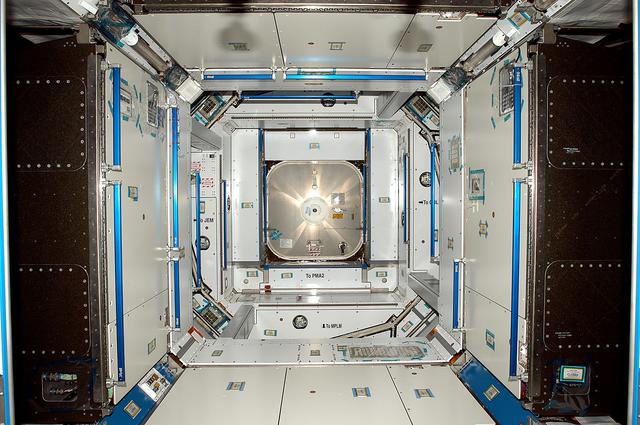
KENNEDY SPACE CENTER, FLA. - The inside of the Italian-built Node 2 looks pristine after opening of the hatch. A future element of the International Space Station, Node 2 arrived at KSC June 1. The second of three Station connecting modules, Node 2 attaches to the end of the U.S. Lab and provides attach locations for the Japanese laboratory, European laboratory, the Centrifuge Accommodation Module and, later, Multipurpose Logistics Modules. It will provide the primary docking location for the Shuttle when a pressurized mating adapter is attached to Node 2. Installation of the module will complete the U.S. Core of the ISS. Node 2 is the designated payload for mission STS-120. No orbiter or launch date has been determined yet.
KSC-03pd1886
KSC | 2003-06-06
Details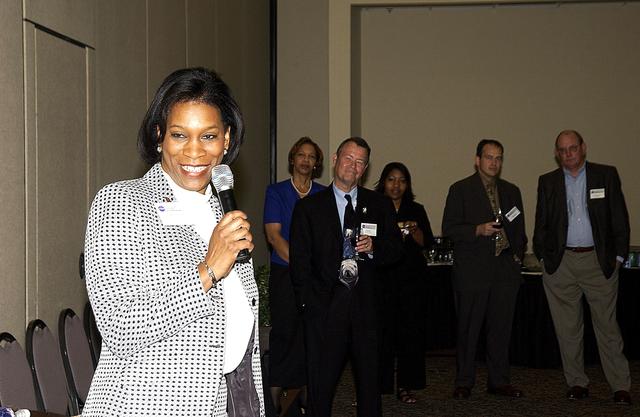
KENNEDY SPACE CENTER, FLA. - Dr. Adena Williams Loston (left) addresses attendees at a reception and dinner in her honor at the Debus Conference Center June 6. Loston is NASA’s new associate administrator of Education and the reception was in her honor. Loston was previously NASA Administrator Sean O’Keefe’s senior advisor of education and assumed her new position in October 2002.
KSC-03pd1857
KSC | 2003-06-06
Details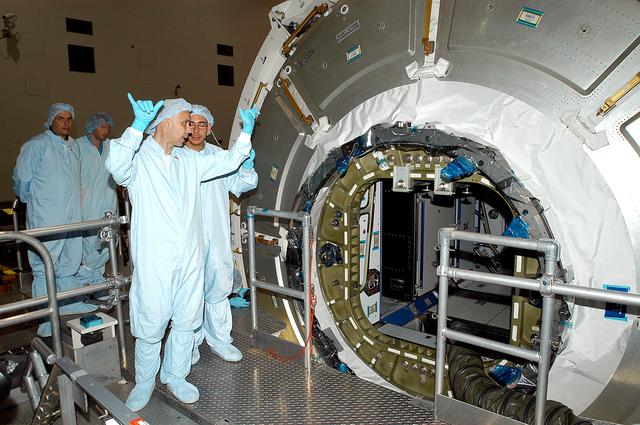
KENNEDY SPACE CENTER, FLA. - In the Space Station Processing Facility, workers talk near the opened hatch of the Italian-built Node 2. A future element of the International Space Station, Node 2 arrived at KSC June 1. The second of three Station connecting modules, Node 2 attaches to the end of the U.S. Lab and provides attach locations for the Japanese laboratory, European laboratory, the Centrifuge Accommodation Module and, later, Multipurpose Logistics Modules. It will provide the primary docking location for the Shuttle when a pressurized mating adapter is attached to Node 2. Installation of the module will complete the U.S. Core of the ISS. Node 2 is the designated payload for mission STS-120. No orbiter or launch date has been determined yet.
KSC-03pd1887
KSC | 2003-06-06
Details
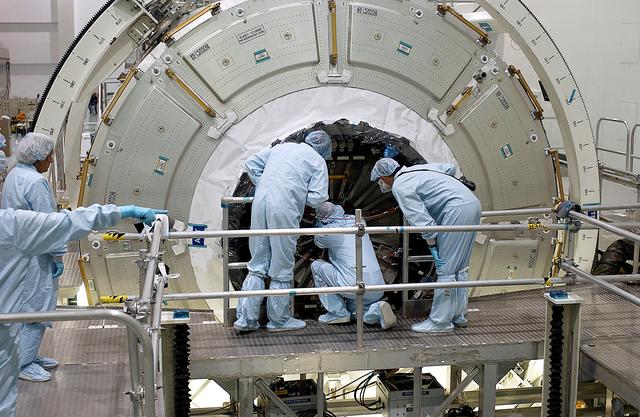
KENNEDY SPACE CENTER, FLA. - Workers in the Space Station Processing Facility attempt to open the hatch on the Italian-built Node 2, a future element of the International Space Station. Node 2 arrived at KSC June 1. The second of three Station connecting modules, the module attaches to the end of the U.S. Lab and provides attach locations for the Japanese laboratory, European laboratory, the Centrifuge Accommodation Module and, later, Multipurpose Logistics Modules. It will provide the primary docking location for the Shuttle when a pressurized mating adapter is attached to Node 2. Installation of the module will complete the U.S. Core of the ISS. Node 2 is the designated payload for mission STS-120. No orbiter or launch date has been determined yet.
KSC-03pd1882
KSC | 2003-06-06
Details
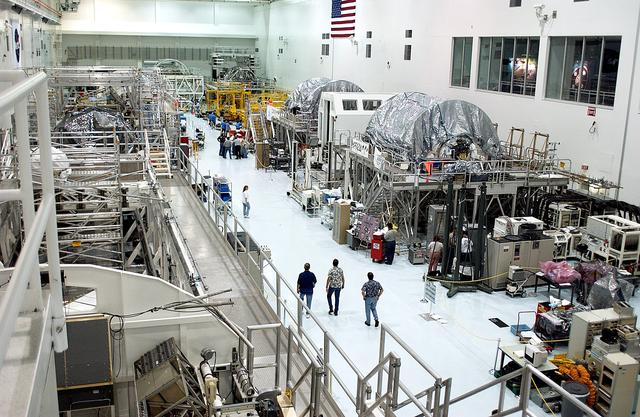
KENNEDY SPACE CENTER, FLA. - An overview of the Space Station Processing Facility shows workstands and ISS elements. The most recent additions are the Japanese Experiment Module (JEM)’s pressurized module and the Italian-built Node 2. The pressurized module is the first element of the JEM, Japan’s primary contribution to the Space Station, to be delivered to KSC. It will enhance the unique research capabilities of the orbiting complex by providing an additional shirt-sleeve environment for astronauts to conduct science experiments. Node 2 will be installed on the end of the U.S. Lab and provides attach locations for the Japanese laboratory, European laboratory, the Centrifuge Accommodation Module and, later, Multipurpose Logistics Modules. It will provide the primary docking location for the Shuttle when a pressurized mating adapter is attached to Node 2. Installation of the module will complete the U.S. Core of the ISS.
KSC-03pd1880
KSC | 2003-06-06
Details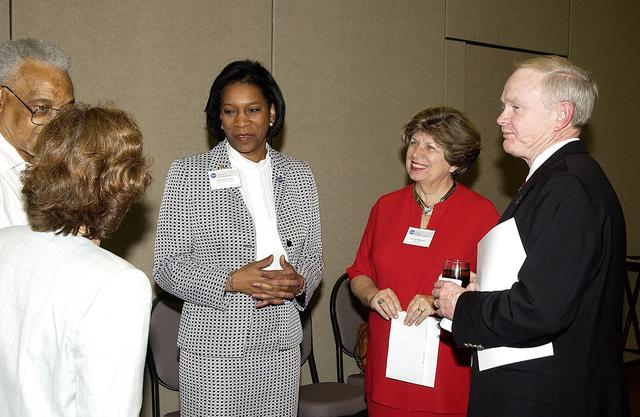
KENNEDY SPACE CENTER, FLA. - Dr. Adena Williams Loston (center) talks to attendees (left) of a reception and dinner in her honor at the Debus Conference Center June 6. With her are Director of External Relations and Business Development JoAnn Morgan and Center Director Roy Bridges Jr. Loston is NASA’s new associate administrator of Education and the reception was in her honor. Loston was previously NASA Administrator Sean O’Keefe’s senior advisor of education and assumed her new position in October 2002.
KSC-03pd1855
KSC | 2003-06-06
Details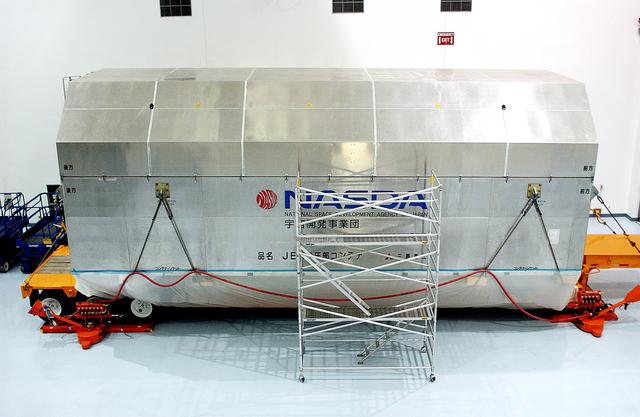
KENNEDY SPACE CENTER, FLA. - The container with the Japanese Experiment Module (JEM)’s pressurized module is inside the Space Station Processing Facility. The National Space Development Agency of Japan (NASDA) developed the laboratory at the Tsukuba Space Center near Tokyo. The Pressurized Module is the first element of the JEM, named "Kibo" (Hope), to be delivered to KSC. The JEM is Japan's primary contribution to the Station. It will enhance the unique research capabilities of the orbiting complex by providing an additional environment for astronauts to conduct science experiments. The JEM also includes an exposed facility (platform) for space environment experiments, a robotic manipulator system, and two logistics modules. The various JEM components will be assembled in space over the course of three Shuttle missions.
KSC-03pd1879
KSC | 2003-06-06
Details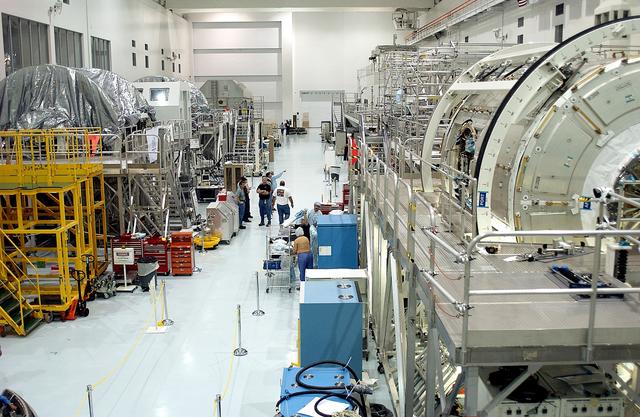
KENNEDY SPACE CENTER, FLA. - A view of the Space Station Processing Facility shows workstands and ISS elements. The most recent additions are the Japanese Experiment Module (JEM)’s pressurized module and the Italian-built Node 2. The pressurized module is the first element of the JEM, Japan’s primary contribution to the Space Station, to be delivered to KSC. It will enhance the unique research capabilities of the orbiting complex by providing an additional shirt-sleeve environment for astronauts to conduct science experiments. Node 2 will be installed on the end of the U.S. Lab and provides attach locations for the Japanese laboratory, European laboratory, the Centrifuge Accommodation Module and, later, Multipurpose Logistics Modules. It will provide the primary docking location for the Shuttle when a pressurized mating adapter is attached to Node 2. Installation of the module will complete the U.S. Core of the ISS.
KSC-03pd1881
KSC | 2003-06-06
Details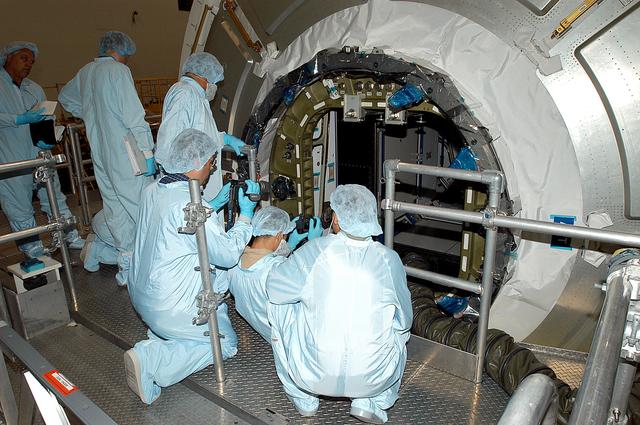
KENNEDY SPACE CENTER, FLA. - Workers in the Space Station Processing Facility attempt to open the hatch on the Italian-built Node 2, a future element of the International Space Station. Node 2 arrived at KSC June 1. The second of three Station connecting modules, the module attaches to the end of the U.S. Lab and provides attach locations for the Japanese laboratory, European laboratory, the Centrifuge Accommodation Module and, later, Multipurpose Logistics Modules. It will provide the primary docking location for the Shuttle when a pressurized mating adapter is attached to Node 2. Installation of the module will complete the U.S. Core of the ISS. Node 2 is the designated payload for mission STS-120. No orbiter or launch date has been determined yet.Installation of the module will complete the U.S. Core of the ISS. Node 2 is the designated payload for mission STS-120. No orbiter or launch date has been determined yet.
KSC-03pd1884
KSC | 2003-06-06
Details
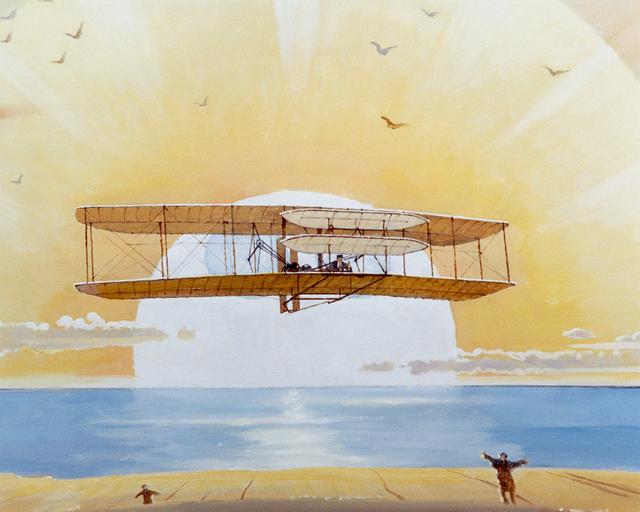
Wright Flyer detail in Bob McCall's Centennial of Flight mural
EC03-0163-16
AFRC | 2003-06-05
Details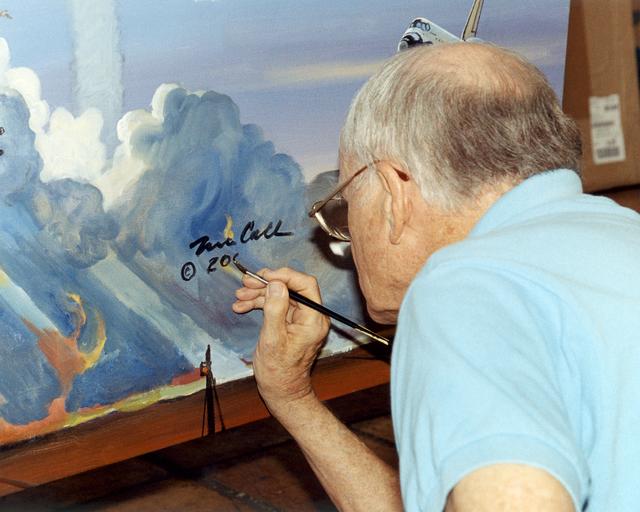
Bob McCall signs the Centennial of Flight mural in the artist's studio in Paradise Valley, Arizona.
EC03-0163-05
AFRC | 2003-06-05
Details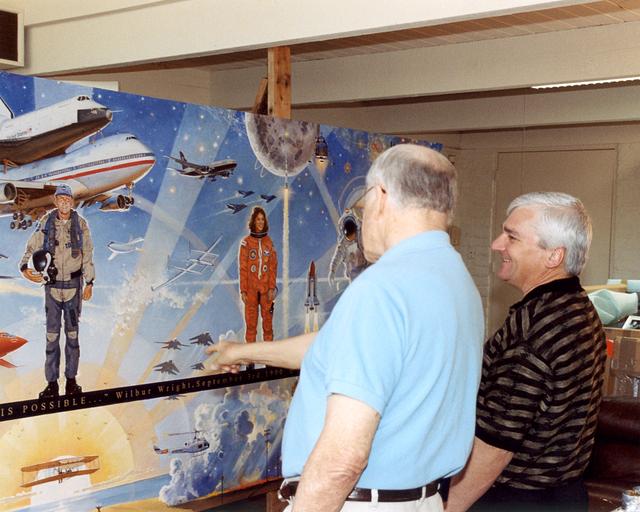
Bob Mccall and NASA Dryden Center Director Kevin Petersen in the artist's studio in Paradise Valley, Arizona.
EC03-0163-03
AFRC | 2003-06-05
Details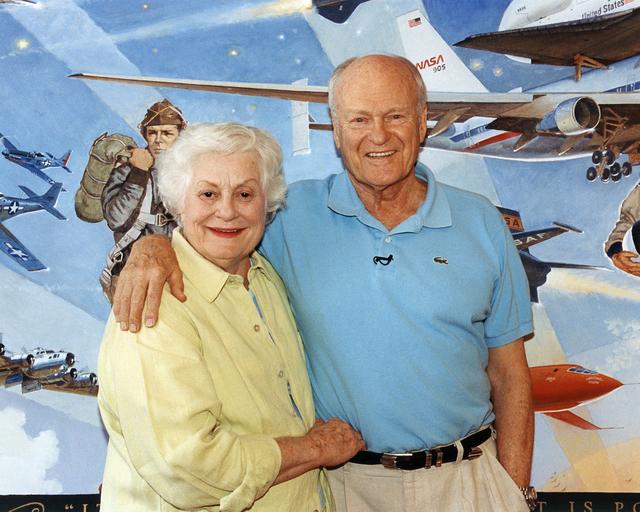
Artists Bob and Louise McCall in their studio in Paradise Valley, Arizona.
EC03-0163-15
AFRC | 2003-06-05
Details
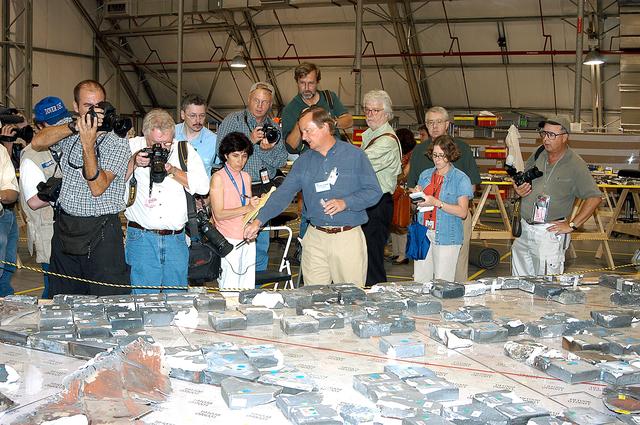
KENNEDY SPACE CENTER, FLA. - In the Columbia Debris Hangar, Shuttle Launch Director Mike Leinbach points to some of the tiles recovered from the orbiter as he explains to the media about activities that have taken place since the Columbia accident on Feb. 1, 2003. STS-107 debris recovery and reconstruction operations are winding down. To date, nearly 84,000 pieces of debris have been recovered and sent to KSC. That represents about 38 percent of the dry weight of Columbia, equaling almost 85,000 pounds.
KSC-03pd1826
KSC | 2003-06-04
Details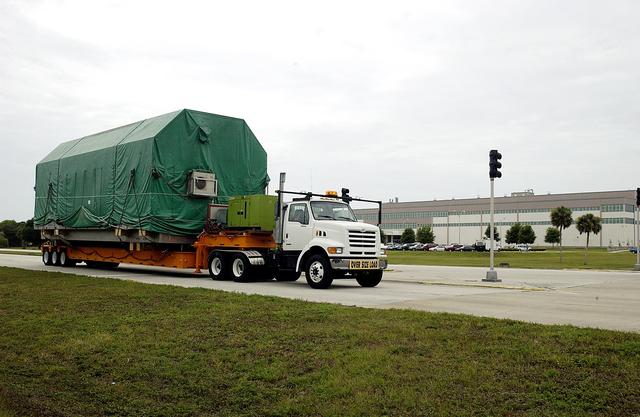
KENNEDY SPACE CENTER, FLA. - The truck transporting the Pressurized Module of the Japanese Experiment Module (JEM) to KSC’s Space Station Processing Facility arrives on Center. The National Space Development Agency of Japan (NASDA) developed the laboratory at the Tsukuba Space Center near Tokyo. The Pressurized Module is the first element of the JEM, named "Kibo" (Hope), to be delivered to KSC. The JEM is Japan's primary contribution to the Station. It will enhance the unique research capabilities of the orbiting complex by providing an additional environment for astronauts to conduct science experiments. The JEM also includes an exposed facility (platform) for space environment experiments, a robotic manipulator system, and two logistics modules. The various JEM components will be assembled in space over the course of three Shuttle missions.
KSC-03pd1817
KSC | 2003-06-04
Details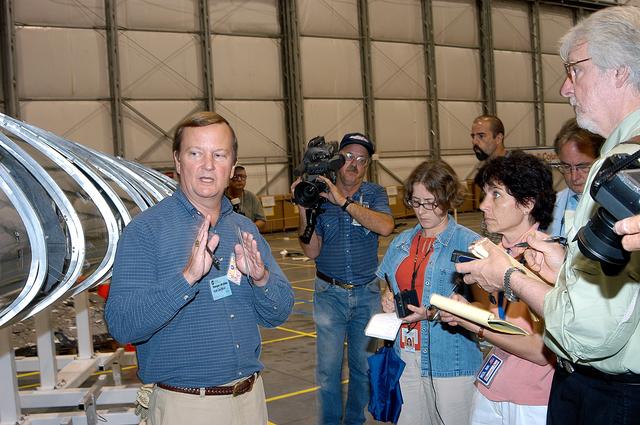
KENNEDY SPACE CENTER, FLA. - In the Columbia Debris Hangar, Shuttle Launch Director Mike Leinbach (left) talks to the media about activities that have taken place since the Columbia accident on Feb. 1, 2003. Behind him is a model of the left wing of the orbiter. STS-107 debris recovery and reconstruction operations are winding down. To date, nearly 84,000 pieces of debris have been recovered and sent to KSC. That represents about 38 percent of the dry weight of Columbia, equaling almost 85,000 pounds.
KSC-03pd1828
KSC | 2003-06-04
Details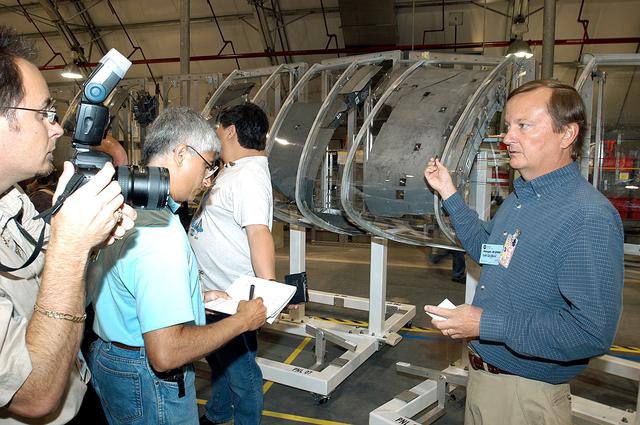
KENNEDY SPACE CENTER, FLA. - In the Columbia Debris Hangar, Shuttle Launch Director Mike Leinbach (right) talks to the media about activities that have taken place since the Columbia accident on Feb. 1, 2003. STS-107 debris recovery and reconstruction operations are winding down. To date, nearly 84,000 pieces of debris have been recovered and sent to KSC. That represents about 38 percent of the dry weight of Columbia, equaling almost 85,000 pounds.
KSC-03pd1819
KSC | 2003-06-04
Details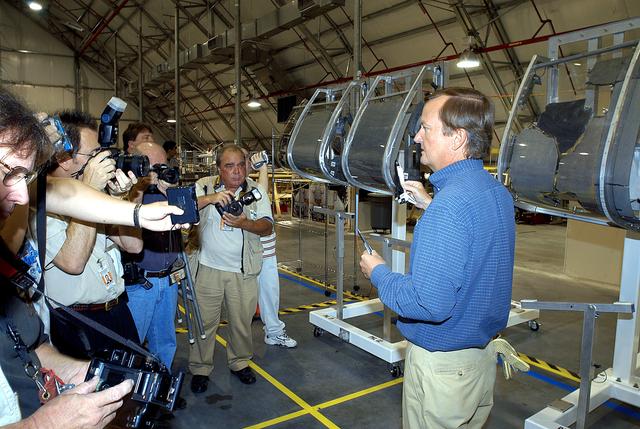
KENNEDY SPACE CENTER, FLA. - In the Columbia Debris Hangar, Shuttle Launch Director Mike Leinbach (right) talks to the media about activities that have taken place since the Columbia accident on Feb. 1, 2003. STS-107 debris recovery and reconstruction operations are winding down. To date, nearly 84,000 pieces of debris have been recovered and sent to KSC. That represents about 38 percent of the dry weight of Columbia, equaling almost 85,000 pounds.
KSC-03pd1818
KSC | 2003-06-04
Details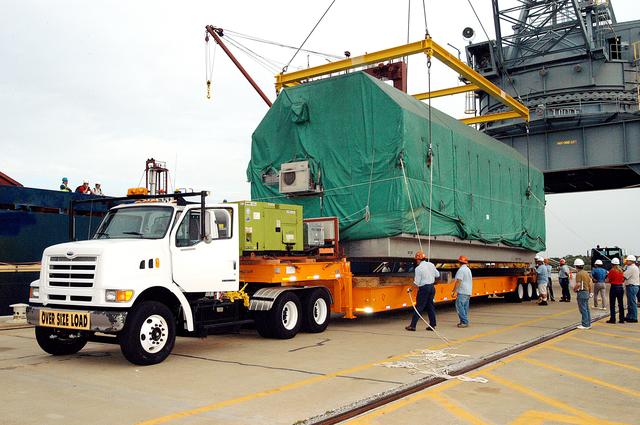
KENNEDY SPACE CENTER, FLA. - At Port Canaveral, workers release the overhead crane that lifted the Pressurized Module of the Japanese Experiment Module (JEM) from the ship onto the truck bed. The container transport ship carrying JEM departed May 2 from Yokohama Harbor in Japan for the voyage to the United States. The National Space Development Agency of Japan (NASDA) developed the laboratory at the Tsukuba Space Center near Tokyo. The Pressurized Module is the first element of the JEM, named "Kibo" (Hope), to be delivered to KSC, and will be transferred to KSC’s Space Station Processing Facility. The JEM is Japan's primary contribution to the Station. It will enhance the unique research capabilities of the orbiting complex by providing an additional environment for astronauts to conduct science experiments. The JEM also includes an exposed facility (platform) for space environment experiments, a robotic manipulator system, and two logistics modules. The various JEM components will be assembled in space over the course of three Shuttle missions.
KSC-03pd1812
KSC | 2003-06-04
Details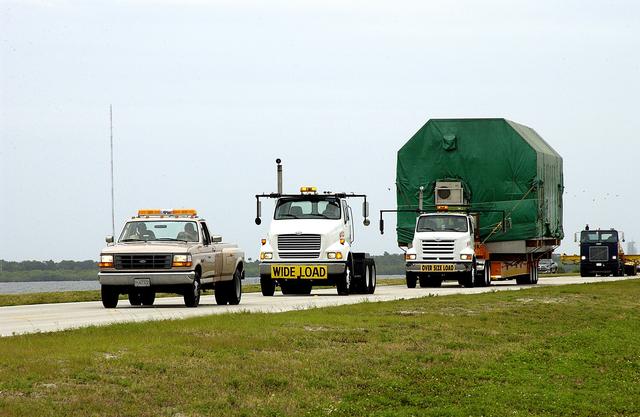
KENNEDY SPACE CENTER, FLA. - A convoy accompanies the truck transporting the Pressurized Module of the Japanese Experiment Module (JEM) to KSC’s Space Station Processing Facility. The National Space Development Agency of Japan (NASDA) developed the laboratory at the Tsukuba Space Center near Tokyo. The Pressurized Module is the first element of the JEM, named "Kibo" (Hope), to be delivered to KSC. The JEM is Japan's primary contribution to the Station. It will enhance the unique research capabilities of the orbiting complex by providing an additional environment for astronauts to conduct science experiments. The JEM also includes an exposed facility (platform) for space environment experiments, a robotic manipulator system, and two logistics modules. The various JEM components will be assembled in space over the course of three Shuttle missions.
KSC-03pd1815
KSC | 2003-06-04
Details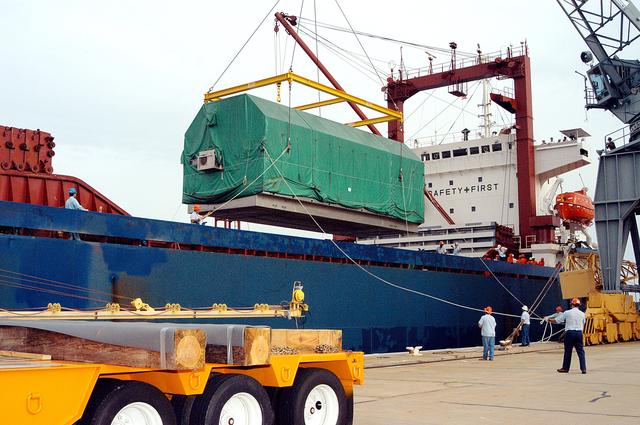
KENNEDY SPACE CENTER, FLA. - At Port Canaveral, the Pressurized Module of the Japanese Experiment Module (JEM) is swung away from the ship. The container transport ship carrying JEM departed May 2 from Yokohama Harbor in Japan for the voyage to the United States. The National Space Development Agency of Japan (NASDA) developed the laboratory at the Tsukuba Space Center near Tokyo. The module will be loaded onto a truck bed and transferred to KSC’s Space Station Processing Facility. The Pressurized Module is the first element of the JEM, named "Kibo" (Hope), to be delivered to KSC. The JEM is Japan's primary contribution to the Station. It will enhance the unique research capabilities of the orbiting complex by providing an additional environment for astronauts to conduct science experiments. The JEM also includes an exposed facility (platform) for space environment experiments, a robotic manipulator system, and two logistics modules. The various JEM components will be assembled in space over the course of three Shuttle missions.
KSC-03pd1807
KSC | 2003-06-04
Details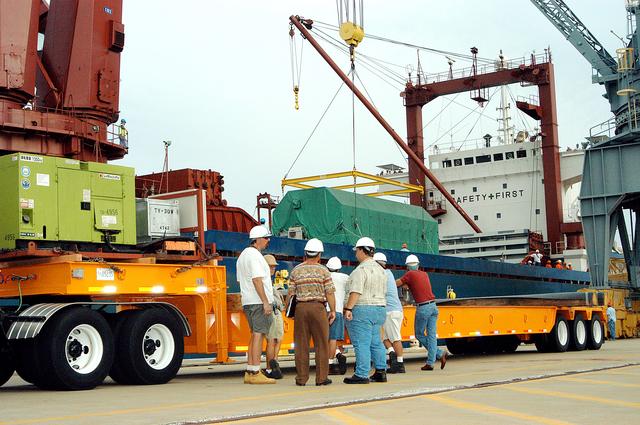
KENNEDY SPACE CENTER, FLA. - At Port Canaveral, the Pressurized Module of the Japanese Experiment Module (JEM) is lowered onto a truck bed. The container transport ship carrying JEM departed May 2 from Yokohama Harbor in Japan for the voyage to the United States. The National Space Development Agency of Japan (NASDA) developed the laboratory at the Tsukuba Space Center near Tokyo. The Pressurized Module is the first element of the JEM, named "Kibo" (Hope), to be delivered to KSC and will be transferred to the Space Station Processing Facility. The JEM is Japan's primary contribution to the Station. It will enhance the unique research capabilities of the orbiting complex by providing an additional environment for astronauts to conduct science experiments. The JEM also includes an exposed facility (platform) for space environment experiments, a robotic manipulator system, and two logistics modules. The various JEM components will be assembled in space over the course of three Shuttle missions.
KSC-03pd1806
KSC | 2003-06-04
Details