NASA Media Archive

KENNEDY SPACE CENTER, FLA. - The second stage of a Delta II rocket arrives at Pad 17-B, Cape Canaveral Air Force Station. It will be mated to the Delta first stage already at the pad in preparation for the launch of the Mars Exploration Rover-1 (MER-B) on June 25. NASA’s twin Mars Exploration Rovers are designed to study the history of water on Mars. These robotic geologists are equipped with a robotic arm, a drilling tool, three spectrometers, and four pairs of cameras that allow them to have a human-like, 3D view of the terrain. Each rover could travel as far as 100 meters in one day to act as Mars scientists' eyes and hands, exploring an environment where humans are not yet able to go. The launch of MER-2 (MER-A) is tentatively set for June 8.
KSC-03pd1739
KSC | 2003-05-29
Details
KENNEDY SPACE CENTER, FLA. - Workers prepare to lift the second stage of a Delta II rocket up the launch tower on Pad 17-B, Cape Canaveral Air Force Station. It will be mated to the Delta first stage already at the pad in preparation for the launch of the Mars Exploration Rover-1 (MER-B) on June 25. NASA’s twin Mars Exploration Rovers are designed to study the history of water on Mars. These robotic geologists are equipped with a robotic arm, a drilling tool, three spectrometers, and four pairs of cameras that allow them to have a human-like, 3D view of the terrain. Each rover could travel as far as 100 meters in one day to act as Mars scientists' eyes and hands, exploring an environment where humans are not yet able to go. The launch of MER-2 (MER-A) is tentatively set for June 8.
KSC-03pd1741
KSC | 2003-05-29
Details
KENNEDY SPACE CENTER, FLA. - In the Payload Hazardous Servicing Facility, workers secure the Mars Exploration Rover-1 (MER-B) to a spin table during preflight processing of the spacecraft. The rover is scheduled to launch aboard a Delta II rocket on June 25. NASA’s twin Mars Exploration Rovers are designed to study the history of water on Mars. These robotic geologists are equipped with a robotic arm, a drilling tool, three spectrometers, and four pairs of cameras that allow them to have a human-like, 3D view of the terrain. Each rover could travel as far as 100 meters in one day to act as Mars scientists' eyes and hands, exploring an environment where humans are not yet able to go. The launch of MER-2 (MER-A) is tentatively set for June 8.
KSC-03pd1737
KSC | 2003-05-29
Details
KENNEDY SPACE CENTER, FLA. - In the Payload Hazardous Servicing Facility, workers secure the Mars Exploration Rover-1 (MER-B) to a spin table during preflight processing of the spacecraft. The rover is scheduled to launch aboard a Delta II rocket on June 25. NASA’s twin Mars Exploration Rovers are designed to study the history of water on Mars. These robotic geologists are equipped with a robotic arm, a drilling tool, three spectrometers, and four pairs of cameras that allow them to have a human-like, 3D view of the terrain. Each rover could travel as far as 100 meters in one day to act as Mars scientists' eyes and hands, exploring an environment where humans are not yet able to go. The launch of MER-2 (MER-A) is tentatively set for June 8.
KSC-03pd1735
KSC | 2003-05-29
Details
KENNEDY SPACE CENTER, FLA. - In the Payload Hazardous Servicing Facility, the Mars Exploration Rover-1 (MER-B) awaits further preflight processing atop a spin table. The rover is scheduled to launch aboard a Delta II rocket on June 25. NASA’s twin Mars Exploration Rovers are designed to study the history of water on Mars. These robotic geologists are equipped with a robotic arm, a drilling tool, three spectrometers, and four pairs of cameras that allow them to have a human-like, 3D view of the terrain. Each rover could travel as far as 100 meters in one day to act as Mars scientists' eyes and hands, exploring an environment where humans are not yet able to go. The launch of MER-2 (MER-A) is tentatively set for June 8.
KSC-03pd1736
KSC | 2003-05-29
Details
KENNEDY SPACE CENTER, FLA. - The second stage of a Delta II rocket is lifted to the top of the launch tower on Pad 17-B, Cape Canaveral Air Force Station. It will be mated to the Delta first stage already at the pad in preparation for the launch of the Mars Exploration Rover-1 (MER-B) on June 25. NASA’s twin Mars Exploration Rovers are designed to study the history of water on Mars. These robotic geologists are equipped with a robotic arm, a drilling tool, three spectrometers, and four pairs of cameras that allow them to have a human-like, 3D view of the terrain. Each rover could travel as far as 100 meters in one day to act as Mars scientists' eyes and hands, exploring an environment where humans are not yet able to go. The launch of MER-2 (MER-A) is tentatively set for June 8.
KSC-03pd1746
KSC | 2003-05-29
Details
KENNEDY SPACE CENTER, FLA. - In the Payload Hazardous Servicing Facility, workers attach a crane to the Mars Exploration Rover-1 (MER-B) as they prepare to lift it onto a spin table during preflight processing of the spacecraft. The rover is scheduled to launch aboard a Delta II rocket on June 25. NASA’s twin Mars Exploration Rovers are designed to study the history of water on Mars. These robotic geologists are equipped with a robotic arm, a drilling tool, three spectrometers, and four pairs of cameras that allow them to have a human-like, 3D view of the terrain. Each rover could travel as far as 100 meters in one day to act as Mars scientists' eyes and hands, exploring an environment where humans are not yet able to go. The launch of MER-2 (MER-A) is tentatively set for June 8.
KSC-03pd1731
KSC | 2003-05-29
Details
KENNEDY SPACE CENTER, FLA. - The second stage of a Delta II rocket is moved into position at the top of the launch tower on Pad 17-B, Cape Canaveral Air Force Station. It will be mated to the Delta first stage already at the pad in preparation for the launch of the Mars Exploration Rover-1 (MER-B) on June 25. NASA’s twin Mars Exploration Rovers are designed to study the history of water on Mars. These robotic geologists are equipped with a robotic arm, a drilling tool, three spectrometers, and four pairs of cameras that allow them to have a human-like, 3D view of the terrain. Each rover could travel as far as 100 meters in one day to act as Mars scientists' eyes and hands, exploring an environment where humans are not yet able to go. The launch of MER-2 (MER-A) is tentatively set for June 8.
KSC-03pd1747
KSC | 2003-05-29
Details
KENNEDY SPACE CENTER, FLA. - The second stage of a Delta II rocket is positioned above a first stage at the top of the launch tower on Pad 17-B, Cape Canaveral Air Force Station. Next, it will be mated to the first stage in preparation for the launch of the Mars Exploration Rover-1 (MER-B) on June 25. NASA’s twin Mars Exploration Rovers are designed to study the history of water on Mars. These robotic geologists are equipped with a robotic arm, a drilling tool, three spectrometers, and four pairs of cameras that allow them to have a human-like, 3D view of the terrain. Each rover could travel as far as 100 meters in one day to act as Mars scientists' eyes and hands, exploring an environment where humans are not yet able to go. The launch of MER-2 (MER-A) is tentatively set for June 8.
KSC-03pd1748
KSC | 2003-05-29
Details
KENNEDY SPACE CENTER, FLA. - The second stage of a Delta II rocket is raised to a vertical position and prepared for its lift up the launch tower on Pad 17-B, Cape Canaveral Air Force Station. It will be mated to the Delta first stage already at the pad in preparation for the launch of the Mars Exploration Rover-1 (MER-B) on June 25. NASA’s twin Mars Exploration Rovers are designed to study the history of water on Mars. These robotic geologists are equipped with a robotic arm, a drilling tool, three spectrometers, and four pairs of cameras that allow them to have a human-like, 3D view of the terrain. Each rover could travel as far as 100 meters in one day to act as Mars scientists' eyes and hands, exploring an environment where humans are not yet able to go. The launch of MER-2 (MER-A) is tentatively set for June 8.
KSC-03pd1744
KSC | 2003-05-29
Details
KENNEDY SPACE CENTER, FLA. - Workers begin to lift the second stage of a Delta II rocket up the launch tower on Pad 17-B, Cape Canaveral Air Force Station. It will be mated to the Delta first stage already at the pad in preparation for the launch of the Mars Exploration Rover-1 (MER-B) on June 25. NASA’s twin Mars Exploration Rovers are designed to study the history of water on Mars. These robotic geologists are equipped with a robotic arm, a drilling tool, three spectrometers, and four pairs of cameras that allow them to have a human-like, 3D view of the terrain. Each rover could travel as far as 100 meters in one day to act as Mars scientists' eyes and hands, exploring an environment where humans are not yet able to go. The launch of MER-2 (MER-A) is tentatively set for June 8.
KSC-03pd1742
KSC | 2003-05-29
Details

KENNEDY SPACE CENTER, FLA. - In the Payload Hazardous Servicing Facility, the Mars Exploration Rover-1 (MER-B) awaits the next step in its preflight processing. The rover is scheduled to launch aboard a Delta II rocket on June 25. NASA’s twin Mars Exploration Rovers are designed to study the history of water on Mars. These robotic geologists are equipped with a robotic arm, a drilling tool, three spectrometers, and four pairs of cameras that allow them to have a human-like, 3D view of the terrain. Each rover could travel as far as 100 meters in one day to act as Mars scientists' eyes and hands, exploring an environment where humans are not yet able to go. The launch of MER-2 (MER-A) is tentatively set for June 8.
KSC-03pd1729
KSC | 2003-05-29
Details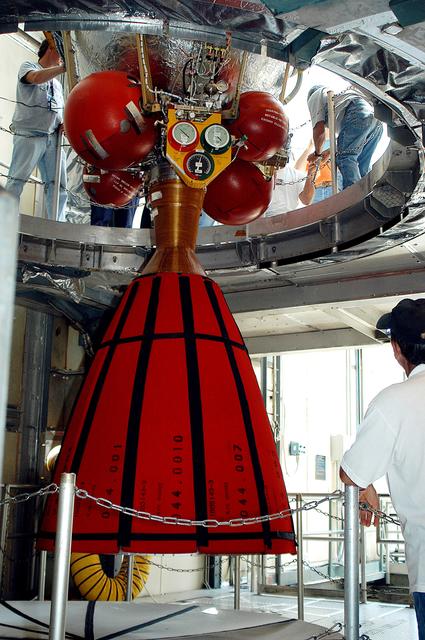
KENNEDY SPACE CENTER, FLA. - The second stage of a Delta II rocket is lowered into positioned above a first stage at Pad 17-B, Cape Canaveral Air Force Station. Next, it will be mated to the first stage in preparation for the launch of the Mars Exploration Rover-1 (MER-B) on June 25. NASA’s twin Mars Exploration Rovers are designed to study the history of water on Mars. These robotic geologists are equipped with a robotic arm, a drilling tool, three spectrometers, and four pairs of cameras that allow them to have a human-like, 3D view of the terrain. Each rover could travel as far as 100 meters in one day to act as Mars scientists' eyes and hands, exploring an environment where humans are not yet able to go. The launch of MER-2 (MER-A) is tentatively set for June 8.
KSC-03pd1749
KSC | 2003-05-29
Details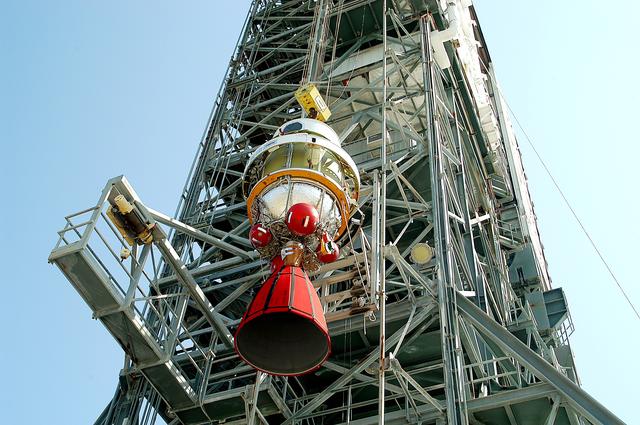
KENNEDY SPACE CENTER, FLA. - The second stage of a Delta II rocket is lifted up the launch tower on Pad 17-B, Cape Canaveral Air Force Station. It will be mated to the Delta first stage already at the pad in preparation for the launch of the Mars Exploration Rover-1 (MER-B) on June 25. NASA’s twin Mars Exploration Rovers are designed to study the history of water on Mars. These robotic geologists are equipped with a robotic arm, a drilling tool, three spectrometers, and four pairs of cameras that allow them to have a human-like, 3D view of the terrain. Each rover could travel as far as 100 meters in one day to act as Mars scientists' eyes and hands, exploring an environment where humans are not yet able to go. The launch of MER-2 (MER-A) is tentatively set for June 8.
KSC-03pd1745
KSC | 2003-05-29
Details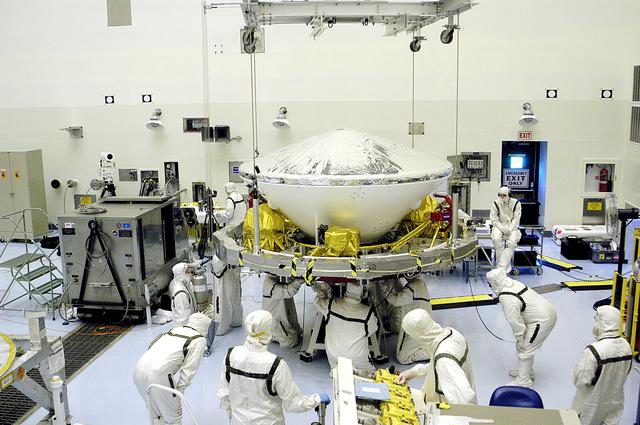
KENNEDY SPACE CENTER, FLA. - In the Payload Hazardous Servicing Facility, workers prepare to lift the Mars Exploration Rover-1 (MER-B) onto a spin table during preflight processing of the spacecraft. The rover is scheduled to launch aboard a Delta II rocket on June 25. NASA’s twin Mars Exploration Rovers are designed to study the history of water on Mars. These robotic geologists are equipped with a robotic arm, a drilling tool, three spectrometers, and four pairs of cameras that allow them to have a human-like, 3D view of the terrain. Each rover could travel as far as 100 meters in one day to act as Mars scientists' eyes and hands, exploring an environment where humans are not yet able to go. The launch of MER-2 (MER-A) is tentatively set for June 8.
KSC-03pd1728
KSC | 2003-05-29
Details

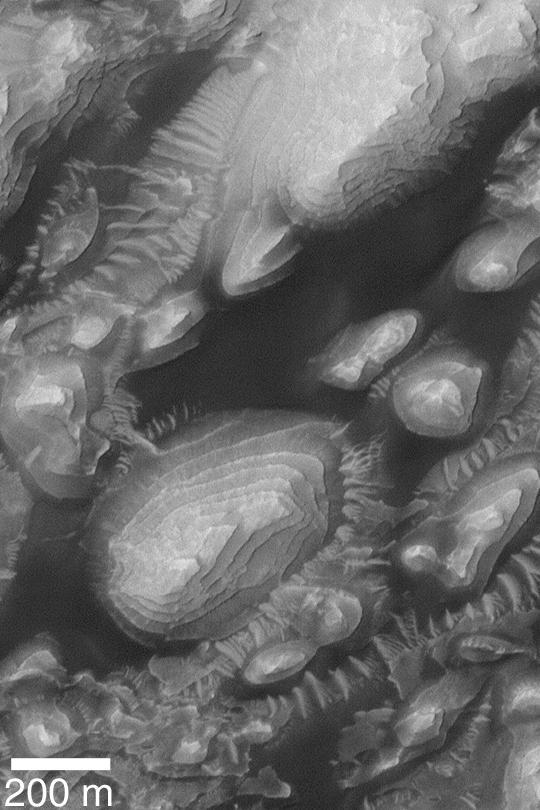
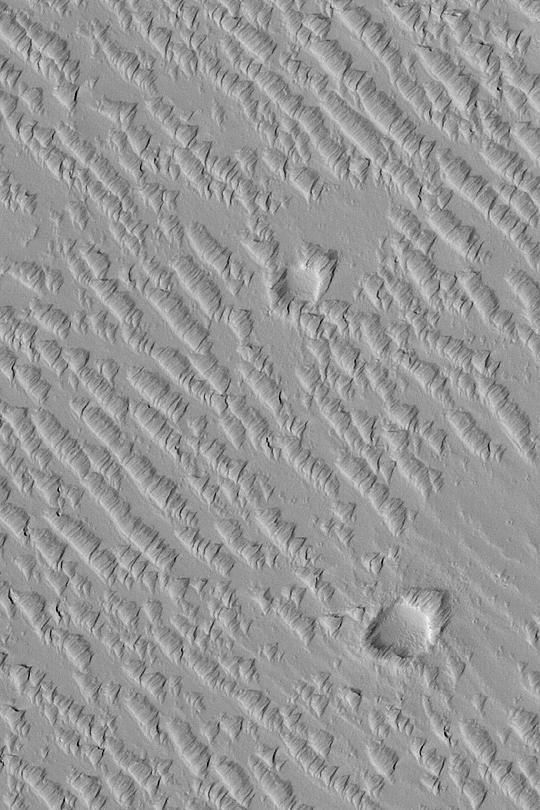
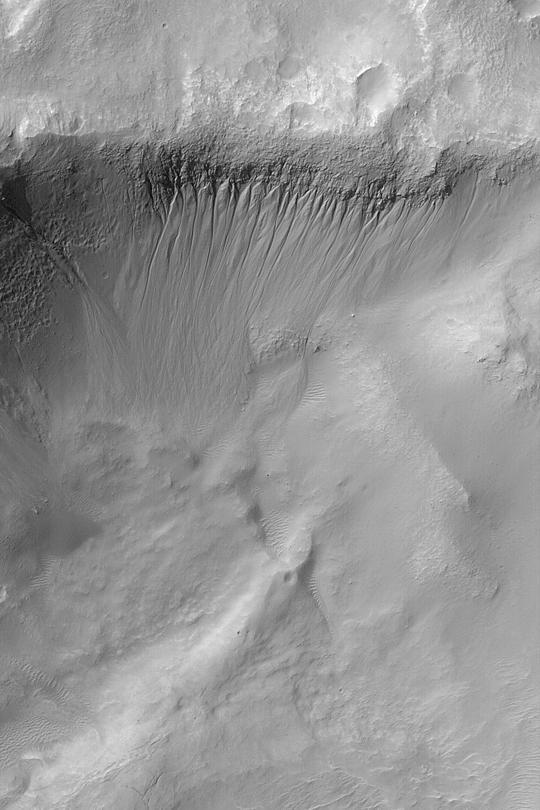
Where on Earth...? MISR Mystery Image Quiz #14:<br .>Anatahan Island
PIA04332
JPL | 2003-05-28
Details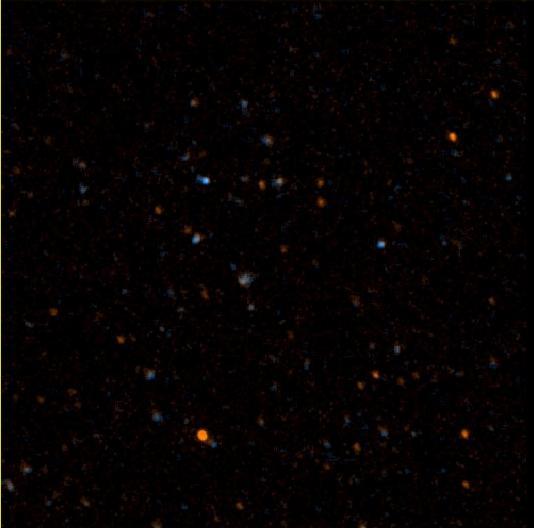

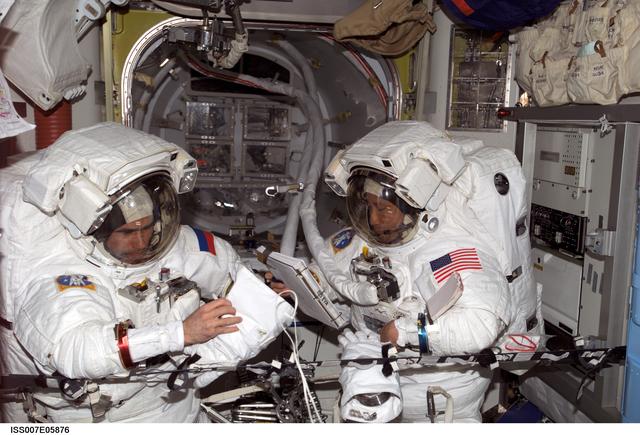
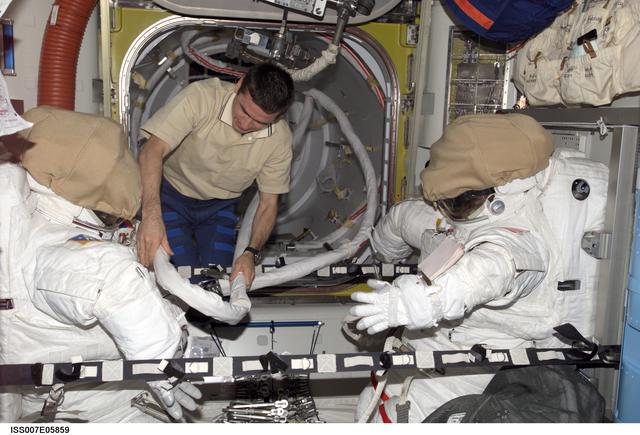
Expedition Seven CDR Malenchenko and Science Officer Lu in Quest airlock with EMUs
iss007e05876
JSC | 2003-05-28
Details



KENNEDY SPACE CENTER, FLA. - A worker on Launch Pad 17-A, Cape Canaveral Air Force Station, gets ready to attach a cable to the Mars Exploration Rover 2 (MER-2), inside the transport canister. After it is lifted into the launch tower, it will be mated to the Delta II rocket for launch. MER-2 is one of NASA's twin Mars Exploration Rovers designed to study the history of water on Mars. These robotic geologists are equipped with a robotic arm, a drilling tool, three spectrometers, and four pairs of cameras that allow them to have a human-like, 3D view of the terrain. Each rover could travel as far as 100 meters in one day to act as Mars scientists' eyes and hands, exploring an environment where humans can't yet go. MER-2 is scheduled to launch no earlier than June 8 as MER-A.
KSC-03pd1715
KSC | 2003-05-27
Details
KENNEDY SPACE CENTER, FLA. - On Launch Pad 17-A, Cape Canaveral Air Force Station, the Mars Exploration Rover 2 (MER-2), inside the transport canister, is ready to be lifted into the launch tower where it will be mated to the Delta II rocket for launch. MER-2 is one of NASA's twin Mars Exploration Rovers designed to study the history of water on Mars. These robotic geologists are equipped with a robotic arm, a drilling tool, three spectrometers, and four pairs of cameras that allow them to have a human-like, 3D view of the terrain. Each rover could travel as far as 100 meters in one day to act as Mars scientists' eyes and hands, exploring an environment where humans can't yet go. MER-2 is scheduled to launch no earlier than June 8 as MER-A.
KSC-03pd1717
KSC | 2003-05-27
Details
KENNEDY SPACE CENTER, FLA. - On Launch Pad 17-A, Cape Canaveral Air Force Station, the Mars Exploration Rover 2 (MER-2), is maneuvered above the Delta II rocket in the launch tower. It will be mated to the rocket for launch. MER-2 is one of NASA's twin Mars Exploration Rovers designed to study the history of water on Mars. These robotic geologists are equipped with a robotic arm, a drilling tool, three spectrometers, and four pairs of cameras that allow them to have a human-like, 3D view of the terrain. Each rover could travel as far as 100 meters in one day to act as Mars scientists' eyes and hands, exploring an environment where humans can't yet go. MER-2 is scheduled to launch no earlier than June 8 as MER-A.
KSC-03pd1722
KSC | 2003-05-27
Details
KENNEDY SPACE CENTER, FLA. - On Launch Pad 17-A, Cape Canaveral Air Force Station, the Mars Exploration Rover 2 (MER-2), inside the transport canister, is lowered toward the Delta II rocket for mating. MER-2 is one of NASA's twin Mars Exploration Rovers designed to study the history of water on Mars. These robotic geologists are equipped with a robotic arm, a drilling tool, three spectrometers, and four pairs of cameras that allow them to have a human-like, 3D view of the terrain. Each rover could travel as far as 100 meters in one day to act as Mars scientists' eyes and hands, exploring an environment where humans can't yet go. MER-2 is scheduled to launch no earlier than June 8 as MER-A.
KSC-03pd1723
KSC | 2003-05-27
Details
KENNEDY SPACE CENTER, FLA. - On Launch Pad 17-A, Cape Canaveral Air Force Station, the Mars Exploration Rover 2 (MER-2), inside the transport canister, is lifted up the launch tower where it will be mated to the Delta II rocket for launch. MER-2 is one of NASA's twin Mars Exploration Rovers designed to study the history of water on Mars. These robotic geologists are equipped with a robotic arm, a drilling tool, three spectrometers, and four pairs of cameras that allow them to have a human-like, 3D view of the terrain. Each rover could travel as far as 100 meters in one day to act as Mars scientists' eyes and hands, exploring an environment where humans can't yet go. MER-2 is scheduled to launch no earlier than June 8 as MER-A.
KSC-03pd1719
KSC | 2003-05-27
Details
KENNEDY SPACE CENTER, FLA. - On Launch Pad 17-A, Cape Canaveral Air Force Station, workers attach the Mars Exploration Rover 2 (MER-2) , above, to the second stage of the Delta II rocket, below. MER-2 is one of NASA's twin Mars Exploration Rovers designed to study the history of water on Mars. These robotic geologists are equipped with a robotic arm, a drilling tool, three spectrometers, and four pairs of cameras that allow them to have a human-like, 3D view of the terrain. Each rover could travel as far as 100 meters in one day to act as Mars scientists' eyes and hands, exploring an environment where humans can't yet go. MER-2 is scheduled to launch no earlier than June 8 as MER-A.
KSC-03pd1725
KSC | 2003-05-27
Details
KENNEDY SPACE CENTER, FLA. - On Launch Pad 17-A, Cape Canaveral Air Force Station, the Mars Exploration Rover 2 (MER-2), inside the transport canister, is lifted off the transporter and into the launch tower where it will be mated to the Delta II rocket for launch. MER-2 is one of NASA's twin Mars Exploration Rovers designed to study the history of water on Mars. These robotic geologists are equipped with a robotic arm, a drilling tool, three spectrometers, and four pairs of cameras that allow them to have a human-like, 3D view of the terrain. Each rover could travel as far as 100 meters in one day to act as Mars scientists' eyes and hands, exploring an environment where humans can't yet go. MER-2 is scheduled to launch no earlier than June 8 as MER-A.
KSC-03pd1718
KSC | 2003-05-27
Details