NASA Media Archive






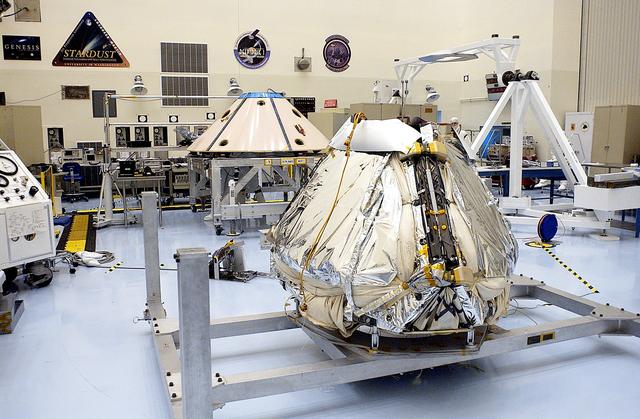
KENNEDY SPACE CENTER, FLA. - The Mars Exploration Rover 1 (MER-1) is seen after installation of the air bags on the outside of the lander. The airbags will inflate to cushion the landing of the spacecraft on the surface of Mars. When it stops bouncing and rolling, the airbags will deflate and retract, the petals will open to bring the lander to an upright position, and the rover will be exposed. NASA's twin Mars Exploration Rovers are designed to study the history of water on Mars. These robotic geologists are equipped with a robotic arm, a drilling tool, three spectrometers, and four pairs of cameras that allow them to have a human-like, 3D view of the terrain. Each rover could travel as far as 100 meters in one day to act as Mars scientists' eyes and hands, exploring an environment where humans can't yet go. MER-1 is scheduled to launch June 25 as MER-B aboard a Delta II rocket from Cape Canaveral Air Force Station.
KSC-03pd1577
KSC | 2003-05-10
Details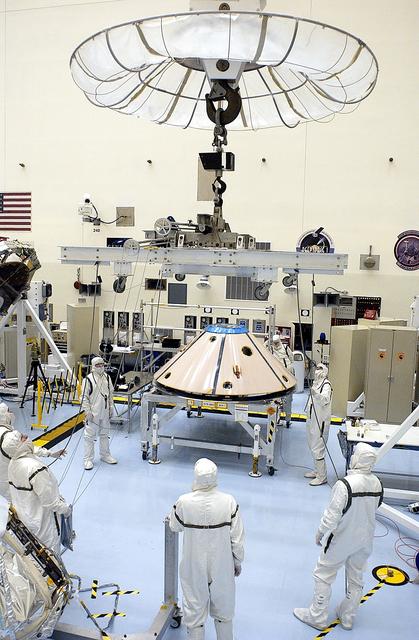
KENNEDY SPACE CENTER, FLA. - Workers in the Payload Hazardous Servicing Facility prepare to lift and move the backshell that will cover the Mars Exploration Rover 1 (MER-1) and its lander. NASA's twin Mars Exploration Rovers are designed to study the history of water on Mars. These robotic geologists are equipped with a robotic arm, a drilling tool, three spectrometers, and four pairs of cameras that allow them to have a human-like, 3D view of the terrain. Each rover could travel as far as 100 meters in one day to act as Mars scientists' eyes and hands, exploring an environment where humans can't yet go. MER-1 is scheduled to launch June 25 as MER-B aboard a Delta II rocket from Cape Canaveral Air Force Station.
KSC-03pd1578
KSC | 2003-05-10
Details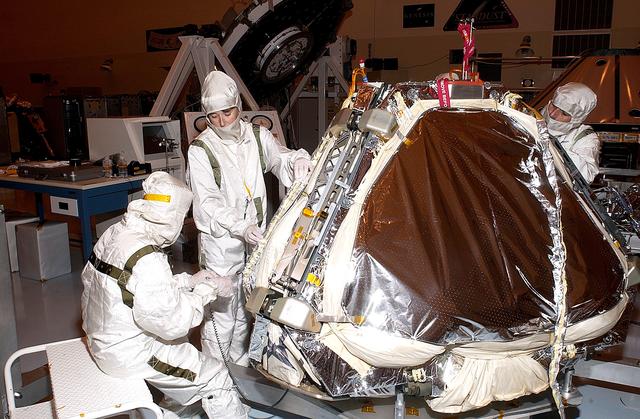
KENNEDY SPACE CENTER, FLA. - On Mars Exploration Rover 1 (MER-1) , air bags are installed on the lander. The airbags will inflate to cushion the landing of the spacecraft on the surface of Mars. When it stops bouncing and rolling, the airbags will deflate and retract, the petals will open to bring the lander to an upright position, and the rover will be exposed. NASA's twin Mars Exploration Rovers are designed to study the history of water on Mars. These robotic geologists are equipped with a robotic arm, a drilling tool, three spectrometers, and four pairs of cameras that allow them to have a human-like, 3D view of the terrain. Each rover could travel as far as 100 meters in one day to act as Mars scientists' eyes and hands, exploring an environment where humans can't yet go. MER-1 is scheduled to launch June 25 as MER-B aboard a Delta II rocket from Cape Canaveral Air Force Station.
KSC-03pd1576
KSC | 2003-05-10
Details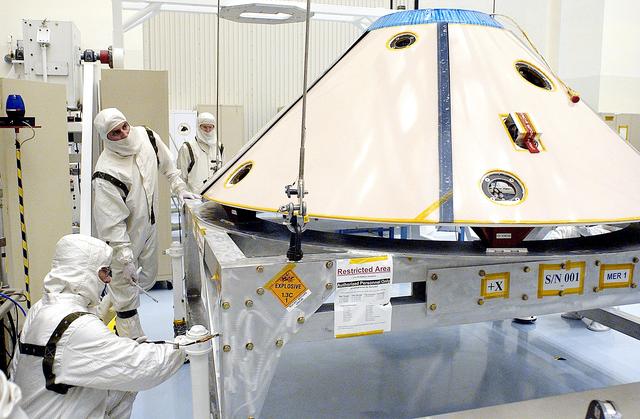
KENNEDY SPACE CENTER, FLA. - Workers in the Payload Hazardous Servicing Facility prepare to lift and move the backshell, a protective cover for the Mars Exploration Rover 1 (MER-1) and its lander. NASA's twin Mars Exploration Rovers are designed to study the history of water on Mars. These robotic geologists are equipped with a robotic arm, a drilling tool, three spectrometers, and four pairs of cameras that allow them to have a human-like, 3D view of the terrain. Each rover could travel as far as 100 meters in one day to act as Mars scientists' eyes and hands, exploring an environment where humans can't yet go. MER-1 is scheduled to launch June 25 as MER-B aboard a Delta II rocket from Cape Canaveral Air Force Station.
KSC-03pd1579
KSC | 2003-05-10
Details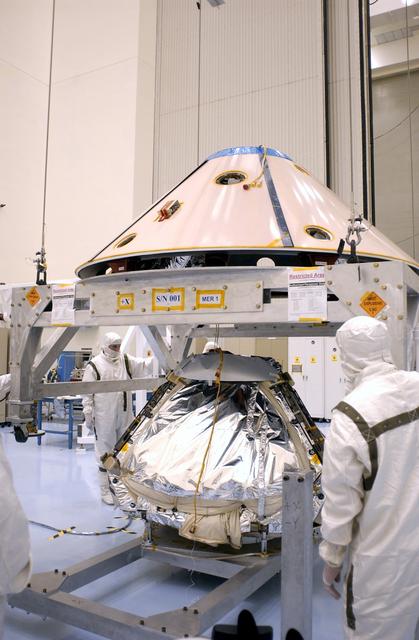
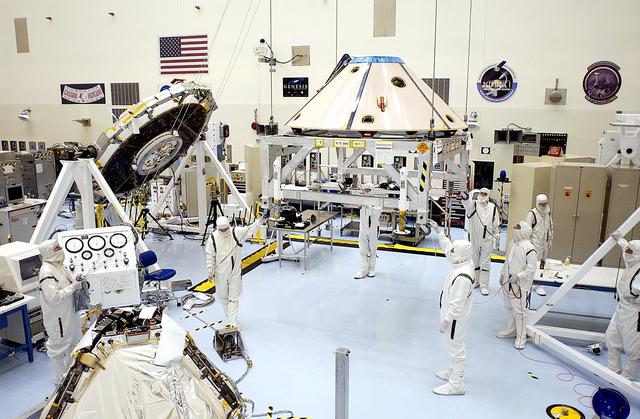
The backshell for the Mars Exploration Rover 1 (MER-1) is moved toward the rover (foreground, left). The backshell is a protective cover for the rover. NASA's twin Mars Exploration Rovers are designed to study the history of water on Mars. These robotic geologists are equipped with a robotic arm, a drilling tool, three spectrometers, and four pairs of cameras that allow them to have a human-like, 3D view of the terrain. Each rover could travel as far as 100 meters in one day to act as Mars scientists' eyes and hands, exploring an environment where humans can't yet go. MER-1 is scheduled to launch June 25 as MER-B aboard a Delta II rocket from Cape Canaveral Air Force Station.
KSC-03pd1580
KSC | 2003-05-10
Details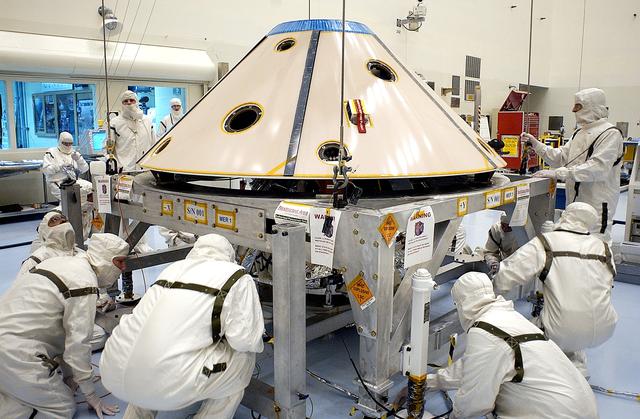
KENNEDY SPACE CENTER, FLA. - Workers in the Payload Hazardous Servicing Facility check the placement of the backshell over the Mars Exploration Rover 1 (MER-1). The backshell is a protective cover for the rover. NASA's twin Mars Exploration Rovers are designed to study the history of water on Mars. These robotic geologists are equipped with a robotic arm, a drilling tool, three spectrometers, and four pairs of cameras that allow them to have a human-like, 3D view of the terrain. Each rover could travel as far as 100 meters in one day to act as Mars scientists' eyes and hands, exploring an environment where humans can't yet go. MER-1 is scheduled to launch June 25 as MER-B aboard a Delta II rocket from Cape Canaveral Air Force Station.
KSC-03pd1585
KSC | 2003-05-10
Details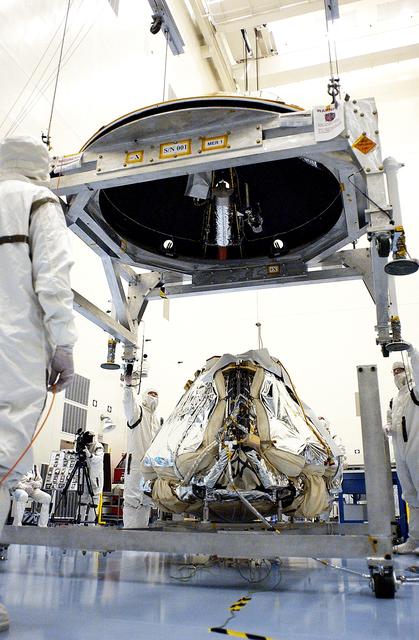
KENNEDY SPACE CENTER, FLA. - Workers in the Payload Hazardous Servicing Facility lower the backshell over the Mars Exploration Rover 1 (MER-1). The backshell is a protective cover for the rover. NASA's twin Mars Exploration Rovers are designed to study the history of water on Mars. These robotic geologists are equipped with a robotic arm, a drilling tool, three spectrometers, and four pairs of cameras that allow them to have a human-like, 3D view of the terrain. Each rover could travel as far as 100 meters in one day to act as Mars scientists' eyes and hands, exploring an environment where humans can't yet go. MER-1 is scheduled to launch June 25 as MER-B aboard a Delta II rocket from Cape Canaveral Air Force Station.
KSC-03pd1582
KSC | 2003-05-10
Details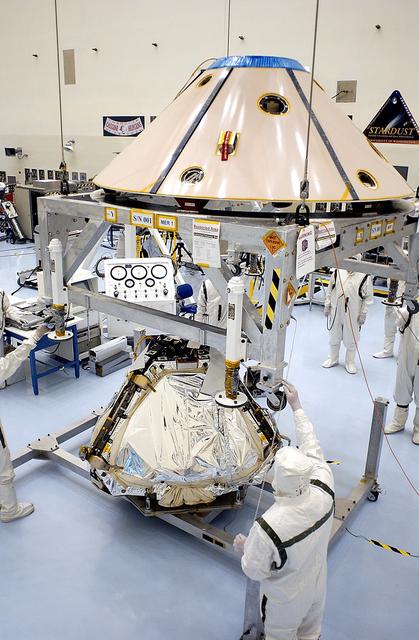
KENNEDY SPACE CENTER, FLA. - Workers in the Payload Hazardous Servicing Facility guide the backshell being lowered over the Mars Exploration Rover 1 (MER-1). The backshell is a protective cover for the rover. NASA's twin Mars Exploration Rovers are designed to study the history of water on Mars. These robotic geologists are equipped with a robotic arm, a drilling tool, three spectrometers, and four pairs of cameras that allow them to have a human-like, 3D view of the terrain. Each rover could travel as far as 100 meters in one day to act as Mars scientists' eyes and hands, exploring an environment where humans can't yet go. MER-1 is scheduled to launch June 25 as MER-B aboard a Delta II rocket from Cape Canaveral Air Force Station.
KSC-03pd1581
KSC | 2003-05-10
Details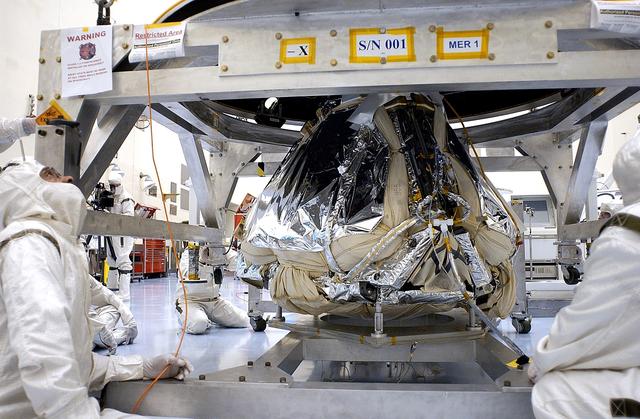
KENNEDY SPACE CENTER, FLA. - Workers in the Payload Hazardous Servicing Facility lower the backshell over the Mars Exploration Rover 1 (MER-1). The backshell is a protective cover for the rover. NASA's twin Mars Exploration Rovers are designed to study the history of water on Mars. These robotic geologists are equipped with a robotic arm, a drilling tool, three spectrometers, and four pairs of cameras that allow them to have a human-like, 3D view of the terrain. Each rover could travel as far as 100 meters in one day to act as Mars scientists' eyes and hands, exploring an environment where humans can't yet go. MER-1 is scheduled to launch June 25 as MER-B aboard a Delta II rocket from Cape Canaveral Air Force Station.
KSC-03pd1584
KSC | 2003-05-10
Details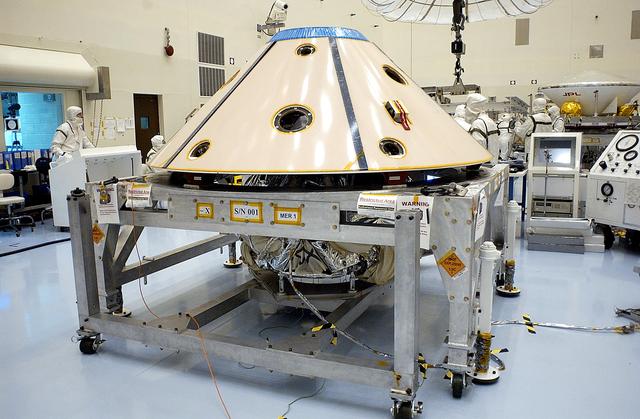
KENNEDY SPACE CENTER, FLA. - The backshell is in place over the Mars Exploration Rover 1 (MER-1). The backshell is a protective cover for the rover. NASA's twin Mars Exploration Rovers are designed to study the history of water on Mars. These robotic geologists are equipped with a robotic arm, a drilling tool, three spectrometers, and four pairs of cameras that allow them to have a human-like, 3D view of the terrain. Each rover could travel as far as 100 meters in one day to act as Mars scientists' eyes and hands, exploring an environment where humans can't yet go. MER-1 is scheduled to launch June 25 as MER-B aboard a Delta II rocket from Cape Canaveral Air Force Station.
KSC-03pd1586
KSC | 2003-05-10
Details
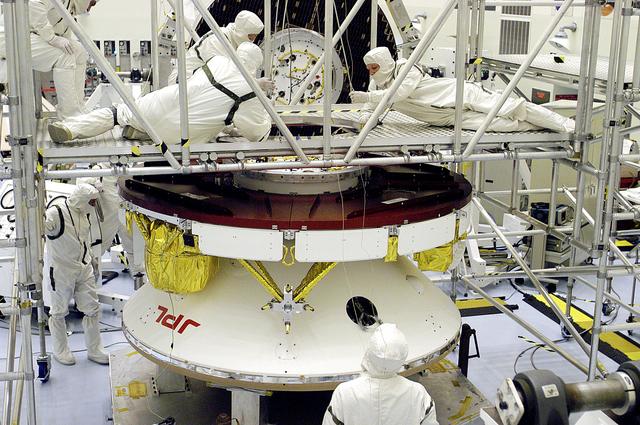
KENNEDY SPACE CENTER, FLA. - Workers in the Payload Hazardous Servicing Facility prepare the Mars Exploration Rover 2 (MER-2) for a weight and center of gravity determination. NASA's twin Mars Exploration Rovers are designed to study the history of water on Mars. These robotic geologists are equipped with a robotic arm, a drilling tool, three spectrometers, and four pairs of cameras that allow them to have a human-like, 3D view of the terrain. Each rover could travel as far as 100 meters in one day to act as Mars scientists' eyes and hands, exploring an environment where humans can't yet go. Launch of MER-2 is scheduled for June 5 from Cape Canaveral Air Force Station.
KSC-03pd1567
KSC | 2003-05-09
Details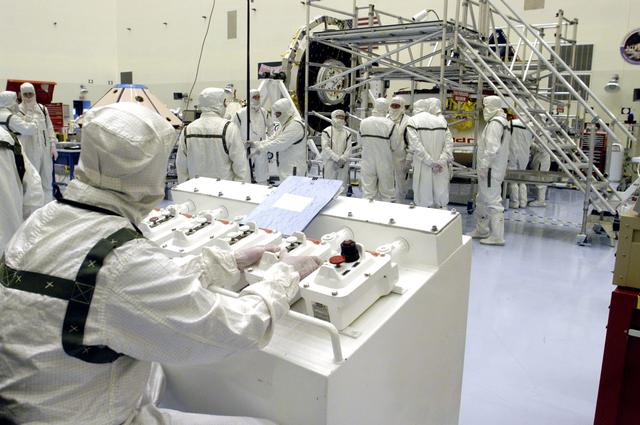
KENNEDY SPACE CENTER, FLA. - Workers in the Payload Hazardous Servicing Facility are preparing to determine weight and center of gravity for the Mars Exploration Rover 2 (MER-2). NASA's twin Mars Exploration Rovers are designed to study the history of water on Mars. These robotic geologists are equipped with a robotic arm, a drilling tool, three spectrometers, and four pairs of cameras that allow them to have a human-like, 3D view of the terrain. Each rover could travel as far as 100 meters in one day to act as Mars scientists' eyes and hands, exploring an environment where humans can't yet go. Launch of MER-2 is scheduled for June 5 from Cape Canaveral Air Force Station.
KSC-03pd1565
KSC | 2003-05-09
Details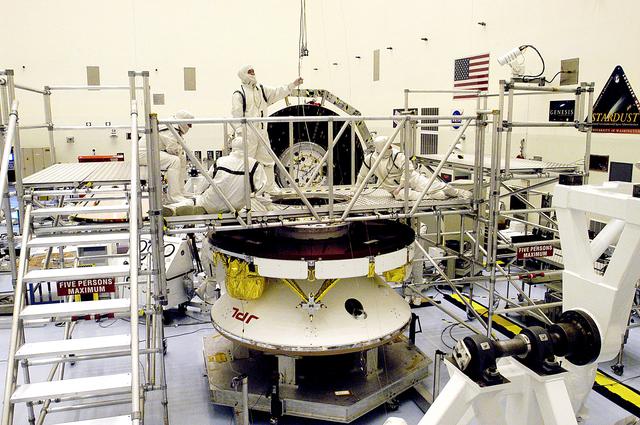
KENNEDY SPACE CENTER, FLA. - Workers in the Payload Hazardous Servicing Facility prepare the Mars Exploration Rover 2 (MER-2) for a weight and center of gravity determination. NASA's twin Mars Exploration Rovers are designed to study the history of water on Mars. These robotic geologists are equipped with a robotic arm, a drilling tool, three spectrometers, and four pairs of cameras that allow them to have a human-like, 3D view of the terrain. Each rover could travel as far as 100 meters in one day to act as Mars scientists' eyes and hands, exploring an environment where humans can't yet go. Launch of MER-2 is scheduled for June 5 from Cape Canaveral Air Force Station.
KSC-03pd1566
KSC | 2003-05-09
Details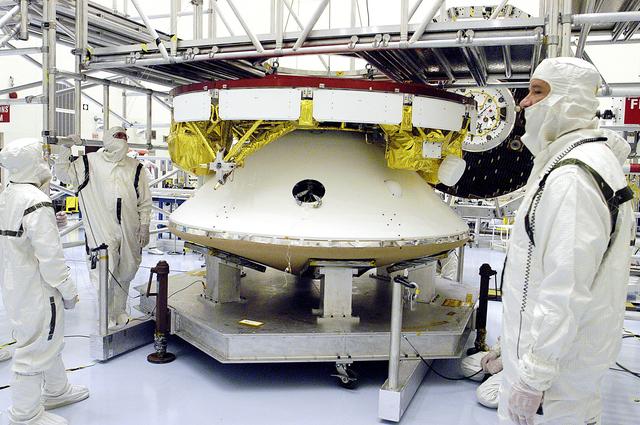
KENNEDY SPACE CENTER, FLA. - The Mars Exploration Rover 2 (MER-2) undergoes a weight and center of gravity determination in the Payload Hazardous Servicing Facility. NASA's twin Mars Exploration Rovers are designed to study the history of water on Mars. These robotic geologists are equipped with a robotic arm, a drilling tool, three spectrometers, and four pairs of cameras that allow them to have a human-like, 3D view of the terrain. Each rover could travel as far as 100 meters in one day to act as Mars scientists' eyes and hands, exploring an environment where humans can't yet go. Launch of MER-2 is scheduled for June 5 from Cape Canaveral Air Force Station.
KSC-03pd1569
KSC | 2003-05-09
Details
KENNEDY SPACE CENTER, FLA. - Official portrait of Roy D. Bridges Jr., director of Kennedy Space Center.
KSC-03pp1925
KSC | 2003-05-09
Details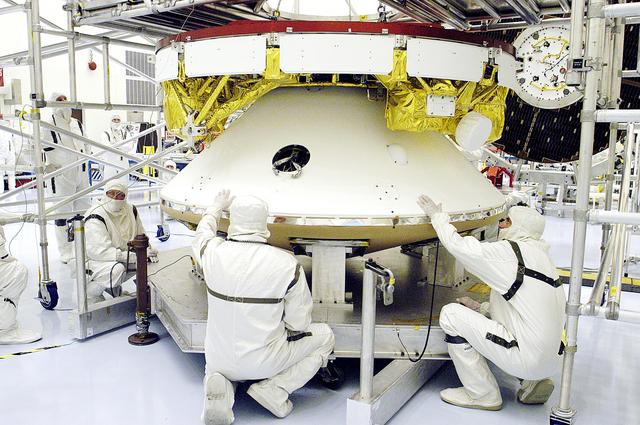
KENNEDY SPACE CENTER, FLA. - The Mars Exploration Rover 2 (MER-2) undergoes a weight and center of gravity determination in the Payload Hazardous Servicing Facility. NASA's twin Mars Exploration Rovers are designed to study the history of water on Mars. These robotic geologists are equipped with a robotic arm, a drilling tool, three spectrometers, and four pairs of cameras that allow them to have a human-like, 3D view of the terrain. Each rover could travel as far as 100 meters in one day to act as Mars scientists' eyes and hands, exploring an environment where humans can't yet go. Launch of MER-2 is scheduled for June 5 from Cape Canaveral Air Force Station.
KSC-03pd1568
KSC | 2003-05-09
Details