NASA Media Archive




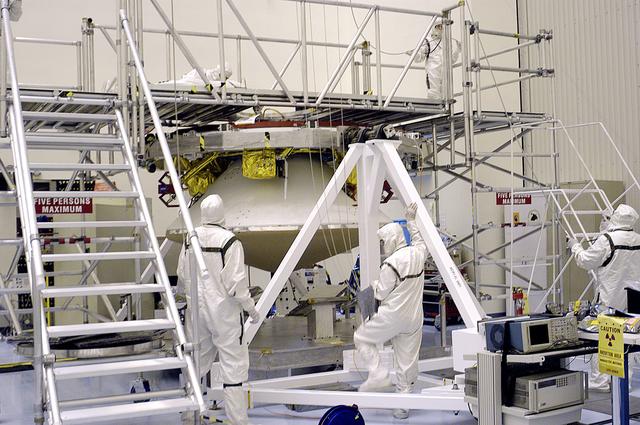
KENNEDY SPACE CENTER, FLA. - In the Payload Hazardous Servicing Facility, the cruise stage is mated to the Mars Exploration Rover 2 (MER-2) entry vehicle. The cruise stage includes fuel tanks, thruster clusters and avionics for steering and propulsion. NASA's twin Mars Exploration Rovers are designed to study the history of water on Mars. These robotic geologists are equipped with a robotic arm, a drilling tool, three spectrometers, and four pairs of cameras that allow them to have a human-like, 3D view of the terrain. Each rover could travel as far as 100 meters in one day to act as Mars scientists' eyes and hands, exploring an environment where humans can't yet go. MER-2 is scheduled to launch June 5 as MER-A aboard a Delta rocket from Cape Canaveral Air Force Station.
KSC-03pd1560
KSC | 2003-05-06
Details
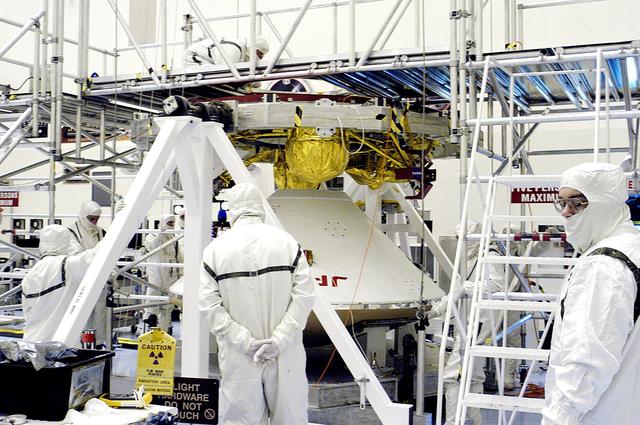
KENNEDY SPACE CENTER, FLA. - The Mars Exploration Rover 2 (MER-2) entry vehicle (below) is being mated to the cruise stage (above). The cruise stage includes fuel tanks, thruster clusters and avionics for steering and propulsion. NASA's twin Mars Exploration Rovers are designed to study the history of water on Mars. These robotic geologists are equipped with a robotic arm, a drilling tool, three spectrometers, and four pairs of cameras that allow them to have a human-like, 3D view of the terrain. Each rover could travel as far as 100 meters in one day to act as Mars scientists' eyes and hands, exploring an environment where humans can't yet go. MER-2 is scheduled to launch June 5 as MER-A aboard a Delta rocket from Cape Canaveral Air Force Station.
KSC-03pd1557
KSC | 2003-05-06
Details
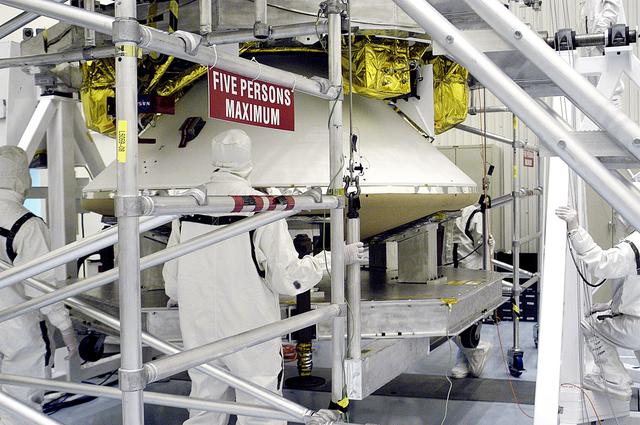
KENNEDY SPACE CENTER, FLA. - Workers in the Payload Hazardous Servicing Facility stand by while the cruise stage is mated to the Mars Exploration Rover 2 (MER-2) entry vehicle. The cruise stage includes fuel tanks, thruster clusters and avionics for steering and propulsion. NASA's twin Mars Exploration Rovers are designed to study the history of water on Mars. These robotic geologists are equipped with a robotic arm, a drilling tool, three spectrometers, and four pairs of cameras that allow them to have a human-like, 3D view of the terrain. Each rover could travel as far as 100 meters in one day to act as Mars scientists' eyes and hands, exploring an environment where humans can't yet go. MER-2 is scheduled to launch June 5 as MER-A aboard a Delta rocket from Cape Canaveral Air Force Station.
KSC-03pd1558
KSC | 2003-05-06
Details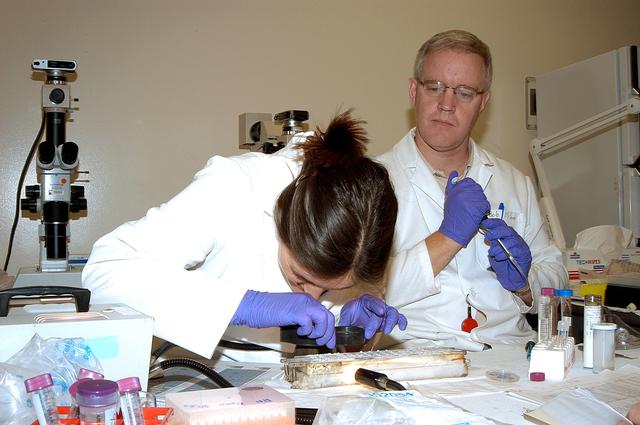
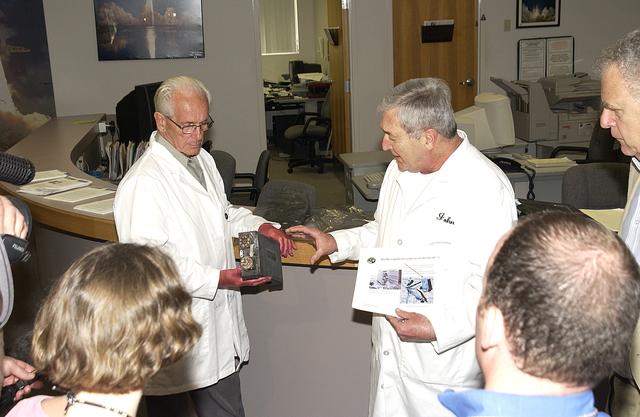
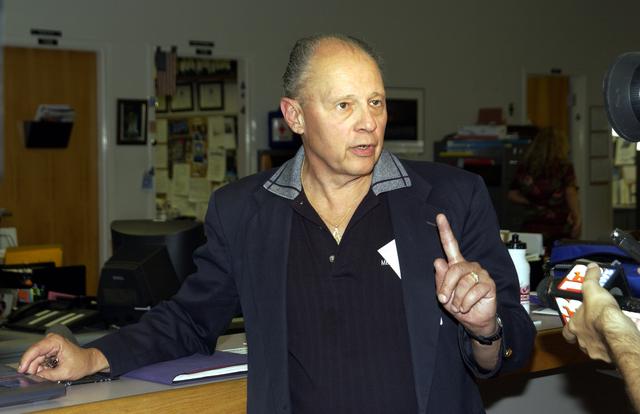
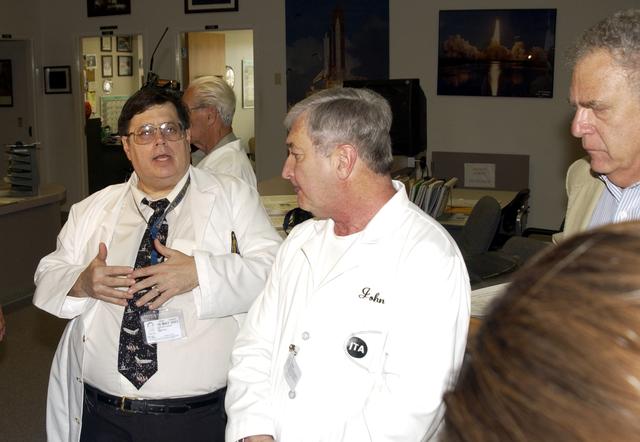
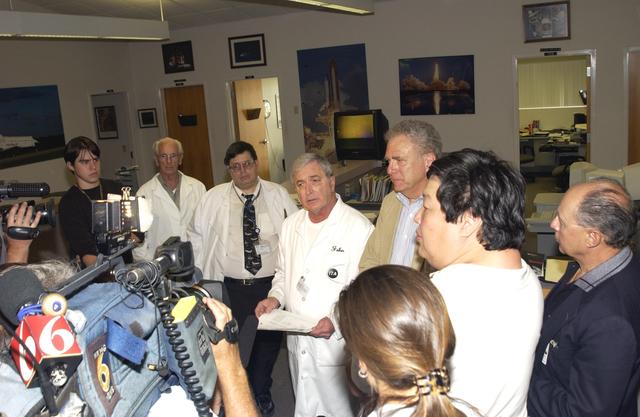
KENNEDY SPACE CENTER, FLA. - Valerie Cassanto, with Instrumentation Technology Associates, Inc., works on an experiment found during the search for Columbia debris. Mike Casasanto, also with ITA, looks on. Included in the Commercial ITA Biomedical Experiments payload on mission STS-107 are urokinase cancer research, microencapsulation of drugs, the Growth of Bacterial Biofilm on Surfaces during Spaceflight (GOBBSS), and tin crystal formation.
KSC-03pd1455
KSC | 2003-05-06
Details


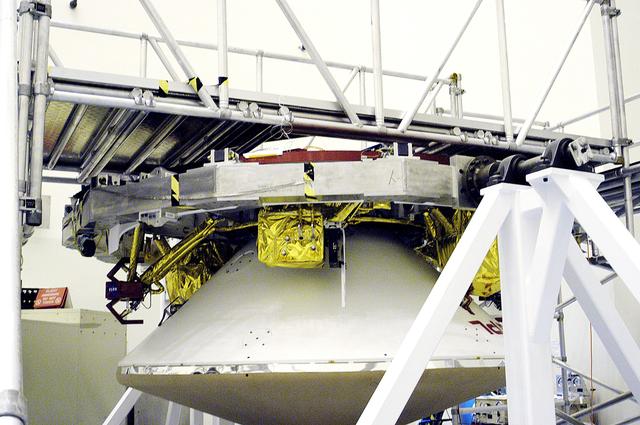
KENNEDY SPACE CENTER, FLA. - In the Payload Hazardous Servicing Facility, the cruise stage is mated to the Mars Exploration Rover 2 (MER-2) entry vehicle. The cruise stage includes fuel tanks, thruster clusters and avionics for steering and propulsion. NASA's twin Mars Exploration Rovers are designed to study the history of water on Mars. These robotic geologists are equipped with a robotic arm, a drilling tool, three spectrometers, and four pairs of cameras that allow them to have a human-like, 3D view of the terrain. Each rover could travel as far as 100 meters in one day to act as Mars scientists' eyes and hands, exploring an environment where humans can't yet go. MER-2 is scheduled to launch June 5 as MER-A aboard a Delta rocket from Cape Canaveral Air Force Station.
KSC-03pd1563
KSC | 2003-05-06
Details
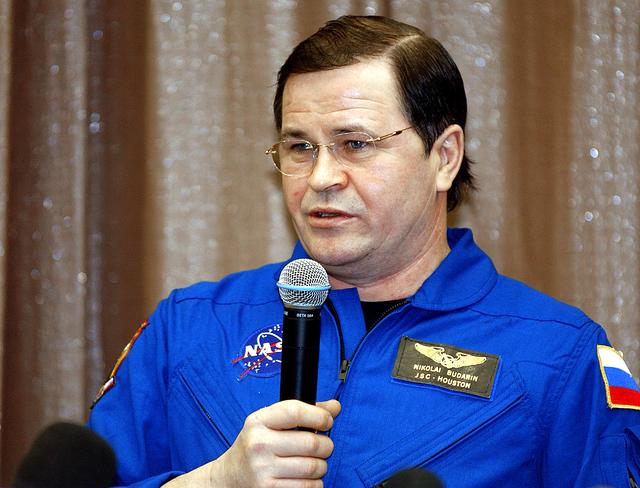
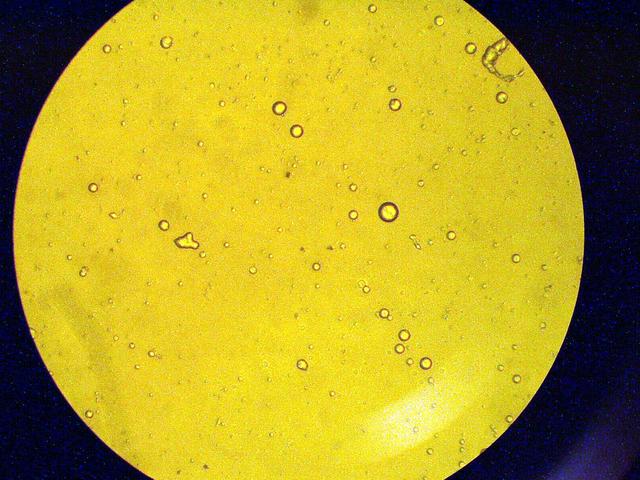
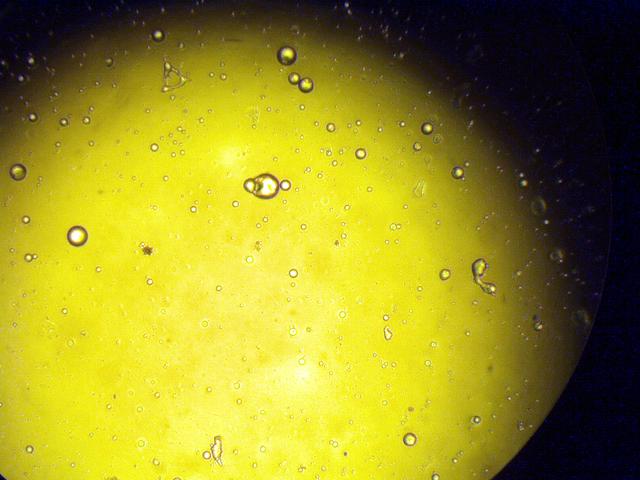
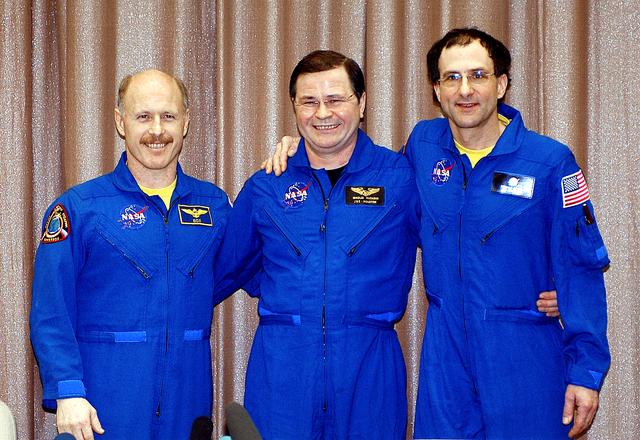


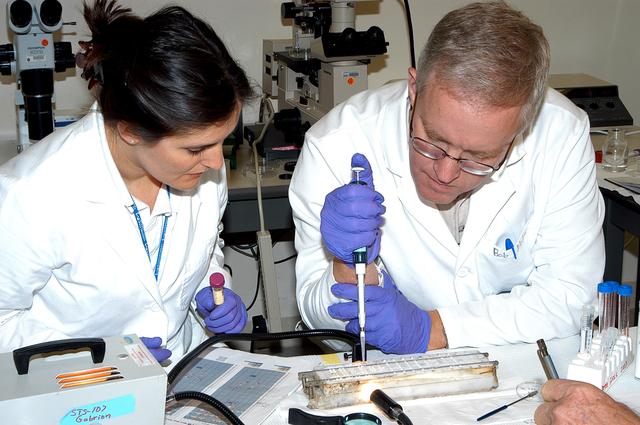
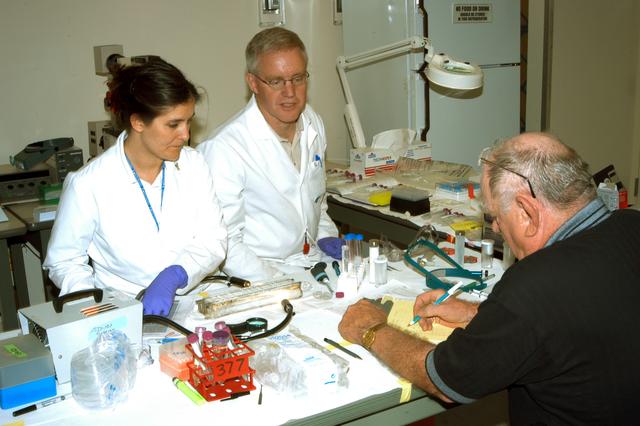
KENNEDY SPACE CENTER, FLA. - Valerie Cassanto, with Instrumentation Technology Associates, Inc., and Bob McLean, from the Southwest Texas State University, work on an experiment found during the search for Columbia debris. Included in the Commercial ITA Biomedical Experiments payload on mission STS-107 are urokinase cancer research, microencapsulation of drugs, the Growth of Bacterial Biofilm on Surfaces during Spaceflight (GOBBSS), and tin crystal formation.
KSC-03pd1454
KSC | 2003-05-06
Details
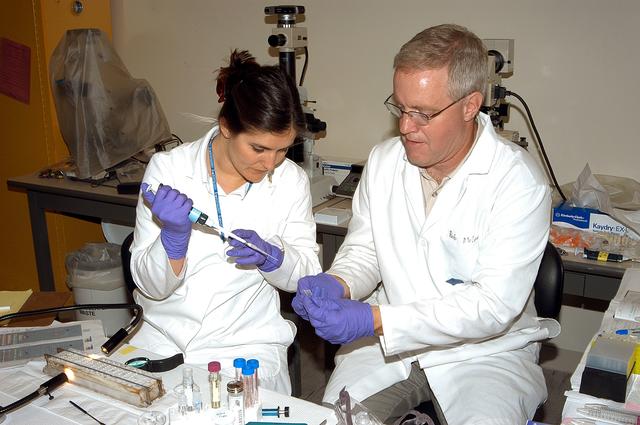
KENNEDY SPACE CENTER, FLA. - Valerie Cassanto, with Instrumentation Technology Associates, Inc., and Bob McLean, from the Southwest Texas State University, transfer to a new container material from one of the experiments carried on mission STS-107. Several experiments were found during the search for Columbia debris. Included in the Commercial ITA Biomedical Experiments payload on mission STS-107 are urokinase cancer research, microencapsulation of drugs, the Growth of Bacterial Biofilm on Surfaces during Spaceflight (GOBBSS), and tin crystal formation.
KSC-03pd1457
KSC | 2003-05-06
Details
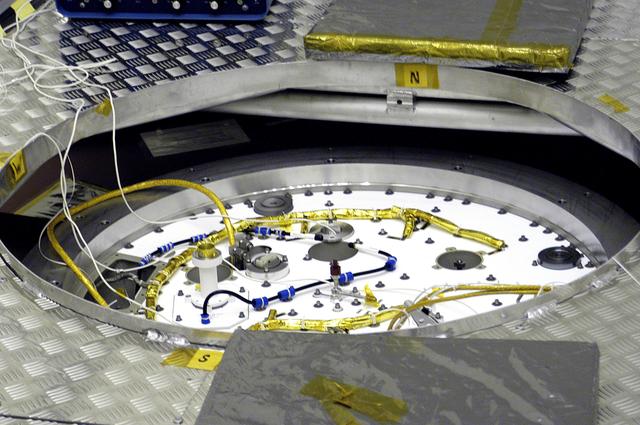
KENNEDY SPACE CENTER, FLA. - A closeup of the cruise stage to be mated to the Mars Exploration Rover 2 (MER-2) entry vehicle. The cruise stage includes fuel tanks, thruster clusters and avionics for steering and propulsion. NASA's twin Mars Exploration Rovers are designed to study the history of water on Mars. These robotic geologists are equipped with a robotic arm, a drilling tool, three spectrometers, and four pairs of cameras that allow them to have a human-like, 3D view of the terrain. Each rover could travel as far as 100 meters in one day to act as Mars scientists' eyes and hands, exploring an environment where humans can't yet go. MER-2 is scheduled to launch June 5 as MER-A aboard a Delta rocket from Cape Canaveral Air Force Station.
KSC-03pd1561
KSC | 2003-05-06
Details

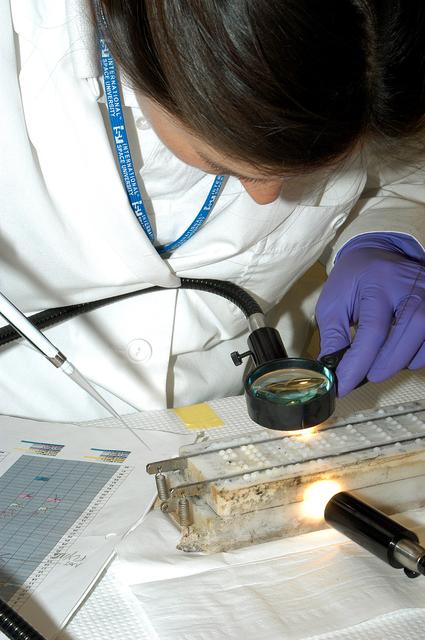
KENNEDY SPACE CENTER, FLA. - Valerie Cassanto, with Instrumentation Technology Associates, Inc., examines closely the container containing one of the experiments carried on mission STS-107. Several experiments were found during the search for Columbia debris. Included in the Commercial ITA Biomedical Experiments payload on mission STS-107 are urokinase cancer research, microencapsulation of drugs, the Growth of Bacterial Biofilm on Surfaces during Spaceflight (GOBBSS), and tin crystal formation.
KSC-03pd1456
KSC | 2003-05-06
Details